
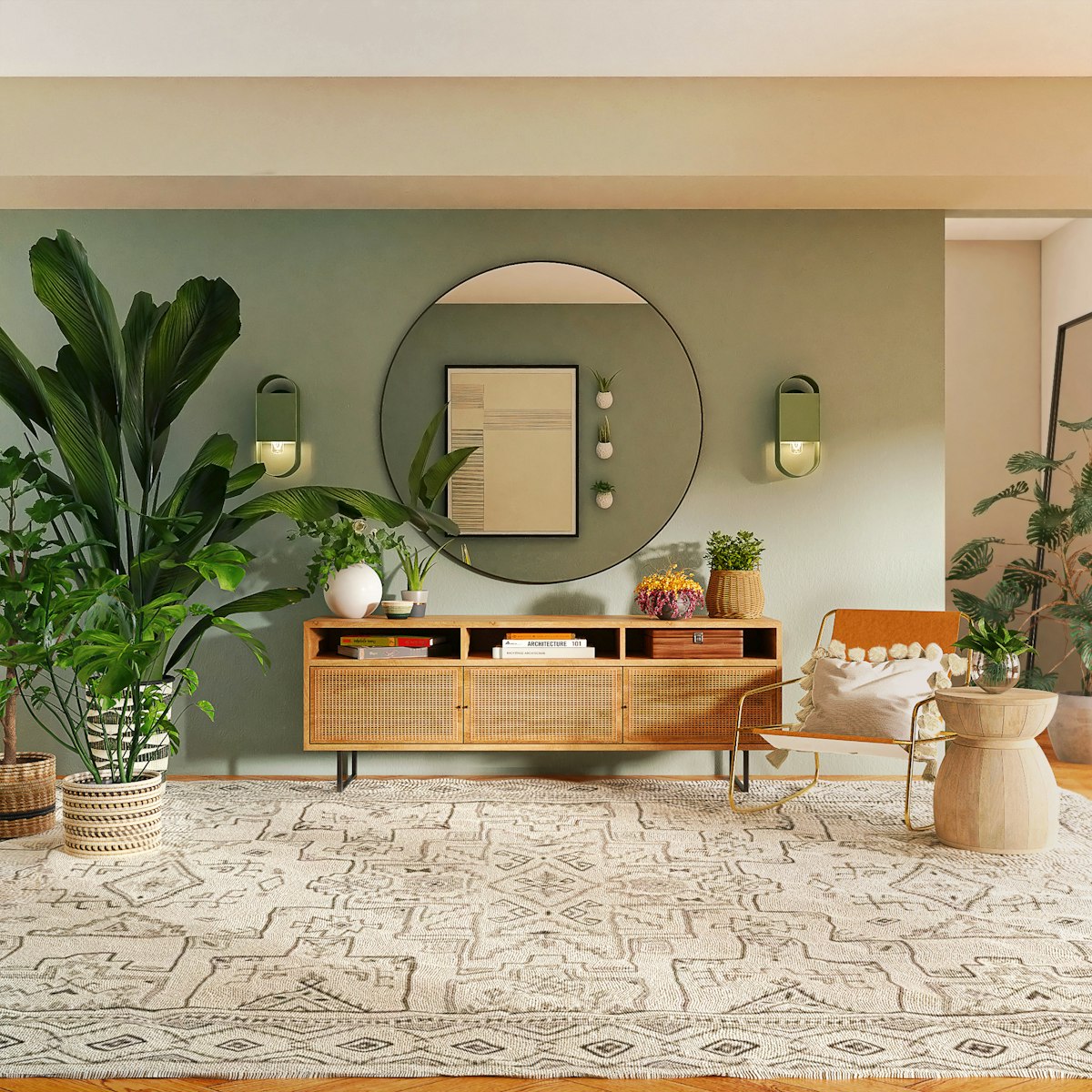
When you work from home, your house is not just where you live. It is your office, your gym, your retreat, and the place you are supposed to recover from all of it. For a while mine was just a cluttered backdrop to a busy workday, and I could feel the difference in my nervous system. So I slowly, room by room, turned it into something that actually supports my wellbeing instead of draining it.
I am single, I work remotely, and I share the place with dogs and cats, so my sanctuary had to be real and livable, not a magazine spread. These are the eight changes that made my house feel like a place that takes care of me back.
In This Article
Key Takeaways
- When you work from home, your space directly shapes your nervous system.
- A sanctuary does not need to be picture-perfect, just intentional and livable.
- Separating work and rest spaces helps your brain switch off.
- Light, nature, and scent are powerful, low-cost mood levers.
- Build it room by room, keeping it pet-safe along the way.
1. A Dedicated Calm Corner
I set up one small corner that is just for calm: a comfortable chair, a soft blanket, good light, and nothing work-related in sight. It is where I do my morning quiet, my meditation, my legs-up-the-wall. Having a specific spot my body associates with rest means I drop into calm faster, because the place itself is a cue. You do not need a whole room, just a corner that is yours.
2. A Tidy, Separate Workspace
The most important boundary in a work-from-home life is between work and everything else, and space helps draw it. I keep my work in a defined area and, as much as I can, out of the rooms meant for rest. A tidy, contained workspace lets me close the laptop and actually leave the office, even when the office is twelve feet from my couch.
3. Soft, Layered Lighting
Harsh overhead light keeps the nervous system on alert, so I leaned into soft, layered lighting: lamps, warm bulbs, candlelight in the evening. Bright light for focus during the day, gentle light to signal wind-down at night. Lighting is one of the cheapest, most transformative changes you can make, and it quietly shifts the whole mood of a room.
4. Plants and Natural Elements
Bringing nature indoors makes a space feel calmer and more alive. I keep pet-safe houseplants, natural materials like wood and linen, and views to the outdoors where I can. There is real research behind why nature soothes us, but I mostly just feel it. A room with something green and growing in it is a room that breathes a little easier, and so do I.
5. A Sleep-Supportive Bedroom
I treat my bedroom as a true sanctuary for rest, which matters even more with menopause disrupting my sleep. Cool, dark, calm, and as screen-free as I can manage. Protecting the bedroom as a place for sleep and rest only, rather than a second workspace, helps my body know that crossing the threshold means the day is done.
6. One Screen-Free Zone
Since I stare at screens all day for work, I designated at least one part of the house as screen-free, usually the calm corner and the dining table. Having a physical zone where screens simply do not come gives my eyes and attention a genuine break. It is a small rule that creates a surprisingly large pocket of peace.
7. Calming, Pet-Safe Scent
Scent shapes how a space feels, so I use it intentionally: a calming diffuser blend or my homemade linen spray to make a room feel restful. Because I live with cats, I am careful here, diffusing only in well-ventilated rooms they can leave and never using oils that are toxic to them. Done safely, a signature calming scent turns a room into an instant exhale.
8. A Space to Move and Be Still
Finally, I keep a little open space, just a corner of floor, where I can roll out a mat to stretch, do gentle movement, or simply sit in quiet. When you work from home, you need somewhere to move your body and somewhere to do nothing at all. Having a dedicated spot for both means I actually use them, and they are the heart of what makes my house a sanctuary rather than just a place I happen to work.
Sources
- Stress and Your Health, U.S. Office on Women’s Health.
- Spending time in nature can promote mental health, Harvard T.H. Chan School of Public Health.
- Caring for Your Mental Health, National Institute of Mental Health.
The Free Subscriber’s Library Is Open
Join Peacefully Proven for a growing collection of free wellness tools, guides, and printables, plus a guided forest bathing meditation to begin. All yours, always free.







Join the conversation and add your thoughts.