
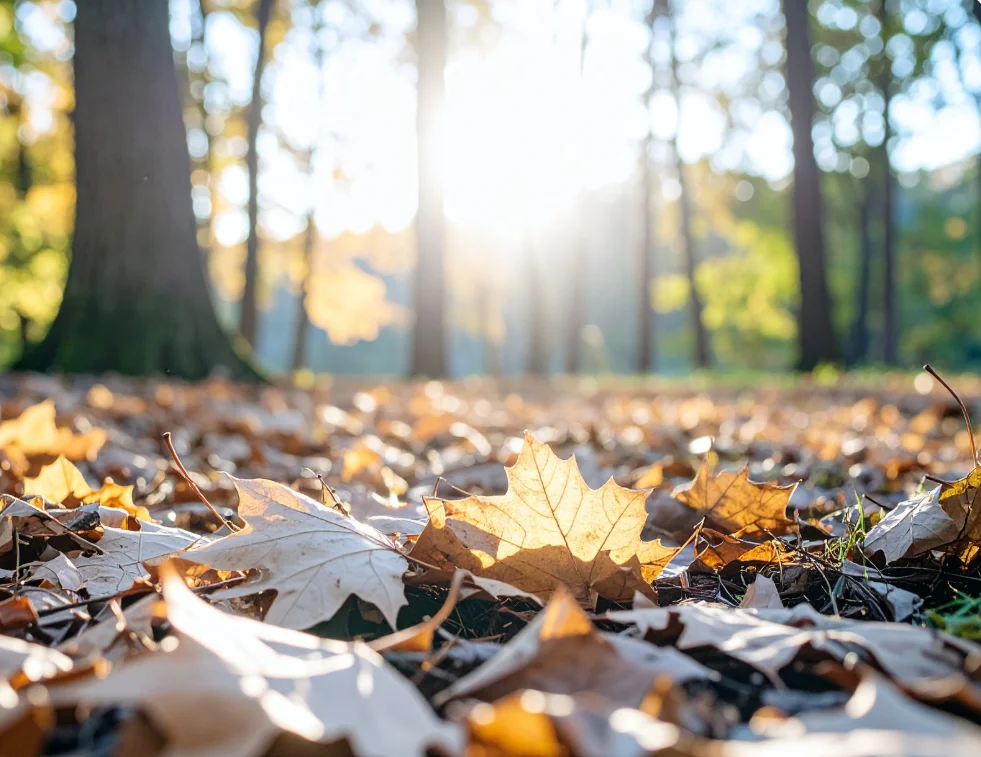
I live on four acres of woods in Wayland, Michigan, and I walk those woods with my dogs. I want to be honest with you about what that looks like once the weather turns. I don’t walk my woods as much in the colder months. When there is snow on the ground, I don’t walk them at all. What I try to do is get out at least once a week with my dogs, on days when the ground is clear and it is not too cold.
That is the whole goal. Once a week, when the weather allows. It is a lot smaller than the routine many of us picture when we think about “staying active,” and that is okay.
I think a lot of us carry the idea that a habit only counts if we keep it up every day, all year long, no matter what. When winter comes and the routine shrinks, we feel like we have failed. I don’t see it that way. Below, I share why a smaller goal still counts, plus practical tips for cold-weather walks: layers, footing, caring for your dogs, and why anyone walking near Michigan woods in November should wear blaze orange.
In This Article
- What My Cold-Weather Walks Look Like
- You Do Not Have to Keep a Summer Routine All Year
- How to Dress in Layers for a Cold Walk
- Wet Leaves, Mud, and Footing in the Woods
- Shorter Days, Wind, and Knowing When to Stay In
- Caring for Your Dogs on Cold-Weather Walks
- Michigan Deer Season: Wear Blaze Orange In or Near the Woods
- Making a Once-a-Week Walk Feel Good
Key Takeaways
- You do not have to keep your summer walking routine all year. A smaller, realistic goal, like once a week when the weather allows, still counts.
- Federal activity guidelines say any amount of physical activity has some health benefits.
- Dress in layers you can take off and put back on, and skip cotton, since it stays wet.
- Wet leaves, mud, and uneven ground call for nonskid, waterproof footwear and a slower pace.
- Dogs need cold-weather care too: wash and dry their paws after walks, and consider a coat for short-haired dogs.
- Michigan’s regular firearm deer season runs November 15 to 30, 2026. The DNR encourages nonhunters near woods or fields to wear bright colors, especially hunter orange.
What My Cold-Weather Walks Look Like
My cold-weather walking comes down to three simple guidelines. None of them are fancy. They are simply what works for me.
1. I walk less once it turns cold
I don’t walk my woods as much in the colder months, and I am not going to pretend otherwise.
2. I don’t walk when there is snow on the ground
Snow on the ground means I stay in. That is my line, and it is a clear one. A clear rule takes the daily decision away.
3. I aim for once a week with my dogs
When the ground is clear and it is not too cold, I try to get out at least once a week with my dogs.
Your own guidelines may look very different from mine. Maybe you walk a neighborhood loop or a park path. Maybe you love winter and walk more once the air turns crisp. The point is to pick a goal that fits the season you are in, instead of the season you wish you were in.
You Do Not Have to Keep a Summer Routine All Year
Many of us feel a little guilty when our routines shrink in the colder months. The long, easy walks of summer get shorter, then less frequent, and then we start telling ourselves we have “fallen off.” I would gently invite you to let go of that thought.
The light changes with the seasons, and our energy can change too. I wake up tired every day, so goals that fit an ordinary day, not just my best one, matter to me. A goal that bends with the season is not a weaker goal. It is a more honest one.
The research supports a kinder approach. According to the U.S. Office of Disease Prevention and Health Promotion, any amount of physical activity has some health benefits, and physical activity has immediate health benefits too. The same guidelines say that adults get the most health benefits from at least 150 to 300 minutes a week of moderate-intensity activity, such as brisk walking.
One walk a week, on its own, may not add up to 150 minutes. That is okay. Walking outside is only one way to move, and short bursts of movement indoors count too. If you spend long hours at a desk, these five-minute movement breaks are an easy place to start.
I work from home and spend most of my day at the computer, often on calls, so I know how easy it is for a gray week to go by without much movement at all. One small thing that helps me during the workday is taking a one- or two-minute deep breathing break. It is not exercise, but it is a small pause in a long day.
Yoga has also been part of my life for about seventeen years. If you would like a gentle indoor practice for cold evenings, my list of restorative yoga poses for long desk days is a calm way to stretch without going outside.
A small goal you keep is kinder, and more useful, than a big goal that leaves you feeling like you failed.
How to Dress in Layers for a Cold Walk
Harvard Health explains that a key to staying warm on a cold walk is staying dry, and layering is what helps you do that. When you take off a layer as you warm up, you avoid heavy sweating, which can leave you chilled later in your walk. Then you can put the layer back on as you cool down.
Harvard Health describes a simple three-layer system:
- First layer (next to your skin): a light synthetic fabric, such as polypropylene, that pulls sweat away from your skin and dries quickly.
- Second layer (insulation): a fleece, sweater, or sweatshirt made of a synthetic fabric or a wool blend. Avoid cotton, because it stays wet.
- Third layer (protection): a breathable jacket and pants that block wind, rain, or snow. Vents you can open and close help you stay comfortable.
Harvard Health also suggests dressing for a temperature about 10 degrees higher than the forecast, since you warm up as you move. And don’t forget to cover your ears, hands, and head.
Cleveland Clinic shares similar advice. In its guide to staying active outside when the weather gets colder, an orthopedic surgeon explains that the outer layer can trap sweat during exercise. Unless it is raining, snowing, or very windy, you may want to take that layer off while you move and put it back on when you stop to rest.
The National Institute on Aging adds a helpful detail: wear warm, loose layers, because the air between the layers helps keep you warm. It also suggests a waterproof coat when it is snowy or rainy, and changing out of damp or wet clothes as soon as you can once you are back inside.
Wet Leaves, Mud, and Footing in the Woods
Fallen leaves can hide roots, rocks, and dips in the ground. When those leaves get wet, they can be slick. Add mud after a rain, and a familiar path can feel very different from the way it felt in July.
The National Institute on Aging lists falls on wintry surfaces among the hazards of cold weather. Its advice includes wearing nonskid, rubber-soled, low-heeled footwear and using railings on icy stairs and walkways. If the weather is bad, it suggests staying inside when you can.
Cleveland Clinic points out that uneven surfaces can cause injuries if you are not paying attention, and it recommends waterproof shoes for winter hiking, so your socks stay dry.
A few gentle ideas for safer footing on a fall or early winter walk:
- Slow your pace. Watch where you step, especially on slopes and around fallen branches.
- Choose shoes with good grip. Nonskid, rubber-soled, waterproof footwear helps on wet leaves and mud.
- Be mindful of a pulling dog. On slick ground, a sudden tug on the leash can pull you off balance. A shorter leash on tricky stretches can help.
- Turn back if the ground gets tricky. If a stretch is icy or very muddy, it is okay to head home early.
Shorter Days, Wind, and Knowing When to Stay In
By November, the days are much shorter than they were in summer. If you walk after work, you may find the light is already fading. Try planning your weekly walk for the middle of the day, or on a weekend.
Weather matters as much as daylight. The National Institute on Aging suggests checking the forecast for windy and cold days, since heavy wind can lower your body temperature quickly. On windy, cold, or damp days, it recommends not staying outside for long. It also suggests letting others know when you plan to spend time outdoors and carrying a fully charged phone.
It is worth knowing the signs of hypothermia too. According to the National Institute on Aging, hypothermia happens when the body’s core temperature drops below 95°F. It can even happen at cool temperatures above 40°F if you get chilled from rain or sweat. Early warning signs include:
- Cold feet and hands
- A puffy or swollen face
- Pale skin
- Shivering or shaking
- Slowed or slurred speech
- Feeling sleepy, angry, or confused
Hypothermia is a medical emergency. If someone shows signs of it, the National Institute on Aging advises calling 911 right away.
This is where having your own clear rule helps. Whether your line is snow, a certain temperature, or strong wind, deciding ahead of time makes the choice easier. Staying in on a bad-weather day is good judgment.
Caring for Your Dogs on Cold-Weather Walks
When I do get out for my once-a-week walk, my dogs come with me. If you walk with dogs too, the cold affects them as well. The ASPCA’s cold weather safety tips are a helpful checklist. Here are the points that matter most for walks:
Protect and check their paws
The ASPCA suggests massaging petroleum jelly or another vet-approved paw protectant into paw pads before going outside, to help protect them from salt and chemicals. Booties give even more coverage. After each walk, wash and dry your dog’s feet and stomach to remove ice, salt, and chemicals, and check for cracks in the paw pads or redness between the toes. Remove any snowballs that collect between the toes.
Wipe off road salt and de-icers
If your walk takes you along a road, sidewalk, or driveway that has been treated, those ice melts and de-icing chemicals can cling to your dog’s feet and fur. The ASPCA notes that cold-weather chemicals like ice melts can be dangerous if swallowed, so wiping your dog down when you get home helps keep them from licking it off. At your own home, the ASPCA recommends pet-friendly ice melts whenever possible.
Help short-haired dogs stay warm
If your dog has a short coat, the ASPCA suggests a coat or sweater with a high collar or turtleneck that covers them from the base of the tail to the belly. For long-haired dogs, it advises against shaving down to the skin in winter, since a longer coat provides more warmth.
Keep them on a leash on snow and ice
The ASPCA advises never letting your dog off leash on snow or ice, especially during a snowstorm, because dogs can lose their scent in the snow and become lost. It notes that more dogs are lost during the winter than during any other season, so make sure your dog always wears an ID tag.
Antifreeze is lethal for dogs and cats, so clean up any spills thoroughly. If you think your pet has swallowed antifreeze or another possible toxin, the ASPCA says to contact your veterinarian or ASPCA Poison Control at (888) 426-4435 right away.
Michigan Deer Season: Wear Blaze Orange In or Near the Woods
If you walk in or near Michigan woods this fall, knowing the deer season dates helps you plan your walks safely.
According to the Michigan DNR’s hunting season calendar, the 2026 deer seasons include:
- Regular firearm: November 15 to 30, 2026
- Archery: October 1 to November 14, 2026, and December 1, 2026, to January 1, 2027
- December firearm: December 4 to 6, 2026 (Lower Peninsula deer management units)
- Late antlerless firearm: December 7, 2026, to January 1, 2027
Some of these dates are new this year. In May, the Natural Resources Commission approved deer regulation changes for 2026 and 2027, including shortening the statewide muzzleloader season from 10 days to three. In the Lower Peninsula, it is now called the December Firearm Deer Season, and any legal firearm may be used. The late antlerless season also now starts earlier, on the Monday after the December firearm season.
Hunters are required to wear hunter orange during the firearm season. In its firearm deer season safety reminders, the DNR also encourages all hunters and nonhunters to wear bright colors, especially hunter orange, when spending time near woods or fields where hunting may occur.
Here are a few simple ways to follow that advice:
- Wear blaze orange on your upper body and head. An orange hat and vest are easy to pull on over your other layers.
- Put something orange on your dog. A bright vest or bandana makes your dog easier to see, too.
- Keep wearing it through the later firearm dates. With firearm dates running into January in the Lower Peninsula, it makes sense to keep the orange on through those dates too.
- Check the dates each year. Season dates can change, as they did for 2026, so look at the DNR’s calendar before the season starts.
None of this is meant to scare you away from the woods. It is just one more part of being prepared.
Making a Once-a-Week Walk Feel Good
If you are setting a smaller cold-weather goal for yourself, here are a few ideas to help that one walk feel good instead of like a chore.
Give yourself a loose window, not a fixed day
Instead of “every Saturday at 10,” try “once this week, on a good-weather day.” A loose window lets you wait for the better day.
Let it be as short as you need
A once-a-week walk does not need to be long to be worth it. Remember: any amount of activity has some benefit.
Make it a mindful walk
You can turn a short walk into a calm, present-moment practice. Notice the feel of the cold air, the sound of your steps, and the way your dog explores. My guide to walking meditation explains how to start. If you want to slow down even more, the ideas in our forest bathing guide work well in late fall woods too.
Plan for the warm-up afterward
In fall and winter, I turn on the fireplace in the morning, and a warm home is a nice thing to come back to after time in the cold. Change out of anything damp and towel dry your dog. If cold weather leaves your skin feeling dry, you might find ideas in my winter dry skin routine.
Be kind to yourself on the weeks it does not happen
Some weeks the weather will not cooperate. Snow will come, or the wind will be bitter, or the week will be too full. That is fine. Next week is another chance.
I hope this gives you permission to let your walking routine change with the seasons. A smaller, realistic goal that you can meet is something to feel good about. For me, that is at least once a week with my dogs, when the ground is clear and it is not too cold. I would love for you to find the version that fits your life, your weather, and your season.
Sources
- Top 10 Things to Know About the Second Edition of the Physical Activity Guidelines for Americans, U.S. Office of Disease Prevention and Health Promotion.
- No excuses: How to layer up for walking in cold weather, Harvard Health Publishing.
- How to Stay Active Outside When the Weather Gets Colder, Cleveland Clinic.
- Cold Weather Safety for Older Adults, National Institute on Aging.
- Cold Weather Safety Tips, ASPCA.
- Hunting Season Calendar, Michigan Department of Natural Resources.
- Natural Resources Commission approves deer regulation changes for 2026 and 2027, Michigan Department of Natural Resources.
- Firearm deer hunting season begins Saturday, Michigan Department of Natural Resources (November 12, 2025).
Free 10-Minute Forest Bathing Meditation
Subscribe to Peacefully Proven and receive a free guided meditation to restore calm and clarity, delivered straight to your inbox.




Join the conversation and add your thoughts.