
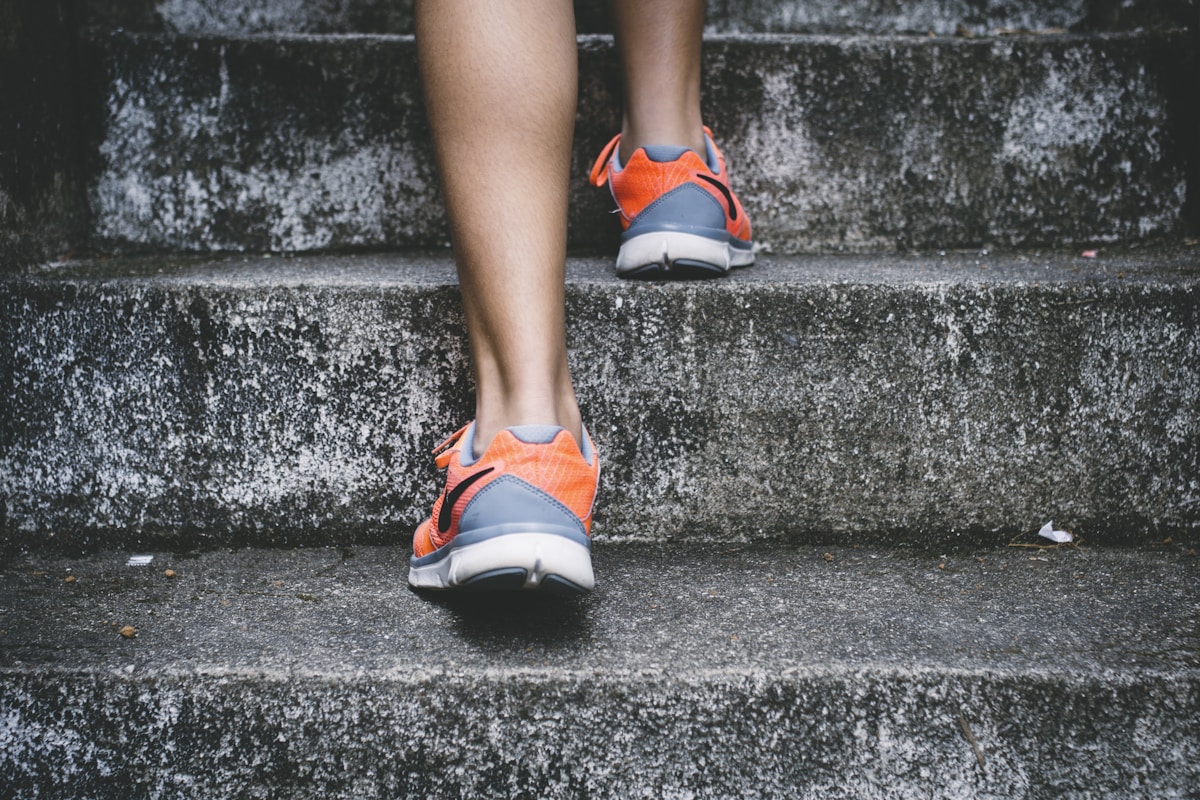
You already walk. Maybe you walk to the mailbox, around the block after dinner, through the parking lot to your office, or along a trail on weekend mornings. What if those steps you’re already taking could become one of the most powerful mindfulness practices available to you — without adding a single minute to your day?
Walking meditation is exactly what it sounds like: bringing mindful awareness to the simple, familiar act of walking. But don’t let the simplicity fool you. This ancient practice, rooted in Buddhist tradition and now embraced by modern psychology, can reduce anxiety, improve mood, sharpen focus, and help you feel more connected to your body and the world around you.
The best part? You don’t need a cushion, a quiet room, or the ability to sit still. You just need your feet and a willingness to pay attention.
In This Article
- What Is Walking Meditation?
- The Science Behind Walking Meditation
- 8 Benefits of Walking Meditation
- How to Practice Walking Meditation: A Complete Guide
- 5 Walking Meditation Techniques to Try
- How to Turn Any Walk Into a Mindfulness Practice
- Common Challenges and How to Work with Them
- Building a Sustainable Walking Meditation Practice
Key Takeaways
- Walking meditation combines the physical benefits of walking with the mental benefits of mindfulness
- Research shows it can significantly reduce anxiety, improve mood, and lower stress hormones
- You can practice anywhere — no special equipment, location, or experience needed
- Even 10 minutes of mindful walking can shift your nervous system toward calm
- Multiple techniques exist, so you can find the approach that feels most natural to you
What Is Walking Meditation?
At its core, walking meditation is the practice of bringing deliberate, focused awareness to the experience of walking. Instead of walking on autopilot while your mind churns through your to-do list, replays yesterday’s conversation, or worries about tomorrow’s meeting, you intentionally direct your attention to what’s happening right now: the sensation of your feet touching the ground, the rhythm of your steps, the feeling of air against your skin.
According to the Cleveland Clinic, walking meditation is a mindfulness practice that can be done at any pace, in any setting, and for any duration. It combines the well-established physical benefits of walking with the mental health benefits of meditation, creating a practice that nourishes body and mind simultaneously.
Walking meditation has deep roots in contemplative traditions. In Buddhist practice, it’s known as kinhin and has been practiced for over 2,500 years as a complement to seated meditation. Monks would walk slowly and deliberately between sitting sessions, using the movement as an opportunity to maintain meditative awareness while giving the body relief from prolonged sitting.
Today, walking meditation has been adapted and studied by researchers and clinicians who recognize its remarkable accessibility. Unlike seated meditation, which can feel challenging for people who struggle with stillness, walking meditation works with the body’s natural inclination toward movement. This makes it particularly appealing for beginners, people with restless minds, those recovering from injury who need gentle movement, and anyone who simply prefers to meditate with their eyes open and their body in motion.
The Science Behind Walking Meditation
Walking meditation isn’t just a feel-good practice — there’s solid research supporting its benefits. When you walk mindfully, you’re essentially combining two well-studied interventions: physical activity and mindfulness meditation. The synergy between them appears to create effects that are greater than either practice alone.
A study highlighted by Psychology Today found that combining meditation with walking produced significant reductions in anxiety among participants. The researchers noted that the walking meditation group showed improvements that exceeded what you’d expect from walking or meditating separately, suggesting that the combination creates a unique therapeutic effect.
From a neuroscience perspective, walking meditation activates several beneficial processes simultaneously. The rhythmic, repetitive nature of walking helps regulate the nervous system, promoting a shift from the stress-driven sympathetic response to the calmer parasympathetic state. Meanwhile, the mindful attention component engages the prefrontal cortex — the brain region associated with executive function, emotional regulation, and self-awareness.
As Healthline explains, walking meditation has been shown to improve blood sugar levels, reduce symptoms of depression, enhance cardiovascular fitness, and improve overall quality of life. The practice appears to offer particular benefits for people who find it difficult to sit still for extended periods, providing an active alternative to traditional meditation without sacrificing the mental health benefits.
There’s also evidence that walking in natural environments amplifies the benefits. The combination of mindful movement and exposure to green spaces or natural settings creates a particularly potent stress-relief experience, engaging the senses in ways that indoor or urban walking cannot fully replicate.
8 Benefits of Walking Meditation
1. Reduced Anxiety and Stress
Walking meditation directly addresses anxiety by activating the body’s relaxation response while simultaneously providing a physical outlet for stress energy. The focused attention on present-moment sensations helps break the cycle of anxious rumination that fuels so much of our daily stress. Many practitioners notice a significant shift in their stress levels within just a few minutes of mindful walking.
2. Improved Mood
The combination of movement and mindfulness triggers the release of endorphins and serotonin while reducing cortisol. This neurochemical shift can lift mood in the short term and, with regular practice, contribute to more stable emotional wellbeing over time. Some people find walking meditation more effective for mood management than seated meditation alone.
3. Better Body Awareness
Many of us live “from the neck up,” so disconnected from our physical bodies that we don’t notice tension, discomfort, or fatigue until it becomes severe. Walking meditation rebuilds the connection between mind and body, helping you develop a more sensitive and responsive relationship with your physical self.
4. Enhanced Focus and Concentration
Training your mind to stay present during walking strengthens the same mental muscles you use for focused work, creative projects, and attentive conversation. Regular practice can improve your ability to concentrate in all areas of life, not just during meditation.
5. Improved Digestion
Gentle walking after meals has long been known to support digestion, and adding a mindful component can enhance this effect. The parasympathetic activation that comes with mindfulness supports the digestive process, while the walking itself promotes healthy gut motility.
6. Better Sleep
Regular walking meditation, particularly when practiced in the late afternoon or early evening, can help prepare your body and mind for restful sleep. The practice helps discharge the day’s accumulated tension and quiet the mental chatter that often interferes with falling asleep.
7. Greater Connection to Nature
When practiced outdoors, walking meditation naturally deepens your relationship with the natural world. You begin to notice the texture of bark on trees, the pattern of clouds, the sound of birds, and the feeling of earth beneath your feet in ways that a hurried walk never allows. This connection to nature carries its own set of well-documented wellness benefits.
8. Accessibility for All Fitness Levels
Walking meditation can be adapted to virtually any physical ability. Whether you walk briskly or barely move, use a wheelchair or a walker, practice indoors or outside, the mindfulness component remains equally effective. This makes it one of the most inclusive wellness practices available.
How to Practice Walking Meditation: A Complete Guide
According to Verywell Mind, walking meditation can be practiced in many different ways, but the fundamental approach involves bringing sustained, gentle attention to the physical experience of walking. Here’s a detailed guide to get you started.
Basic Walking Meditation Practice (10-20 Minutes)
- Choose a path of about 10 to 30 paces in length (or any comfortable walking route)
- Stand still for a moment. Feel your feet on the ground. Take two or three deep breaths.
- Begin walking slowly, directing your attention to the sensations in your feet and legs
- Notice the lifting, moving, and placing of each foot
- When your mind wanders, gently return your attention to the act of walking
- At the end of your path, pause, turn mindfully, and walk back
- Continue for your chosen duration
Finding your pace. There’s no single “correct” speed for walking meditation. Some traditions emphasize extremely slow walking, where a single step might take several seconds. Others use a natural or even brisk pace. For beginners, starting with a pace that’s slightly slower than your normal walk often works well. It should be slow enough that you can genuinely pay attention to each step, but not so slow that you feel uncomfortable or unbalanced.
Where to direct your attention. Your primary anchor of attention is the physical sensation of walking. This includes the feeling of your foot lifting off the ground, the movement of your leg through the air, the moment your foot makes contact with the earth again, and the shift of weight from one foot to the other. You might also bring awareness to your breath, the position of your arms, or the feeling of your whole body moving through space.
Working with your hands. You can hold your hands in whatever position feels natural and comfortable. Some practitioners clasp their hands behind their back, others hold them gently in front, and some let them swing naturally at their sides. The only guideline is to choose a position that doesn’t distract you from the walking itself.
Dealing with wandering thoughts. Your mind will wander. This isn’t a problem — it’s actually the core of the practice. Each time you notice your mind has drifted away from the sensations of walking and gently bring it back, you’re strengthening your capacity for present-moment awareness. Think of each return to attention as a mindfulness repetition, like a bicep curl for your brain.
5 Walking Meditation Techniques to Try
1. Sensory Awareness Walk
As you walk, cycle through your senses one at a time. Spend two minutes focusing exclusively on what you see. Then shift to what you hear. Then what you feel on your skin. Then any scents in the air. This technique is particularly effective outdoors and can help break the grip of repetitive thinking by anchoring you firmly in sensory experience.
2. Counting Steps Meditation
Coordinate your steps with your breath and a simple counting pattern. For example, breathe in for four steps, breathe out for four steps, and count each cycle. When you reach ten cycles, start over. The counting gives your mind a gentle task, which can be helpful if you find pure sensation-based awareness difficult to maintain.
3. Gratitude Walk
With each step, silently note something you’re grateful for. This can be as simple as the ground supporting you, the air filling your lungs, or the ability to move your body. The combination of walking, mindfulness, and gratitude creates a particularly uplifting practice that can shift your emotional state remarkably quickly.
4. Body Scan Walk
As you walk, slowly move your attention upward through your body. Begin with the soles of your feet and gradually notice your ankles, calves, knees, thighs, hips, abdomen, chest, shoulders, arms, neck, and the crown of your head. This technique combines the benefits of a traditional body scan meditation with the grounding effect of walking.
5. Loving-Kindness Walk
With each step, silently repeat phrases of goodwill directed toward yourself and others. Traditional phrases include “May I be happy. May I be healthy. May I be safe. May I live with ease.” As you continue walking, extend these wishes to people you love, to acquaintances, and eventually to all living beings. This practice combines the physical benefits of walking meditation with the emotional benefits of compassion practices.
How to Turn Any Walk Into a Mindfulness Practice
You don’t need a dedicated meditation session to bring mindfulness into your walking. As Mindful.org suggests, any walk can become a mindfulness practice with a few simple adjustments.
Your morning commute. Whether you walk to work, from your car to the office, or just from your bedroom to the kitchen, use these moments to practice. Leave your phone in your pocket, feel your feet on the ground, and notice the transition from one environment to another.
Walking the dog. Instead of scrolling your phone while your dog explores, use this time as a shared mindfulness practice. Notice where your dog directs its attention. Feel the leash in your hand. Observe the way the light falls on the sidewalk. Your dog is already practicing present-moment awareness — let it be your teacher.
Grocery store aisles. The slow pace of navigating a store is actually perfect for walking meditation. Feel the cart under your hands, notice the colors on the shelves, and bring your attention to the sensation of walking rather than rushing to complete your list.
After-dinner walks. A post-meal walk is already a healthy habit. Transform it into a mindfulness practice by setting an intention before you begin: “For the next 15 minutes, I’m going to walk with full awareness.” Even if your mind wanders frequently (it will), the intention itself creates a fundamentally different quality of experience.
Walking between meetings. If you work in an office, the walk from one meeting room to another is a perfect micro-meditation. Even 30 seconds of mindful walking can help you arrive at your next commitment more present, more grounded, and more able to give your full attention.
Remember: the goal isn’t to walk perfectly or to maintain unbroken awareness for an entire walk. The practice is in the returning — noticing when your mind has wandered and gently bringing it back to the present moment. Every return is a small victory.
Common Challenges and How to Work with Them
Feeling self-conscious
If you’re practicing slow walking meditation in a public space, you might worry about looking strange. There are two solutions: find a private space (a backyard, a quiet hallway, or an empty path), or practice at a natural pace so that nothing about your walking looks unusual. Remember, mindful walking at a normal speed is invisible to anyone watching.
Getting bored
If focusing on the sensation of walking feels monotonous, experiment with different techniques. Try the sensory awareness walk one day, the gratitude walk the next, and the counting technique the day after. Variety keeps the practice fresh while still building your mindfulness capacity.
Mind won’t stop racing
This is perhaps the most universal challenge, and it’s worth reframing. A racing mind isn’t a sign that you’re doing something wrong — it’s exactly why you’re practicing. Each time you notice your mind has raced away and you bring it back to walking, you’re building the neural pathways for better attention. Some days will feel scattered. Others will feel easeful. Both kinds of sessions are valuable.
Physical discomfort
If slow walking causes knee or hip discomfort, speed up to a more natural pace. Walking meditation works at any speed. If standing and walking are painful, consider adapting the practice to wheelchair use or even seated movement. The mindfulness is what matters, not the specific form of movement.
Forgetting to practice
The best way to build a walking meditation habit is to anchor it to something you already do. Walk to the mailbox mindfully. Take the first two minutes of your lunch break walk as meditation time. Choose one daily walk — any walk — and make it your meditation walk. Consistency matters more than duration.
Building a Sustainable Walking Meditation Practice
Like any worthwhile habit, walking meditation is most beneficial when practiced regularly. Here are some strategies for making it stick:
Start absurdly small. Commit to just one minute of mindful walking per day. That’s roughly 60 steps. Almost anyone can do one minute, and that tiny commitment often naturally expands once you experience how good it feels.
Stack it onto an existing habit. Attach your walking meditation to something you already do daily. Every time you walk from your car to the store, the first 30 seconds become your practice. Every time you take the dog out, the walk to the end of the driveway is mindful. No extra time required.
Use reminders. Place a note by your door, set a gentle alarm on your phone, or put a small stone in your pocket that you’ll feel each time you reach in — a tactile reminder to bring awareness to your walking.
Track your practice. Keep a simple log of your walking meditation sessions. Note the date, duration, technique used, and a one-sentence reflection on how it felt. This creates accountability and allows you to see your practice develop over time.
Be patient with yourself. Some days your walking meditation will feel deeply peaceful and connected. Other days it will feel like you spent the entire time lost in thought. Both experiences are part of the practice. The practitioners who benefit most are not those who meditate perfectly — they’re the ones who keep showing up.
Walking meditation is one of those rare practices that asks almost nothing of you and yet offers so much in return. You don’t need to buy anything, go anywhere special, or carve out a significant chunk of time. You just need to walk — something you’re already doing — and pay attention while you do it.
Every step is an invitation to arrive in the present moment. Every walk is an opportunity to practice the art of being here, now, fully alive. And the path is always right beneath your feet.
The Free Subscriber’s Library Is Open
Join Peacefully Proven for a growing collection of free wellness tools, guides, and printables, plus a guided forest bathing meditation to begin. All yours, always free.





Join the conversation and add your thoughts.