
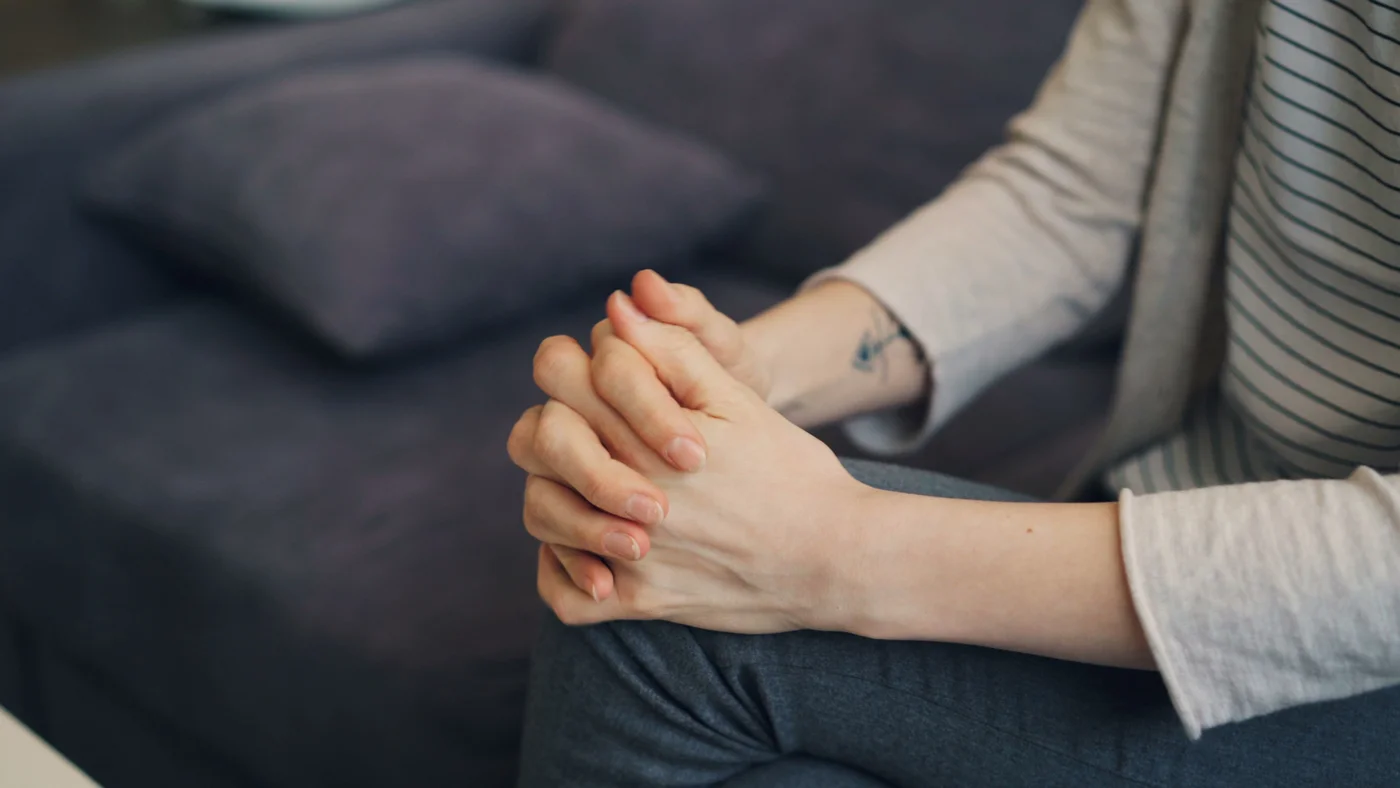
My joint pain came second. The brain fog came first, starting when I was 38, and it was so bad that I counted on my fingers to add single digits and feared I was developing early dementia. Then the pain moved into my joints. My hands, my elbows, and my feet all hurt, and it was severe. I assumed it was arthritis. It did not occur to me that it could be connected to my hormones.
It took me about 15 years from my first symptom to understand what was going on in my body. Looking back, I wish someone had told me that menopause can show up in your joints. So I want to tell you. If your hands, elbows, or feet have started to ache in your 40s or 50s, it may be worth asking whether hormones are part of the picture. And it is always worth ruling out arthritis with your doctor.
Here is what helped me: hormone therapy, anti-inflammatory food, and supplements, working together. I want to be honest that no single thing fixed it on its own, and I cannot point to one supplement as the answer. But together, they made a real difference, and I hope my story helps you have a better conversation with your own doctor.
In This Article
Key Takeaways
- Joint pain is a common and often overlooked menopause symptom. A Menopause Society education feature reports that 70 percent of women report musculoskeletal symptoms during menopause.
- Estrogen receptors are found in bone, cartilage, the lining of the joints, muscles, and tendons, so falling estrogen can affect all of them.
- See your doctor to rule out arthritis and other causes, especially if a joint is red, warm, or swollen, or if symptoms last three days or more.
- For me, hormone therapy, anti-inflammatory food, and supplements all helped. Research on hormone therapy for joint pain is encouraging but still limited.
- If your doctor will not discuss hormone therapy and you have no reason you cannot take it, it is okay to find another doctor.
What Happened to My Joints
The pain was in my hands, my elbows, and my feet. It was severe. I spend most of my day at a computer running my consulting business, so my hands matter to my work.
Because I did not know that menopause could affect joints, my first thought was arthritis. That is a very reasonable thought, and I still think it was right to take it seriously. What I did not know then is that joint pain and stiffness are a well-documented part of the menopause transition. My brain fog had already taught me that menopause symptoms can look like something else entirely. I wrote about that in I Thought It Was Early Dementia. It Was Perimenopause. Joint pain turned out to be another symptom that is easy to mislabel.
Why Menopause Can Affect Your Joints
Estrogen does much more than most of us were ever taught. According to Joint pain and menopause, an education feature by rheumatologist Rebecca L. Manno in Menopause, the journal of the Menopause Society, estrogen receptors are present in bone, in the cartilage that cushions your joints, in the membranes that line your joints, and in muscles and tendons. When estrogen falls, all of those tissues can be affected.
Here is what the research shows about how common this is:
- It is very common. The Menopause feature reports that 70 percent of women report musculoskeletal symptoms during menopause.
- It rises during perimenopause. A systematic review and meta-analysis in Neural Plasticity, Musculoskeletal Pain during the Menopausal Transition, estimated that 71 percent of perimenopausal women had musculoskeletal pain. Perimenopausal women had higher odds of this pain than premenopausal women, and the odds of moderate to severe pain increased from premenopause to perimenopause to postmenopause.
- It seems tied to menopause, not only to age. Manno describes a study of women aged 45 to 55 that found joint pain and stiffness were significantly more likely after menopause than before, with no link to age itself.
- Low estrogen and joint pain show up together in other settings too. Up to 40 percent of patients treated with aromatase inhibitors, drugs that sharply lower estrogen during breast cancer treatment, report joint and muscle pain.
Manno also describes what menopause-related joint pain tends to look like. It usually involves several joints rather than just one. Women describe pain and stiffness in multiple joints without obvious swelling. In general, it does not destroy the joint the way some forms of arthritis do, but it can still be very disabling. There is also no single blood test that confirms it, which is part of why it gets missed.
Joint pain from low estrogen is common and often overlooked. You are not imagining it, and you deserve to have it taken seriously.
Rule Out Arthritis: When to See Your Doctor
Even though menopause can cause joint pain, please do not assume that is the whole story. Manno is clear that other possible causes should be ruled out first, and any treatable condition addressed. That was my first instinct too, and I still think it is the right one.
Signs it is time to make an appointment
The Arthritis Foundation’s guide, When It’s Time to See a Doctor for Joint Pain, suggests seeing a doctor if you have:
- Joint symptoms that last three days or more
- Several episodes of joint symptoms within a month
- Pain, swelling, or stiffness in one or more joints
- Joints that are red or warm to the touch
- Trouble moving a joint or doing daily activities
- Any joint symptoms that worry you
What your doctor may look for
The National Institute of Arthritis and Musculoskeletal and Skin Diseases lists pain, redness, heat, and swelling in the joints as common arthritis symptoms, and it notes that getting the right diagnosis matters because the type of arthritis guides the treatment. Osteoarthritis is the most common type, and rheumatoid arthritis is an autoimmune form in which the immune system attacks healthy joint tissue.
Manno’s feature adds some details that are especially helpful for women with sore hands:
- Rheumatoid arthritis affects 1 percent of the population, is more common in women, and most often starts between ages 30 and 60.
- Doctors are encouraged to consider rheumatoid arthritis when joint problems are specific to the hands or wrists.
- Blood tests for rheumatoid factor and anti-CCP antibodies can help tell rheumatoid arthritis apart from other causes of joint pain.
- Joint pain can also come from other causes, including low vitamin D, thyroid problems, some medications such as statins, viral infections, and overuse injuries.
Morning stiffness, swelling, and warmth in a joint point more toward inflammatory arthritis, so mention those if you have them. Bring a list of which joints hurt, when, and any other menopause symptoms you have noticed. Manno notes that joint pain from low estrogen often shows up alongside other menopause symptoms such as hot flashes, mood changes, and sleep problems.
What Hormone Therapy Did for Me
I am on hormone therapy, and I am a strong advocate for it. It was the biggest win of my entire menopause, mostly because it cleared my brain fog. It also helped my joint pain. I say “helped” on purpose. For me, hormone therapy was one part of what eased my joints, along with the way I eat and the supplements I take.
What the research says
The evidence here is promising but not complete, and I want to share it honestly. Manno writes that there are no large randomized controlled trials looking specifically at hormone therapy as a treatment for menopause joint pain. There is still useful data, though:
- In the Women’s Health Initiative, about 77 percent of women in the estrogen-alone group reported joint pain before they started treatment. Those who took hormone therapy had more relief than those on placebo, although the differences were modest.
- Hormone therapy also significantly reduced the number of new joint and muscle symptoms.
- When the combined hormone therapy part of the study ended and women stopped treatment, 36 percent of those who had been taking it reported pain and stiffness.
- A smaller randomized trial found that significantly fewer women taking combined hormone therapy reported joint and muscle pain than women taking a placebo.
Manno’s recommendation is to consider hormone therapy when it is clinically appropriate for women with joint pain in menopause, while more research is done on timing, duration, and dose. That matches my experience. Hormone therapy is not right for everyone, and it is a decision to make with your doctor. But it deserves a place in the conversation.
If you have been nervous about hormone therapy because of old warnings, I shared what changed when the FDA took the black box off menopause hormone therapy.
Anti-Inflammatory Food: The Other Big Piece
I have been vegan for about four years, organic for about nine, and I have treated food as medicine for about eight. When my joints hurt, anti-inflammatory eating was one of the things that helped. I start every day with a Kachava shake, and the rest of what I eat is organic and plant-based.
Harvard Health’s guide, Foods that fight inflammation, notes that chronic inflammation has been linked to many major diseases, including arthritis. It suggests eating more of these foods (I have listed the plant-based ones):
- Tomatoes
- Olive oil
- Green leafy vegetables, such as spinach, kale, and collards
- Nuts, such as almonds and walnuts
- Fruits, such as strawberries, blueberries, cherries, and oranges
It also suggests limiting refined carbohydrates such as white bread and pastries, fried foods, soda and other sugary drinks, red and processed meats, and margarine, shortening, and lard. The same guide points to the Mediterranean diet, which is high in fruits, vegetables, nuts, whole grains, and healthy oils, as a good anti-inflammatory pattern. A vegan version of that pattern is very doable.
Manno’s feature also recommends getting enough protein to protect muscle, which matters as estrogen falls. On a vegan diet, beans, lentils, tofu, tempeh, nuts, and seeds can all help you get there.
If you would like ideas, this list of anti-inflammatory foods for vegans in menopause is a good place to start.
A Careful Word About Supplements
Supplements were the third piece of what helped my joints. Every morning, I add a powder blend to my Kachava shake that includes ashwagandha, rose powder, ginkgo biloba, a mushroom blend, amla, and saw palmetto.
Here is the honest part. I cannot tell you that any one of those ingredients fixed my joint pain, and I would not want you to buy something because of my experience. My joints improved while I was using hormone therapy, eating an anti-inflammatory diet, and taking supplements all at the same time. I have no way to separate out which piece did what.
If you are thinking about adding supplements, please talk with your doctor or pharmacist first. Some supplements can interact with medications, and what works for one woman may not suit another.
Movement and Strength
Food and hormones are not the only tools. Manno recommends that all women in menopause, and especially women with joint pain, be counseled on exercise, specifically resistance exercise. Low-impact strength training can protect your joints while you build muscle, and it also supports bone health. If you are new to strength training, she notes that a physical therapist can help you learn a safe, gradual home program.
The NIAMS guide Living With Arthritis offers similar advice for people with osteoarthritis: exercise to reduce joint pain and stiffness, and start any exercise program slowly after talking to your doctor.
I have practiced yoga for about seventeen years. If you are just starting, you do not need anything fancy. A few minutes of stretching, a walk, or a short strength routine can all be a kind place to start. Stop if anything hurts, and ask your doctor what is right for your joints.
What I Want You to Know
If your joints hurt and you are in your late 30s, 40s, or 50s, here is what I would tell you if we were sitting together:
- Your symptoms may have started earlier than you think. Menopause symptoms can start about ten years before menopause itself. Cleveland Clinic notes that perimenopause may begin as early as your mid-30s.
- Rule out arthritis and other causes first. Get checked, especially if a joint is swollen, red, or warm.
- Ask about hormone therapy. It made the biggest difference in my own menopause. Talk to your doctor about whether it is right for you.
- If your doctor will not discuss it, find another doctor. If you have no reason you cannot take hormone therapy and your doctor will not even talk about it, you are allowed to look for someone who will.
- Look at the whole picture. Food, movement, sleep, and stress all play a part. For me, hormone therapy, anti-inflammatory food, and supplements worked together.
- One thing will not work for everyone. Your path may look different from mine, and that is okay.
Most of all, you do not have to suffer. I spent years not knowing that my brain fog and my aching joints were connected to my hormones. I hope you get your answers much sooner than I did, and I hope you find the combination that helps you feel like yourself again.
Sources
- Joint pain and menopause, Menopause, the journal of the Menopause Society (Rebecca L. Manno).
- Musculoskeletal Pain during the Menopausal Transition: A Systematic Review and Meta-Analysis, Neural Plasticity.
- When It’s Time to See a Doctor for Joint Pain, Arthritis Foundation.
- Arthritis – Overview and Types, National Institute of Arthritis and Musculoskeletal and Skin Diseases.
- Living With Arthritis: Health Information Basics for You and Your Family, National Institute of Arthritis and Musculoskeletal and Skin Diseases.
- Foods that fight inflammation, Harvard Health Publishing.
- Perimenopause: Age, Stages, Signs, Symptoms & Treatment, Cleveland Clinic.
Free 10-Minute Forest Bathing Meditation
Subscribe to Peacefully Proven and receive a free guided meditation to restore calm and clarity, delivered straight to your inbox.




Join the conversation and add your thoughts.