
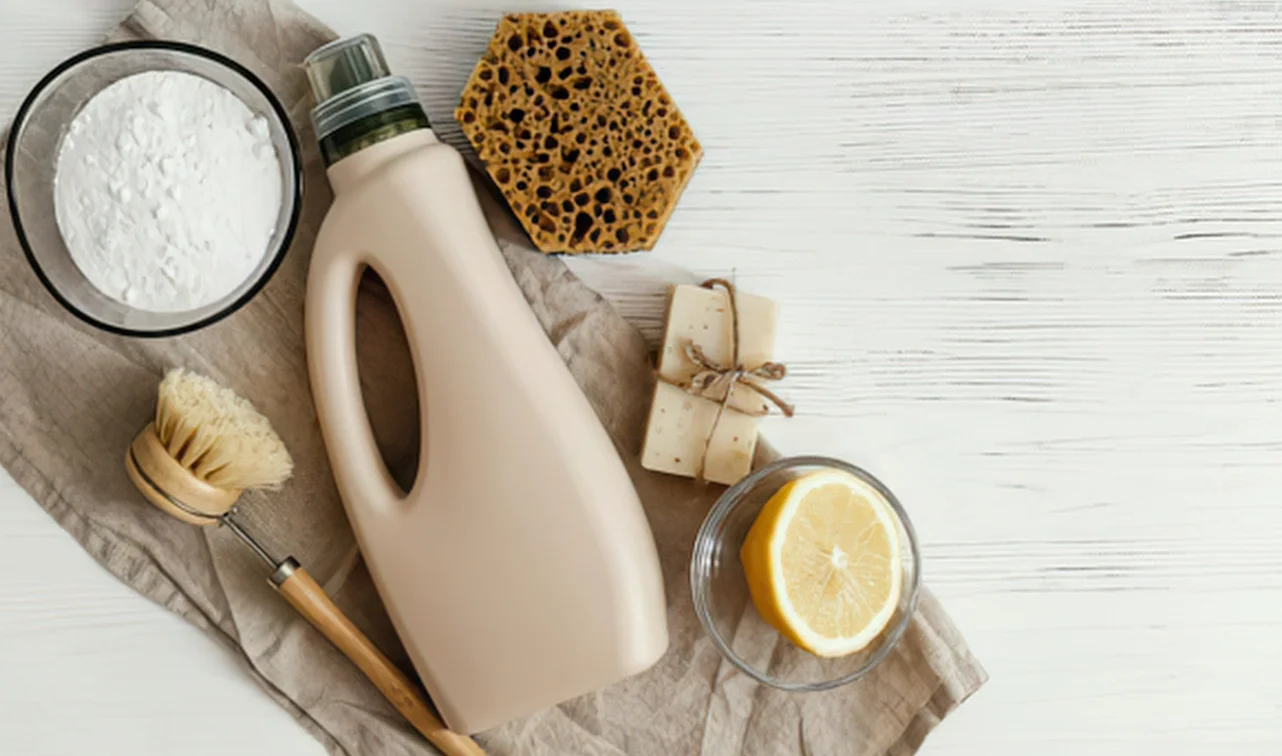
I live in a house on four acres of woods in Wayland, Michigan, and I share it with my dogs and cats. When animals live with you, they walk on your floors, nap on your furniture, and groom whatever ends up on their fur. That makes what you clean with feel a lot more personal. My cleaning kit is simple, and it starts with two products I rely on: Young Living Thieves Household Cleaner and Dr. Bronner’s soap.
Fall feels like a natural time to look at what is under the sink. As the weather cools, many of us spend more time indoors with the windows closed, and a gentler, simpler set of cleaners can make home feel calmer. In this article, I will share the two products in my own kit, along with some simple DIY options you may want to try, the safety rules every home needs, and a few simple tips for pet owners.
In This Article
Key Takeaways
- My kit starts with two products: Young Living Thieves Household Cleaner and Dr. Bronner’s soap. Follow each company’s dilution directions.
- Simple options like white vinegar and water, baking soda, and a good microfiber cloth can handle many everyday jobs.
- Never mix bleach with ammonia or vinegar, and never mix vinegar with hydrogen peroxide in the same container. These combinations can release harmful gases or form a corrosive acid.
- If you have pets, take a little care with scented cleaners: keep pets out of the room while you clean, let surfaces dry, and never spray a pet directly.
- The EPA Safer Choice label can help you find store-bought cleaners made with safer ingredients.
The Two Products in My Kit
Young Living Thieves Household Cleaner
Thieves Household Cleaner is a concentrated, plant-based cleaner from Young Living. The company describes it as powered by its Thieves essential oil blend, and that blend features clove, lemon, cinnamon bark, eucalyptus radiata, and rosemary essential oils. Keep that ingredient list in mind, because it matters for pet safety, which I cover below.
Because it is so concentrated, you always dilute it. In its post Make 29 DIY cleaners with just one bottle of Thieves Household Cleaner, Young Living shares these guidelines:
- It is safe to use at a 15:1 dilution or higher (15 parts water to 1 part cleaner) on most non-porous surfaces.
- One capful is about ½ tablespoon, so one capful in ½ cup of water makes a 15:1 mix.
- Most cleaning jobs use 30 parts water to 1 part cleaner.
- Mix only the amount you will use right away.
- Do a small spot test first, especially on wood, plastic, fabric, and granite, and do not use it on soft plastics or vinyl.
Dr. Bronner’s soap
Dr. Bronner’s soap is the other staple in my kit. If you use the liquid castile soap, the company’s Dilutions Cheat Sheet for Dr. Bronner’s Pure-Castile Magic Soap is a handy reference. A few of its suggestions:
- All-purpose spray: ¼ cup (60 mL) of soap in a quart (1 L) of water in a spray bottle.
- Floors: ½ cup (120 mL) of soap in 3 gallons (12 L) of hot water. Dip your mop and wring it out well.
- Hand-washing dishes: Pre-dilute 1 part soap with 10 parts water, then use it on a scrub brush.
- Fruit and vegetable rinse: A small dash, about ¼ teaspoon, in a bowl of water. Swish the produce, then rinse in clear water.
Dr. Bronner’s soap comes in several scents, and the company also sells an unscented version. If you live with cats, that may be worth considering for jobs where your pets will be close by, since scented soaps often use essential oils.
If you are just starting to swap out harsher products, you may also enjoy these non-toxic swaps for a vegan, pet-safe home.
Simple DIY Options to Consider
Beyond those two products, there are a few simple, inexpensive ingredients many people keep on hand for cleaning. You do not need all of them. Pick what fits the way you like to clean.
White vinegar and water
A mix of white vinegar and water is a popular, inexpensive cleaner for glass and many hard surfaces. The ASPCA notes that vinegar is acidic and can act as an irritant, and that swallowing concentrated or undiluted vinegar can cause vomiting, diarrhea, and mouth irritation in pets. So dilute it, keep the bottle put away, and let surfaces dry before pets walk on them. As with any cleaner, do a spot test first on stone or anything with a special finish.
Baking soda
Baking soda makes a gentle scrub for sinks, tubs, and stovetops. Sprinkle a little on a damp cloth or sponge, scrub, and rinse well. It is also a common way to freshen things like trash cans between cleanings.
Hydrogen peroxide
Some people use drugstore hydrogen peroxide for certain cleaning jobs. If you do, keep it in its own container and use it on its own. Never combine it with vinegar in the same bottle. I explain why in the next section.
Hot water and a good cloth
It is easy to forget that a lot of everyday cleaning needs very little product. Warm water, a microfiber cloth, and a little soap handle much of the dusting and wiping in most homes.
Safety First: What Never to Mix
Natural or not, cleaning products can react with each other. The Missouri Poison Center explains the combinations to avoid in Some Things Just Don’t Mix: Poison Center Tips for Chemicals:
- Bleach and ammonia: Mixing them creates chloramine gas.
- Bleach and vinegar (or other acidic cleaners): This releases chlorine gas.
- Vinegar and hydrogen peroxide: When they mix in the same container, they form peracetic acid, which is corrosive and can irritate the skin, eyes, and airways.
- Bleach and pet urine: Dog and cat urine contain ammonia, so bleach can release chloramine gas when used on pet messes. The poison center suggests choosing cleaners without bleach for litter boxes, pet stains, and pet play areas.
The same page gives two simple rules that I think every household should follow: never mix chemicals, and keep all cleaners in their original containers. It also notes that chloramine and chlorine gases cause watery eyes, a runny nose, and coughing. If you ever breathe in fumes from a mix-up, leave the area, get to fresh air, open a window if you can, and call Poison Control at 1-800-222-1222.
One product at a time, in its own bottle, with the window cracked. That simple habit prevents the most common cleaning mix-ups.
A Note for Pet Owners
If you have pets, a few simple habits help. The ASPCA’s guide Pet Poisons: Be Mindful of these Household Products and Cleaning Agents says most cleaning agents can be used safely in homes with pets as long as you follow the label directions. It also recommends keeping products up and out of paws’ reach and keeping your pet out of the area while you clean.
Many natural cleaners, Thieves included, get their scent from essential oils, and cats in particular can be more sensitive to essential oils than people are. So take a little extra care with scented products: never spray a pet directly, and do not let pets lick or drink a cleaner.
Simple pet-friendly cleaning habits
- Clean with pets in another room when you can.
- Let surfaces dry before pets come back.
- Rinse surfaces pets lick or eat from. For food and water bowls and feeding areas, rinse with plain water after cleaning.
- Put things away right after. The ASPCA recommends throwing out used cleaning solutions and storing mops and other tools where pets cannot reach them.
- Skip bleach on pet messes. As the Missouri Poison Center notes, bleach can react with the ammonia in pet urine.
- Follow label directions. More product does not mean cleaner.
- Ask your veterinarian if you have questions about a product, or if your pet ever licks or eats a cleaner.
Cleaning products are only one part of the air your pets breathe at home. If you would like more ideas, here are some ways to keep indoor air cleaner in a house full of pets.
Choosing Store-Bought Cleaners With EPA Safer Choice
You do not have to make everything yourself. When you shop for cleaners, the EPA Safer Choice program can help. The EPA says Safer Choice helps consumers find products that perform well and contain ingredients that are safer for human health and the environment. The label means a product has met the EPA’s standards for safer chemical ingredients.
The Safer Choice website has a searchable list of certified products sorted by category, including all-purpose cleaners, dish soaps, laundry products, floor cleaners, and tub and tile cleaners. It can be a helpful shortcut when a label says “natural” or “green” and you are not sure what that means. Even with a certified product, keep following the label directions and the pet safety habits above.
Laundry is another easy place to rethink what you use. If you are curious, this post on moving away from liquid laundry detergent is a good place to start.
A Gentle Fall Cleaning Checklist
Fall cleaning does not have to be a big project. Here are some ideas you can pick from, one small task at a time:
- Wash throw blankets, couch covers, and pet beds, following the care labels.
- Wipe down window sills and window tracks before the windows stay closed for the season.
- Dust air vents, ceiling fans, and baseboards.
- If you have a porch or deck, wipe down outdoor furniture and cushions before you store them or cover them.
- Wipe doorknobs, light switches, and cabinet handles.
- Clean out the refrigerator and wipe the shelves.
- Wash pet food and water bowls, toys, and leashes, and rinse bowls well.
- Check your cleaning cabinet. Toss anything expired or unlabeled, and make sure everything is stored safely.
Do what feels good and leave the rest. A clean home is supposed to help you feel calmer, not add pressure.
Storing Your Kit Safely
A few simple storage habits make a big difference, especially with curious animals in the house:
- Keep products in their original containers, as the Missouri Poison Center advises, so labels and directions stay with the product.
- Label your DIY bottles clearly with what is inside and the date you made it. Never put a cleaner in a food or drink container.
- Store everything up high or behind a closed door, out of paws’ reach, as the ASPCA recommends.
- Keep it small. A simple kit is easier to store safely than a crowded cabinet full of half-used bottles.
A nontoxic kit does not need to be fancy or complicated. For me, it starts with Thieves and Dr. Bronner’s. For you, it might be a Safer Choice product, a jar of baking soda, and a good cloth. Whatever you choose, use one product at a time, follow the label, and keep your pets safe. Your home will feel fresher for the season, and you can feel good about what you used to get it there.
Sources
- Make 29 DIY cleaners with just one bottle of Thieves Household Cleaner, Young Living.
- 3 Innovative Ways to Use Thieves Household Cleaner, Young Living.
- Our top essential oils to add to your collection, Young Living.
- Dilutions Cheat Sheet for Dr. Bronner’s Pure-Castile Magic Soap, Dr. Bronner’s.
- Some Things Just Don’t Mix: Poison Center Tips for Chemicals, Missouri Poison Center.
- Pet Poisons: Be Mindful of these Household Products and Cleaning Agents, ASPCA.
- Safer Choice, US Environmental Protection Agency.
Free 10-Minute Forest Bathing Meditation
Subscribe to Peacefully Proven and receive a free guided meditation to restore calm and clarity, delivered straight to your inbox.





Join the conversation and add your thoughts.