
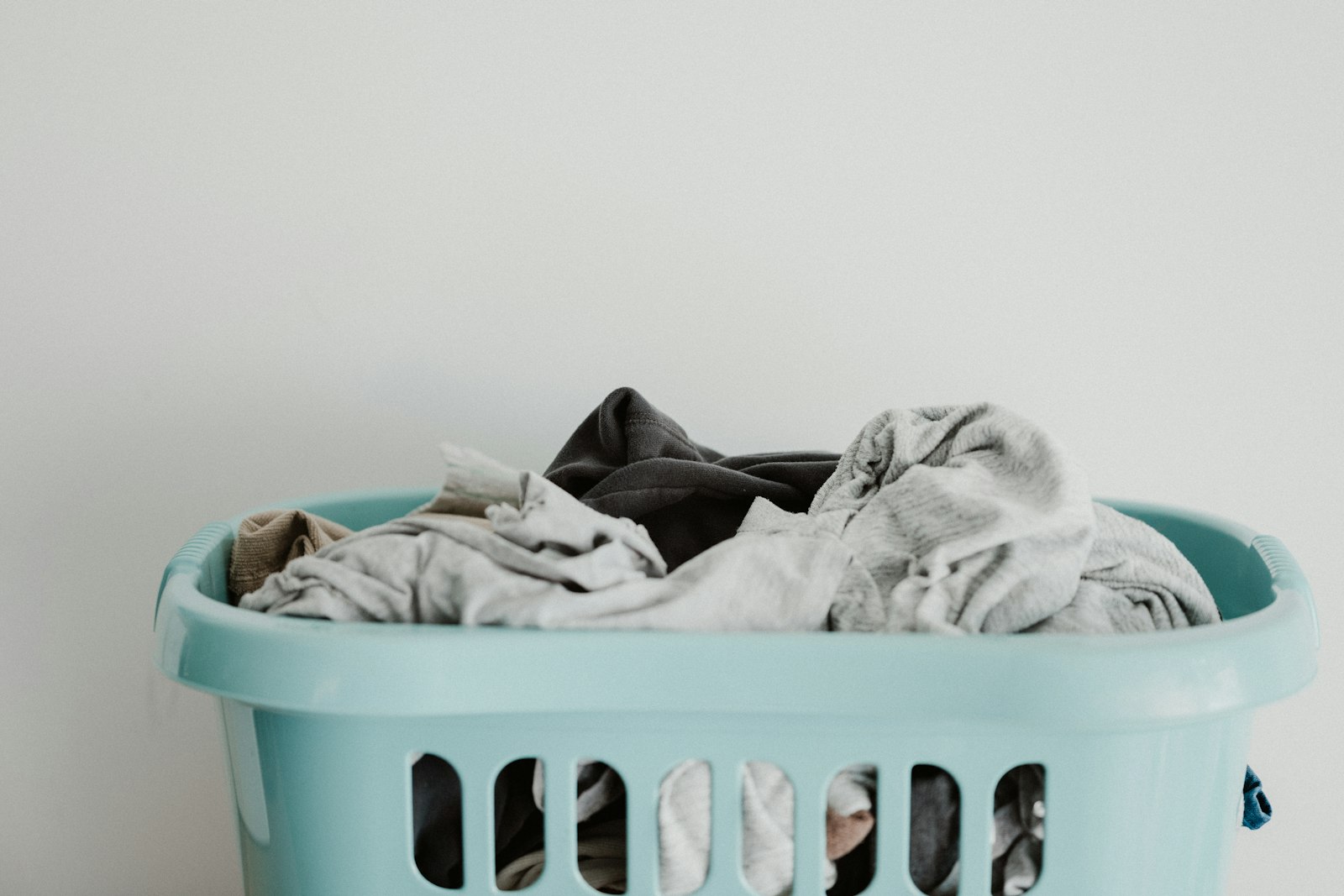
The conversation that finally got me to quit liquid laundry detergent happened in the laundry aisle of my regular grocery store on a Tuesday morning. I was staring at the wall of plastic jugs trying to remember which one I’d bought last time. Each jug weighed about ten pounds, came in a heavy opaque plastic container, claimed to contain dozens of “loads,” and cost between $18 and $30. I’d been buying them on autopilot for years.
That morning, for some reason, I actually looked at what I was holding. A massive plastic container, most of it water, sized to last me maybe two months. I’d gone through dozens of these jugs over the years I’d lived in this house. They were all probably in a landfill, because the recycling rate for these specific jugs is much lower than people think. The Environmental Working Group’s reporting on cleaning product safety, summarized on their Guide to Healthy Cleaning, has also documented that many conventional liquid detergents contain a range of fragrances, dyes, and surfactants with known irritant, allergen, or environmental concerns. I’d been giving this aspect of my home cleaning routine very little thought.
That Tuesday I put the jug back on the shelf and went home with what I had. Over the next few weeks I researched alternatives, tried a couple of options, settled on one, and have not bought a plastic jug of liquid laundry detergent in two years. The setup costs less than what I used to spend on detergent. It takes up roughly the size of a paperback book in my closet. And it cleans my clothes at least as well as the jugs did. This is the case for why I switched and what I use now.
In This Article
Key Takeaways
- Liquid laundry detergent is mostly water and ships in heavy plastic jugs with low actual recycling rates.
- The conventional formulations also frequently contain fragrances and surfactants worth questioning.
- Detergent sheets, powder, and bar formats all eliminate the plastic jug problem at lower or comparable cost.
- My switch was to fragrance-free detergent sheets in a small cardboard box, which has held up for two years.
- Performance has been at least as good as the jugs, with significantly less storage space and less packaging.
What’s Actually Wrong With Liquid Detergent
Before I get to what I switched to, here’s why I switched. There are a few stacking issues with conventional liquid laundry detergent that, once I saw them, I couldn’t unsee.
It’s mostly water
Liquid laundry detergent is typically 60 to 90 percent water. You are paying for water to be shipped to you in plastic, sometimes from a manufacturing plant across the country. The actual cleaning ingredients are a small fraction of the volume. This is a remarkable inefficiency when you stop and think about it.
The plastic jugs are not recycled at meaningful rates
The big opaque jugs are technically recyclable (HDPE plastic, resin code 2). In practice, the EPA’s most recent data, summarized on the agency’s plastics page, shows that overall U.S. plastic recycling rates are below 9 percent, with HDPE only modestly better. Most jugs land in landfills. Even when they don’t, recycling consumes additional energy and water.
The ingredients are worth a second look
Conventional liquid detergents commonly include fragrances (often listed simply as “fragrance” and protected as proprietary, which can mean dozens of unidentified compounds), optical brighteners, dyes, and surfactants of varying environmental profiles. The Environmental Working Group’s database rates many widely-sold detergents in the D and F range for hazard scores. This is not the end of the world, most of us have used them for years without obvious harm, but for anyone trying to reduce overall chemical exposure in the home, swapping the detergent is a reasonable lever to pull.
It takes up significant space in small homes
A 92-load jug is roughly the size of a small grocery bag and weighs ten pounds. In a small home, that’s real real estate. Multiply by the months of supply most people keep on hand, and you’ve got a meaningful footprint just for detergent.
The Alternatives I Considered
When I went looking for an alternative, I evaluated four main options.
Detergent sheets
Pre-portioned thin sheets that dissolve in the wash. Come in small cardboard boxes. Light, compact, no plastic. Several brands available now, with a range of price points and ingredient profiles. The newest and most popular small-space option.
Powder detergent
The older, less-marketed option. Comes in cardboard boxes. Generally cheaper per load than liquid, fewer ingredients on average, no plastic if you find the right brand. Some powders have a fragrance issue similar to liquids; some are fragrance-free.
Soap nuts / soap berries
Dried berries from a tree that release natural saponins in water. You put a few in a small cloth bag and toss them in the wash. They last for several loads. Very low waste, very natural. The reviews are mixed on how well they clean heavily soiled loads; better for normal everyday washing.
Detergent bars or concentrates
Solid bars you grate, or highly-concentrated liquid in small refillable bottles. Refill options at certain stores let you bring your own bottle. Compact, but require slightly more handling.
What I Chose and Why
After trying detergent sheets and powder side by side for a couple of months, I settled on fragrance-free detergent sheets as my primary detergent. Here’s the reasoning.
The convenience matches the jug, without the jug
One sheet per regular load. Half a sheet for a small load. No measuring, no pouring, no sticky cap. Faster than scooping powder, equally fast as pouring liquid. The transition from liquid was almost unnoticeable in daily use.
The packaging is minimal and recyclable
My current brand comes in a small cardboard box about the size of a paperback. Sixty sheets in a box. The box is fully recyclable in regular curbside. There’s no plastic, no foil lining, no tape. Compare this to the gallon jug it replaced.
The ingredient list is short
The brand I chose lists about ten ingredients, all of which I could pronounce and look up. The Environmental Working Group has rated this category of products generally favorably when the formulation is simple and fragrance-free. I felt better about what was washing into my towels and clothes and ultimately into the water system.
The storage footprint is tiny
One box, the size of a paperback, in my linen closet. The box of 60 sheets lasts me about three months. Two boxes a season. The space saved over the jug is dramatic.
It’s reasonably priced
I’ll get into the math below, but the per-load cost is competitive with the jug I used to buy.
How It Actually Performs
This is the question that matters. None of the environmental story matters if the detergent doesn’t clean your clothes. Two years in, here’s the honest report.
Regular loads, towels, sheets, day-to-day clothing, come out as clean as they did with liquid. I have not noticed any difference. My towels are not dingier. My white t-shirts are not graying. My darks are not fading faster.
Heavily soiled loads, like the several loads a day I run when there is a litter of puppies in the house, take a slight bit more attention. I sometimes use two sheets instead of one, or pre-treat especially dirty spots with a stain bar. This is not significantly more work than I was doing with liquid detergent, where I also pre-treated heavy stains.
Cold-water washes work fine. Sheets dissolve completely in cold water in my front-loading machine. I’ve read reports of dissolution issues in some top-loaders with very cold water; I do not have that machine so I can’t speak to it. If you have a top-loader, test before you commit.
The clothes do not have a strong fragrance after washing. This was an adjustment. I had been using a lightly-scented liquid detergent for years, and my clothes had always had a faint “clean laundry” smell. After the switch, they smell like nothing. I have come to prefer this. The Cleveland Clinic has noted that fragrance sensitivity is one of the more common contact-irritation issues, and reducing fragrance load in fabrics that touch skin all day is a small but real comfort.
The Cost Math
This was the question I was most worried about. Here’s what I’ve actually spent.
My old liquid detergent: a 92-load jug at around $20-$22 average. I do approximately three loads a week, so about 156 loads a year. That’s roughly two jugs a year, around $42 annually.
My current detergent sheets: a 60-sheet box at around $15. At one sheet per load, that’s about 156 sheets a year, or roughly three boxes, around $45 annually.
So the cost is essentially the same. About three dollars more per year. I consider that a wash (no pun intended) for the dramatically reduced packaging, the smaller footprint in my home, and the simpler ingredient list.
One note: I have not switched to a refillable bulk option, which would be cheaper per load. Some local zero-waste stores in larger cities sell laundry detergent by weight, where you bring your own container. If I had access to one, I might switch again to bring costs down. The convenience of the box system has kept me with sheets so far.
What to Watch Out For
If you’re going to try this swap, here’s what I’d flag.
Not all detergent sheets are created equal
Some brands use polyvinyl alcohol (PVA) as a dissolution agent. Recent research has raised questions about whether PVA breaks down as completely as marketed, and some of it may persist as microplastic. Plastic Pollution Coalition and similar groups have flagged this concern. I look for sheets that are explicitly PVA-free or that use alternatives. Read the ingredients.
Greenwashing is real in this category
“Eco-friendly,” “natural,” and “plant-based” claims are not regulated in laundry detergent. Look at the actual ingredients, the actual packaging, and the actual third-party certifications (EWG Verified, Safer Choice, etc.) rather than the marketing.
Performance varies by water type
If you have very hard water, you may find some sheet brands underperform. I do not have hard water in my Michigan house, so I cannot speak to this firsthand. Friends with well water have reported needing to add a water softener or use slightly more product.
Build a small stash before you run out
The brand I use isn’t always in stock at my local store. I order ahead so I always have a buffer box on hand. Avoid the panic-buy-a-plastic-jug moment that would set me back to square one.
Don’t beat yourself up if it doesn’t work for you
Some people, in some life situations, with some machines, find that detergent sheets just don’t deliver. If you try them and they’re not for you, switch to a fragrance-free powder in a cardboard box. That’s still a major upgrade from a plastic jug, and it’s a perfectly fine landing spot.
A Last Note
The small cardboard box of detergent sheets has been on the same shelf in my linen closet for two years. The shelf used to hold a leaning tower of plastic jugs. The clothes coming out of my washing machine are not noticeably different. The fragrance load in my home is lower. The packaging that comes into my house from this category is a tiny fraction of what it was.
If you’ve been wondering whether to give up the plastic jugs and try something different, here is what I would offer. Yes, the alternatives work. No, they are not noticeably better at cleaning, but they are not noticeably worse either. The cost is roughly the same. The footprint is dramatically smaller. The ingredients are usually simpler. The plastic jug pile in your recycling bin (or worse, your trash bin) shrinks to nothing.
Start with one box of sheets or one box of powder. Try it for a month. Decide whether it’s working in your life. If it is, you’ve just removed one of the most reliably plastic-heavy products from your shopping rotation, possibly forever. If it isn’t, you’ve learned something. Either way, the swap was worth trying. And in my experience, two years in, it stuck.
Sources
- Plastics: Material-Specific Data, U.S. Environmental Protection Agency.
- Guide to Healthy Cleaning, Environmental Working Group.
- Fragrance Allergy, Cleveland Clinic.
- Single-Use Plastics 101, Natural Resources Defense Council.
The Free Subscriber’s Library Is Open
Join Peacefully Proven for a growing collection of free wellness tools, guides, and printables, plus a guided forest bathing meditation to begin. All yours, always free.






Join the conversation and add your thoughts.