

Let’s be honest: the world of “eco-friendly living” can feel overwhelming. Bamboo toothbrushes. Beeswax wraps. Shampoo bars. Compostable phone cases. The list of things you’re supposed to swap grows longer every day, and sometimes it feels like sustainable living requires a second income and a degree in environmental science.
Here’s the truth that gets lost in the noise: not all eco-friendly swaps are equally impactful. Some changes genuinely reduce your environmental footprint. Others are mostly marketing. And many of the most effective changes aren’t about buying something new at all: they’re about using less of what you already have.
This guide cuts through the green-washing to focus on the home swaps that actually make a measurable difference, organized by the rooms where you live your daily life.
In This Article
Key Takeaways
- The most impactful eco changes are reducing consumption, not replacing products with “green” versions
- Food waste reduction has a larger carbon impact than most product swaps combined
- Energy efficiency improvements (LED bulbs, smart thermostats) deliver measurable savings to both the planet and your wallet
- Many popular eco-swaps have minimal environmental benefit and serve mainly as marketing
- Sustainable living works best when it simplifies your life rather than complicating it
The Philosophy: Reduce First, Swap Second
Before buying a single eco-friendly product, consider the most sustainable action of all: using less. The environmental hierarchy goes refuse, reduce, reuse, repair, recycle, and notice that recycling comes last. The greenest product is often the one you don’t buy.
This doesn’t mean living in deprivation. It means asking a simple question before any purchase: “Do I actually need this, or am I solving a problem that doesn’t exist?” Many eco-swaps create new categories of things to buy when the real solution is to stop buying the original thing altogether.
With that philosophy as our foundation, let’s look at the swaps that genuinely earn their place in your home.
Kitchen Swaps That Make a Real Difference
The kitchen is where some of the highest-impact changes happen, primarily because of food waste. According to the EPA, food waste is the single largest category of material placed in municipal landfills, and decomposing food in landfills produces methane, a greenhouse gas 80 times more potent than CO2 over a 20-year period.
Swap: A Food Waste Strategy (High Impact)
This isn’t a product, it’s a system. Plan meals before shopping. Use the “first in, first out” method in your fridge. Designate one meal a week as a “use it up” meal where you cook whatever needs to be eaten. Freeze food before it goes bad. Compost what’s left. The average American household wastes roughly $1,500 worth of food annually. Reducing that by even 50% saves money and significantly cuts your carbon footprint.
Swap: Reusable Produce and Storage Bags (Medium Impact)
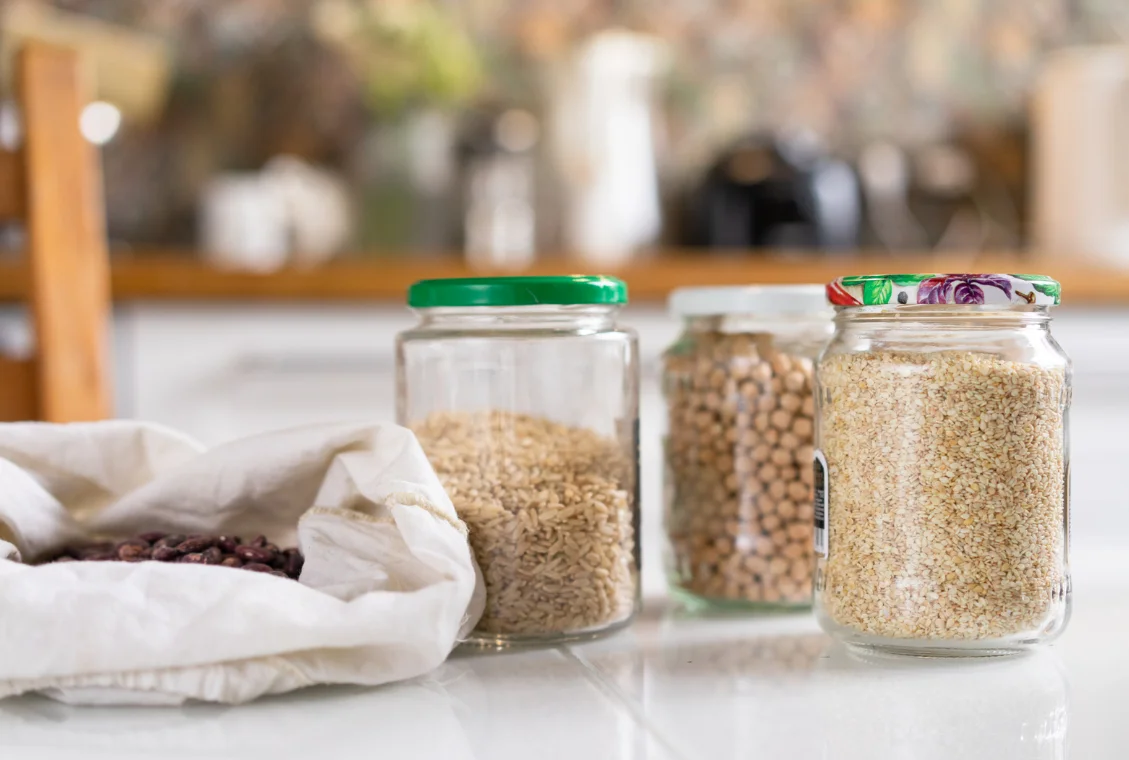
Single-use plastic bags for produce and food storage are an easy swap. Mesh bags for the grocery store and silicone or glass containers for storage replace hundreds of disposable bags per year. The key is actually using them consistently: a drawer full of reusable bags you forget at home does nothing.
Swap: Cloth Towels Instead of Paper Towels (Medium Impact)
The average American household uses 80 rolls of paper towels per year. A stack of simple cotton cloths handles most kitchen tasks, gets tossed in the laundry, and lasts for years. Keep a small bin on the counter for used cloths. It takes about two weeks to break the paper towel habit.
Swap: A Quality Water Filter (Medium Impact)
If you’re buying bottled water, a good countertop or under-sink filter eliminates hundreds of plastic bottles per year. Choose a filter based on your actual water quality (your local utility publishes annual reports) rather than marketing claims. For most municipal water, a basic activated carbon filter is sufficient.
Kitchen Quick Wins
Tonight: Check your fridge for anything that needs to be used in the next 2 days and plan tomorrow’s meal around it.
This week: Put a cloth towel next to the paper towel roll and try using it first.
This month: Track how much food you throw away. Just the awareness often reduces waste by 20%.
Bathroom Swaps Worth Making
The bathroom is where a lot of single-use plastic accumulates, from shampoo bottles to cotton swabs. Some swaps here are meaningful; others are more about aesthetics.
Swap: Bar Soap and Shampoo Bars (Medium Impact)
Liquid soap and shampoo are mostly water, shipped in plastic bottles. Bar versions last longer, use minimal packaging, and avoid the energy cost of transporting water weight. Modern shampoo bars have come a long way, many perform as well as their liquid counterparts. Expect a short adjustment period as your hair adapts.
Swap: Safety Razor (High Impact Over Time)
Disposable razors generate an estimated 2 billion units of plastic waste annually in the U.S. alone. A stainless steel safety razor costs more upfront but lasts a lifetime, and replacement blades cost pennies. The shave quality is actually superior once you learn the technique.
Swap: Concentrated or Refillable Products (Medium Impact)
Many personal care brands now offer concentrated formulas or refill stations. Concentrated hand soap, cleaning products, and even toothpaste tablets reduce packaging waste and shipping emissions. The refill model is growing rapidly and becoming more convenient.
Laundry and Cleaning
Laundry and cleaning products are a significant source of both chemical exposure and packaging waste. A few strategic swaps can reduce both.
Swap: Cold Water Washing (High Impact)
This is one of the easiest and most impactful changes you can make. Roughly 90% of the energy used by a washing machine goes to heating water. Washing in cold water cleans just as effectively for most loads and reduces your energy consumption significantly. Modern detergents are formulated to work well in cold water.
Swap: Wool Dryer Balls (Medium Impact)
Replace single-use dryer sheets with wool dryer balls. They reduce drying time by 20–30%, last for thousands of loads, and eliminate the chemical coating that dryer sheets leave on fabric (and release into your indoor air). Add a few drops of essential oil to the balls for scent if you miss the fragrance. If you have pets, a drop or two is plenty, since cats in particular can be more sensitive to essential oils than people are.
Swap: Simple, Multi-Purpose Cleaners (Medium Impact)
You don’t need a different product for every surface. White vinegar, baking soda, and a good castile soap handle the vast majority of household cleaning. This isn’t just eco-friendly: it simplifies your under-sink cabinet, reduces chemical exposure, and saves significant money. For disinfecting, hydrogen peroxide is an effective and non-toxic option.
Energy and Water: The Invisible Impact
Product swaps get the most attention, but your biggest environmental impact at home comes from energy and water use. These “invisible” changes often deliver the largest measurable benefits.
Swap: LED Bulbs Everywhere (High Impact)
If you haven’t already made this switch, it’s the single easiest high-impact change. LED bulbs use 75% less energy than incandescent bulbs and last 25 times longer. The upfront cost has dropped dramatically, many LEDs now cost under $2 per bulb. Swap every bulb in your home and the energy savings are immediate and ongoing.
Swap: Smart or Programmable Thermostat (High Impact)
Heating and cooling account for roughly 50% of household energy use. A programmable thermostat that reduces heating/cooling when you’re away or asleep can cut energy bills by 10–15% annually. Smart thermostats learn your patterns and optimize automatically. The Department of Energy considers this one of the highest-return home investments.
Swap: Low-Flow Fixtures (Medium Impact)
Replacing old showerheads and faucet aerators with low-flow versions reduces water use by 25–60% without noticeably affecting water pressure. These fixtures cost under $20 each and install in minutes with no tools. Water heating is a significant energy expense, so using less hot water has a double benefit.
Swap: Power Strips for Phantom Loads (Medium Impact)
Electronics draw power even when turned off, this “phantom load” or “vampire energy” accounts for 5–10% of household electricity use. Plugging entertainment centers, office equipment, and kitchen appliances into power strips and switching them off when not in use eliminates this waste effortlessly.
Rethinking How You Shop
Beyond specific product swaps, how you approach shopping itself matters enormously.
Buy Quality, Buy Less
A well-made item that lasts 10 years is far more sustainable than a cheap version you replace every year, even if the cheap version is made from recycled materials. This applies to clothing, kitchen tools, furniture, and electronics. The cost-per-use of quality items is often lower than disposable alternatives.
Buy Secondhand First
Before buying new, check secondhand options. Thrift stores, online marketplaces, and buy-nothing groups offer everything from clothing to furniture to kitchen equipment. The most eco-friendly product is one that already exists and doesn’t need to be manufactured.
Evaluate the Full Lifecycle
When you do buy new, think beyond the product itself. Where was it shipped from? How is it packaged? Can it be repaired? What happens at end of life? A product made locally from simple materials with minimal packaging often has a smaller footprint than an “eco-certified” product shipped across the globe in plastic.
Eco-Swaps That Aren’t Worth the Hype
Not every “green” product lives up to its promise. Here are some popular swaps where the environmental benefit is minimal or misleading:
- Bamboo everything: While bamboo grows quickly, many bamboo products require heavy chemical processing to manufacture and are shipped long distances. A locally-made wooden alternative often has a smaller footprint.
- Biodegradable plastics: Most biodegradable plastics only break down in industrial composting facilities, not in your backyard compost or a landfill. They can actually contaminate recycling streams.
- Reusable cotton tote bags: A organic cotton tote must be used over 20,000 times to offset its production footprint compared to a plastic bag. The solution isn’t more totes: it’s using the bags you already have, whatever material they are.
- Trendy eco-gadgets: Solar-powered phone chargers, bamboo laptop stands, and eco-branded accessories often create more environmental impact in manufacturing than they save in use.
The pattern: be skeptical of any “eco” solution that requires you to buy something new. The most sustainable path is usually using what you have until it wears out, then replacing thoughtfully.
Start Small, Stay Consistent
The worst approach to eco-friendly living is trying to change everything at once. That leads to overwhelm, expense, and abandonment. Instead, choose 2–3 swaps that fit naturally into your existing routine and commit to them for a month before adding more.
Your First Three Swaps
Choose one from each tier based on impact and ease:
High impact, easy: Switch to cold water laundry. Replace all bulbs with LED. Start a food waste awareness practice.
Medium impact, easy: Put cloth towels next to paper towels. Get a water filter to replace bottled water. Install a low-flow showerhead.
Lower impact, satisfying: Switch to bar soap. Try wool dryer balls. Use a reusable water bottle consistently.
Once these feel automatic (about 3–4 weeks), add the next round.
Sustainable living isn’t about perfection. It’s about direction. Every small, consistent choice adds up over months and years into a genuinely lighter footprint, one that benefits both the planet and the simplicity of your daily life.
The Free Subscriber’s Library Is Open
Join Peacefully Proven for a growing collection of free wellness tools, guides, and printables, plus a guided forest bathing meditation to begin. All yours, always free.
Sources
- EPA. “Reducing Wasted Food at Home.”.
- U.S. Department of Energy. “Programmable Thermostats.”.
- Berners-Lee, M. (2021). How Bad Are Bananas? The Carbon Footprint of Everything. Greystone Books.
- Danish Ministry of Environment. (2018). “Life Cycle Assessment of grocery carrier bags.” Environmental Project no. 1985.
- U.S. Department of Energy. “LED Lighting.”.






Join the conversation and add your thoughts.