
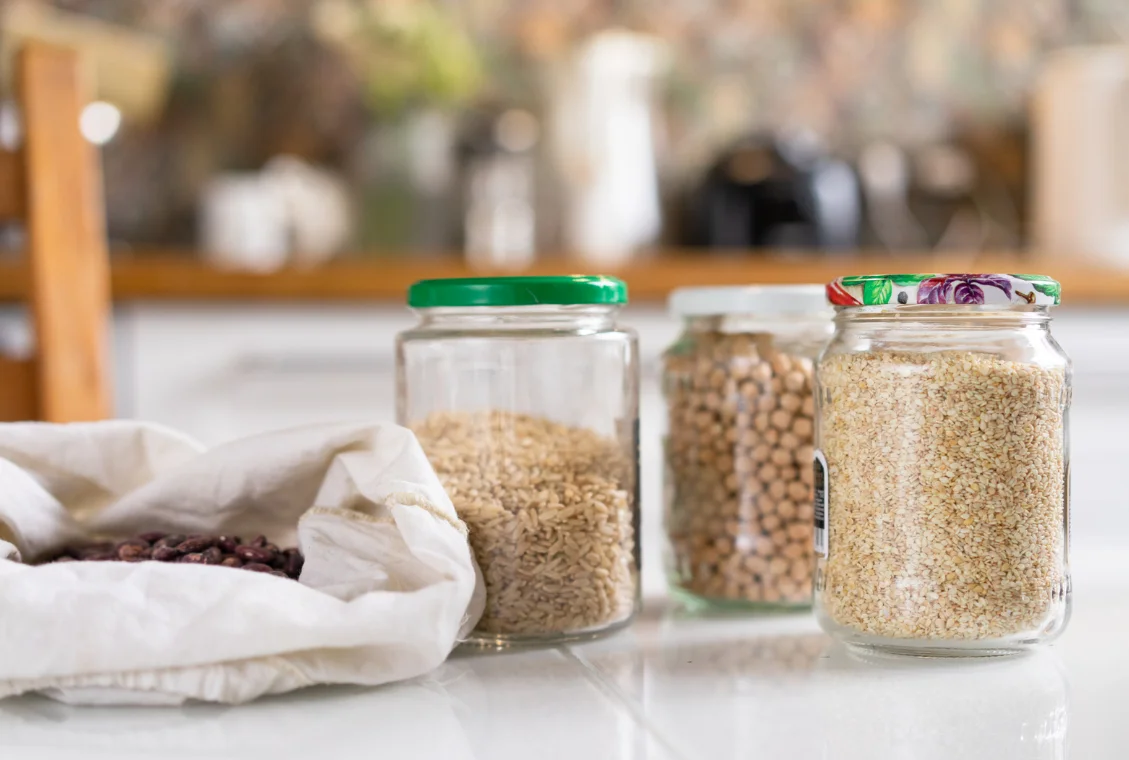
I have been vegan for about four years and eating organic for about nine. For about eight years, I have thought of food as medicine: what I eat is one of the most direct ways I can care for my body every day. My mornings start the same way, with a Kachava shake (two scoops) and my powder blend. Beyond that, I try to fill my plate with whole plant foods.
When people talk about plant-based eating, the conversation often turns to protein. Fiber gets far less attention, and I think it deserves more. Fiber supports digestion, heart health, and steadier blood sugar, and most people in the United States do not eat enough of it. The good news is that a vegan diet built on whole foods gives you many easy ways to get more.
This guide covers why fiber matters, how much you need according to trusted sources, which vegan foods give you the most, and how to add more gently. And I promise you will not need a spreadsheet. The goal is to get enough fiber without counting every gram.
In This Article
Key Takeaways
- MedlinePlus (from the National Library of Medicine) recommends 21 to 38 grams of fiber a day for adults, and the Daily Value on U.S. food labels is 28 grams.
- Harvard’s Nutrition Source says most Americans get only about 15 grams a day.
- Soluble fiber can help lower cholesterol and slows digestion, and insoluble fiber adds bulk and helps prevent constipation.
- Beans, lentils, split peas, berries, chia seeds, and whole grains are some of the richest vegan sources, based on USDA FoodData Central.
- Add fiber slowly and drink water to help avoid gas, bloating, and cramps.
What Fiber Is (and the Two Main Types)
MedlinePlus describes fiber simply as a substance found in plants. It is the part of plant foods that your body does not fully digest. Instead of being broken down and absorbed like most of what you eat, it moves through your digestive system and does helpful work along the way.
According to MedlinePlus, the health information service of the National Library of Medicine, there are two main types:
- Soluble fiber attracts water and turns to gel during digestion, which slows digestion. MedlinePlus lists oat bran, barley, nuts, seeds, beans, lentils, peas, and some fruits and vegetables as sources.
- Insoluble fiber does not dissolve in water. It adds bulk to stool and helps food move through the digestive system more quickly. MedlinePlus lists wheat bran, vegetables, and whole grains as sources.
Most plant foods contain a mix of both. You do not need to track which type you are eating. If you eat a variety of whole plant foods, you will get plenty of each.
Why Fiber Matters: Gut, Heart, and Blood Sugar
Gut health
MedlinePlus explains that fiber aids digestion and helps prevent constipation. Your gut is also home to trillions of bacteria and other microorganisms, known as the microbiome. The Dietary Guidelines for Americans, 2025-2030 say that vegetables, fruits, fermented foods, and high-fiber foods support a diverse microbiome, while highly processed foods can disrupt its balance. The Nutrition Source from the Harvard T.H. Chan School of Public Health adds that fiber’s role in the gut microbiome may have anti-inflammatory effects.
If your gut is something you are working on, you might also like Gut Health Reset Diet: Where to Start Without Overwhelm.
Heart health
MedlinePlus notes that soluble fiber lowers cholesterol, which may help prevent heart disease. Harvard’s Nutrition Source says soluble fiber may lower blood cholesterol and that a high intake of dietary fiber is associated with a lower risk of heart disease.
Blood sugar
MedlinePlus explains that soluble fiber slows digestion, and it mentions that fiber is sometimes used as part of treatment for diabetes. Harvard’s Nutrition Source reports that diets low in fiber may increase the risk of type 2 diabetes, and that high-fiber whole grains are the foods most strongly associated with lower diabetes risk. I wrote more about this topic in 7 Ways I Keep My Blood Sugar Steady as a Vegan in Menopause.
Fiber is found in plants. When your meals are built on beans, whole grains, vegetables, fruit, nuts, and seeds, you are already set up to get plenty of it.
How Much Fiber Do You Need?
You will see a few different numbers depending on where you look. Here is what the sources I checked say:
- MedlinePlus: 21 to 38 grams of fiber each day for older children, teens, and adults.
- FDA: The Daily Value for dietary fiber on U.S. Nutrition Facts labels is 28 grams. This is the number behind the “% Daily Value” you see on packaged food.
- Harvard’s Nutrition Source: at least 25 to 35 grams a day for good health.
Now compare that with what most of us eat. Harvard’s Nutrition Source says most Americans get only about 15 grams a day. That means many people are getting about half of what they need, or less.
If you are vegan and eat mostly whole foods, you may already be closer to these numbers than you think. But it is still worth a look, especially if many of your meals come from packages. The 2025-2030 Dietary Guidelines suggest limiting highly processed vegan and vegetarian foods, which can include added fats, sugars, and salt, and paying attention to possible nutrient gaps on a vegan diet. Whole plant foods are where most of the fiber is.
Easy High-Fiber Vegan Foods, With Amounts
These amounts come from USDA FoodData Central, the U.S. Department of Agriculture’s food composition database. I used its standard reference entries and portion sizes and rounded to one decimal place. Brands and recipes will vary a little, so treat these as good estimates.
Beans, lentils, and peas
- Split peas, cooked: 1 cup, about 16.3 grams
- Lentils, cooked: 1 cup, about 15.6 grams
- Black beans, cooked: 1 cup, about 15.0 grams
- Chickpeas, cooked: 1 cup, about 12.5 grams
- Green peas, cooked: 1 cup, about 8.8 grams
Beans, lentils, and peas are among the richest sources of fiber on a vegan diet. A single cup of lentils gives you more than half of the 28-gram Daily Value. If you like slow cooker meals, a pot of spiced red lentils is an easy place to start.
Fruits
- Avocado: 1 cup cubed, about 10.1 grams
- Raspberries: 1 cup, about 8.0 grams
- Blackberries: 1 cup, about 7.6 grams
- Pear: 1 medium, about 5.5 grams
- Apple with skin: 1 medium, about 4.4 grams
Eating fruit whole, with the skin when you can, keeps the fiber in. Harvard’s Nutrition Source suggests choosing whole fruits instead of fruit juice, and the 2025-2030 Dietary Guidelines encourage eating vegetables and fruits in their original form.
Whole grains
- Barley, pearled, cooked: 1 cup, about 6.0 grams
- Quinoa, cooked: 1 cup, about 5.2 grams
- Oats, dry: 1/3 cup, about 2.7 grams
The 2025-2030 Dietary Guidelines say to prioritize fiber-rich whole grains, with a goal of 2 to 4 servings a day adjusted to your calorie needs, and to cut back on refined carbohydrates like white bread and crackers.
Vegetables
- Sweet potato, baked: 1 cup, about 6.6 grams
- Broccoli, cooked: 1/2 cup chopped, about 2.6 grams
Nuts and seeds
- Chia seeds: 1 ounce, about 9.8 grams
- Almonds: 1 ounce (about 23 almonds), about 3.5 grams
- Flaxseed, ground: 1 tablespoon, about 1.9 grams
One ounce of chia seeds has more fiber than a cup of raspberries. A spoonful of chia or ground flax stirred into oats, a smoothie, or a salad dressing is one of the simplest ways to add fiber without changing what you eat.
How to Get Enough Without Counting Every Gram
Here is the good news: you do not need to track fiber to eat enough of it. Look at how quickly a few foods add up. One cup of cooked lentils (15.6 grams), one cup of raspberries (8.0 grams), and one medium pear (5.5 grams) come to about 29 grams, which is more than the 28-gram Daily Value. That is only three foods.
Instead of counting, try a few simple patterns.
Include a bean, lentil, or pea most days
This is the biggest single step you can take. Try adding chickpeas to a salad, lentils to a soup, black beans to a grain bowl, or hummus to a snack plate. Canned beans count too.
Make your grains whole
Swap white rice, white bread, and refined pasta for whole grain versions when you can. Harvard’s Nutrition Source suggests replacing refined grains with whole grains and choosing cereals that give you 20% or more of the Daily Value for fiber.
Eat fruit whole and keep the peel
An apple or a pear with the skin on, or a handful of berries, is an easy snack. The 2025-2030 Dietary Guidelines note that frozen fruits and vegetables with little or no added sugar can also be good options.
Add a sprinkle
A spoonful of chia seeds, ground flaxseed, or a small handful of almonds can go on almost anything. Harvard’s Nutrition Source suggests adding a tablespoon or two of almonds or other high-fiber toppings to cereal.
Build your plate around whole plants
When most of your plate is vegetables, beans, and whole grains, you will get plenty of fiber without needing to track it.
Check the label on packaged foods
If you use packaged foods, the “% Daily Value” for fiber on the Nutrition Facts label tells you how much a serving gives you, compared with 28 grams. The same goes for meal shakes and protein powders. I have a Kachava shake every morning, and if you use a shake, its label is the easiest place to see how much fiber it adds to your day.
For more ideas on foods that are kind to your gut, you might enjoy 8 Gut-Friendly Vegan Foods for Digestion and Steadier Energy.
Go Slowly and Drink Water
If you are eating much less fiber than these numbers right now, please do not jump to 35 grams tomorrow. MedlinePlus warns that eating a large amount of fiber in a short time can cause intestinal gas, bloating, and abdominal cramps. It advises adding fiber to your diet slowly, instead of all at once, to help reduce gas or diarrhea.
A gentle approach might look like this:
- Add one new high-fiber food at a time. For example, add berries to breakfast for a week before you add beans to lunch.
- Increase portions gradually. Start with a half cup of beans instead of a full cup.
- Drink water through the day. MedlinePlus explains that water helps fiber pass through the digestive system.
- Listen to your body. Some gas is common when you add beans and whole grains. If it bothers you, slow down and give your body more time to adjust.
- Talk with your doctor if you have a digestive condition, take medications, or notice ongoing discomfort, pain, or changes in your bowel habits.
Fiber Is Having a Moment in 2026
If it feels like everyone is suddenly talking about fiber, you are not imagining it. The Johns Hopkins Center for a Livable Future named fiber-maxxing as one of the food trends for 2026. The article cites EatingWell, which reported a 9,500% increase in page views on articles that mention fiber over the past year, and it notes a prediction from Whole Foods that more packaged foods will be fortified with fiber and labeled to highlight it.
I am happy to see fiber get attention. But the same article includes a caution I agree with. It shares a warning from AP News against sharply increasing fiber intake, and says a better practice is to increase slowly while drinking plenty of water. It also reminds readers that eating too much of any one food or nutrient is not the best way to improve health.
So my gentle take on the trend is this: you do not need to “max out” anything. You do not need fiber-fortified snacks either. A vegan diet built on beans, whole grains, vegetables, fruit, nuts, and seeds already gives you what the trend is chasing, along with many other nutrients. Food as medicine does not have to be complicated.
A Simple Place to Start
If this feels like a lot, pick just one idea for this week. Maybe it is a cup of lentil soup, a handful of berries each afternoon, or a spoonful of chia seeds in your oats. Next week, add one more. Small, steady changes are easier on your body and easier to keep.
Fiber is not a trend to me. It is simply part of eating whole plant foods, and it is one of the many reasons I love this way of eating. I hope this guide helps you feel confident that you can get enough, one bowl at a time, without counting every gram.
Sources
- Fiber, MedlinePlus Medical Encyclopedia, U.S. National Library of Medicine.
- Daily Value on the Nutrition and Supplement Facts Labels, U.S. Food and Drug Administration.
- Fiber, The Nutrition Source, Harvard T.H. Chan School of Public Health.
- Dietary Guidelines for Americans, 2025-2030, U.S. Department of Agriculture and U.S. Department of Health and Human Services.
- USDA FoodData Central, U.S. Department of Agriculture, Agricultural Research Service (SR Legacy entries for each food listed).
- Food Trends for 2026 Focus on Fiber-Maxxing, Global Foods, and More, Johns Hopkins Center for a Livable Future.
Free 10-Minute Forest Bathing Meditation
Subscribe to Peacefully Proven and receive a free guided meditation to restore calm and clarity, delivered straight to your inbox.



Join the conversation and add your thoughts.