
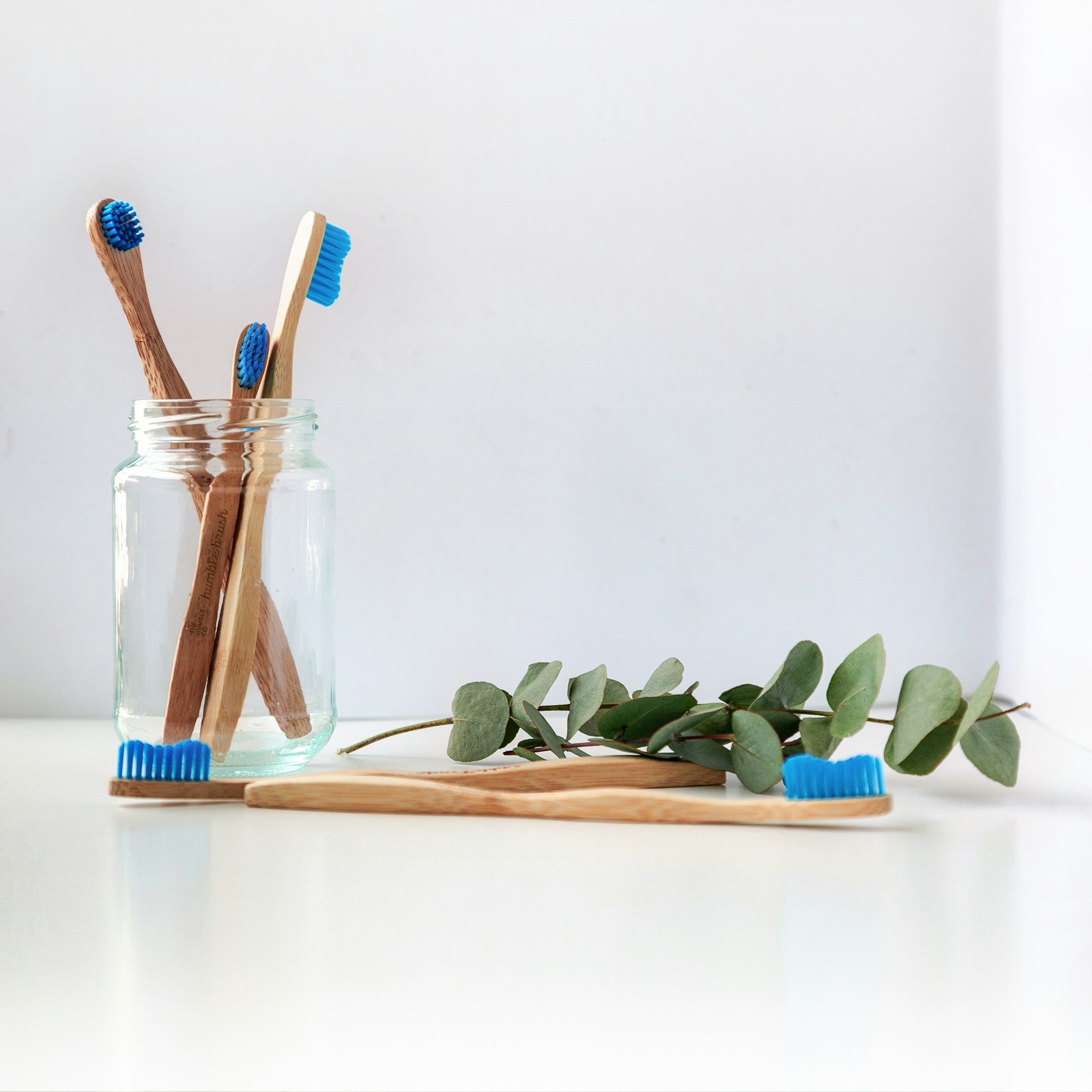
About four months ago I decided I had finally had enough of the bamboo toothbrush guessing game. I had been buying whichever brand happened to be on sale at my local natural grocery for about three years, occasionally trying ones I saw recommended online, and never feeling like I had a clear sense of which one was actually any good. The bristles always seemed to fray at different rates. Some handles got slimy and dark at the base within a few weeks. Others stayed beautiful for the full life of the brush. I had no idea which was which.
So I set up a real, controlled three-month test. Four different bamboo toothbrush brands, used in rotation, with simple criteria I tracked in a notebook. I am one person in one Michigan bathroom, so this is not a scientific study. But it is real data from real use, and after a few years of vague impressions I now have specifics. This is what I tested, how, and what I found.
In This Article
Key Takeaways
- Bamboo toothbrushes really do reduce plastic waste, but only the handle composts.
- Bristle quality varies dramatically between brands; this is the biggest differentiator.
- Handle finish matters more than design; smoother finishes resisted mold better.
- Packaging is wildly inconsistent; some brands ship in fully compostable boxes, others in plastic.
- The winner: a U.S. brand with charcoal-infused bristles and a sealed handle finish.
Why Bamboo Toothbrushes Are Worth the Switch
I want to start with the actual environmental case for bamboo toothbrushes, because it’s stronger than the case against and weaker than the marketing makes it sound. The math has nuance worth knowing.
Americans dispose of about a billion plastic toothbrushes a year, according to estimates summarized by the National Geographic Society and several environmental nonprofits. National Geographic has reported on the fact that every plastic toothbrush ever made still exists in some form somewhere because the kind of mixed-plastic construction used in standard toothbrushes is essentially not recyclable at scale. So one billion brushes a year, every year, all of them effectively permanent.
Bamboo toothbrushes replace the plastic handle with a compostable plant material. The bristles, in most brands, are still nylon (some brands now offer plant-based or castor-oil-based bristle alternatives, but the dental performance of pure plant bristles is still mixed). So the right way to think of a bamboo toothbrush is as a partial swap. You’re eliminating the plastic handle, which is the bulk of the brush. The bristles remain a tiny amount of plastic that you’d ideally pluck out and discard before composting the handle.
Is a partial swap meaningful? Yes. Is it total? No. The Vegan Society and several environmental groups have endorsed bamboo toothbrushes as a reasonable transitional product that meaningfully reduces plastic in the bathroom while better materials are still being developed. That framing has helped me let go of the perfectionist’s argument against them. Less plastic is less plastic.
How I Set Up the Test
I bought four bamboo toothbrushes from four different brands. Two are widely sold in U.S. natural grocery stores, two I ordered online. I did not pay attention to price; some were under three dollars, the most expensive was a little over six.
I used each brush in rotation, one full day each, so each brush got used roughly the same number of times over the three months. Twice a day, soft bristles preferred (one brand only came in medium; I noted this), standard amount of toothpaste. I rinsed each brush after use, shook off excess water, and stored them upright in a bamboo cup on the bathroom counter where they could air-dry between uses.
I tracked four things each week: the visual condition of the bristles, whether the handle was developing any discoloration or roughness at the wet base, how the brush felt in my mouth, and any packaging or labeling notes I could capture.
The Four Brands
I’ll use generic descriptions instead of brand names, because (1) I don’t want this to read as endorsement of any company by name and (2) I want the description to be useful to you regardless of what’s stocked where you live.
Brand A: Mid-priced, charcoal-infused bristles, U.S.-made
The handle had a smooth, slightly sealed-looking finish. The bristles were a dark charcoal gray. The packaging was a small cardboard box with no plastic, fully compostable. Made in the U.S. from sustainably sourced bamboo per the labeling.
Brand B: Budget, white bristles, imported
The cheapest brush in the test. White nylon bristles, unfinished raw bamboo handle (you could feel the grain), and a cardboard sleeve with a small plastic window. Imported.
Brand C: Premium, plant-fiber blend bristles, ethical certifications
The most expensive. The handle was beautifully finished, almost waxed-feeling. The bristles claimed to be a blend of nylon and castor-oil-derived plant fiber, which the packaging said reduced overall plastic content. Came in a fully compostable cardboard tube with paper labels.
Brand D: Mid-priced, medium bristles only, popular online
I would have preferred soft, but this brand only sold medium. The bristles were white, the handle was raw unfinished bamboo, and the packaging was a small cardboard box with no plastic.
Bristle Wear After Three Months
This is the single biggest differentiator between brands, and it’s the thing I would have most wanted to know before testing.
Brand A, the charcoal-infused U.S.-made brush, looked almost new at three months. A small amount of fray at the tips, but otherwise the bristles were straight, the angle was good, and the brush felt the same in my mouth on the last day as it did on the first. Genuinely impressive.
Brand C, the premium plant-fiber blend, also held up beautifully. The bristles stayed straighter than I expected for a blended-fiber product, and the brushing feel was consistent throughout.
Brand B, the budget option, started fraying within three weeks. By six weeks the bristles were visibly splayed. By three months I would have called the brush past its useful life. The American Dental Association recommends replacing your toothbrush every three to four months or when the bristles fray, whichever comes first. Brand B was hitting the fray point before the time point.
Brand D, the medium-only brush, was the wild card. The medium bristles felt too stiff in my mouth from day one, and by week six they had started fraying in a way that left my gums sometimes irritated. I noted this carefully and at week eight I retired Brand D from the rotation, replacing it with another Brand A for the rest of the test.
Handle Durability and Mold Resistance
Mold at the base of the handle, where the brush sits in the cup or stand and stays wet, is the biggest practical complaint about bamboo toothbrushes online. I watched this carefully.
Brand A and Brand C, both with finished handles, showed no mold or discoloration at three months. The wet base of the handle looked the same as the dry part.
Brand B and Brand D, both with raw unfinished bamboo handles, started developing a slightly darker color at the wet base by week six. By week ten Brand B had visible spotting in the grain pattern that I could not scrub off. Brand D was milder but still showed it.
My hypothesis after this test is that finish matters enormously. A sealed or partially finished handle handles the wet-dry cycling of toothbrush life much better than raw bamboo. If you only look at one thing on the brand’s website, look for whether the handle has a finish.
One additional practice that helped: shaking the brush vigorously after rinsing, and storing it upright (head up) in a cup, not flat on the counter or in a closed travel case where moisture would stay against the handle. Both finished and raw brushes did better with this storage. Raw brushes still showed wear earlier, but it was delayed.
Packaging and End-of-Life
Packaging was mixed across the brands and worth thinking about even if you’ve already decided which brush to buy.
Brand A: fully compostable cardboard box, no plastic anywhere. Excellent.
Brand B: cardboard sleeve with a small plastic window that I had to separate out before composting the rest. Annoying.
Brand C: fully compostable cardboard tube with paper labels. Beautiful packaging. The labels were so well-designed that I almost wanted to keep the tube. Composted anyway.
Brand D: small cardboard box, fully compostable, but the labeling inside the box had a thin plastic adhesive backing I had to remove.
For end-of-life on the brushes themselves, all four brands instructed you to pluck out the bristles with pliers before composting the handle. None of the four make this easy. The bristles are embedded in the handle, and removing them with pliers takes about five minutes of fiddly work per brush. I do it because I’m committed to composting the handle, but I will not pretend it’s pleasant. Brand C’s plant-fiber blend bristles can also be plucked but the manufacturer’s guidance was that some residual nylon would remain. I composted three handles at the end of the test and put one in the trash because the bristle-plucking failed.
The Winner (And Two Honorable Mentions)
Brand A wins. The U.S.-made, charcoal-infused, finished-handle, plastic-free-packaging brush was the best in three of the four criteria and tied for first in the fourth. I would buy it again, recommend it to friends, and have already restocked my bathroom with it.
Brand C is the runner-up. It performed almost as well as Brand A and had nicer packaging, but it’s roughly twice the price, and at the budget I keep for personal care products, the difference matters. If price is no object and you want the most premium feel, Brand C is excellent. If you want excellent performance at a reasonable price, Brand A is the better answer.
Brand B and Brand D both failed the test. Brand B in particular taught me an expensive lesson: the savings on a three-dollar brush are not real if the brush only lasts six weeks. You end up buying twice as many brushes, with twice the packaging waste, for slightly less total cost. The math goes the wrong direction.
The broader lesson: bamboo toothbrushes are not interchangeable. Like any product category, there is a quality range, and the low end of the range is genuinely not worth buying. Consumer Reports has done multiple investigations of personal care product durability, and their general finding is that price and certification are usually decent proxies for quality in sustainable products, more so than packaging design or branding.
A Last Note
Switching from plastic toothbrushes to bamboo is one of those tiny, repeated habits where most of the value is in the long compounding. Over a decade of bamboo brushes I’ll personally divert maybe sixty plastic toothbrushes from landfills. That is not a heroic number. It’s a small persistent improvement that, multiplied across a lot of people doing the same small persistent improvement, adds up.
If you’ve been hesitant to switch because you’re worried about bristle performance or handle durability, my real-world test would say this: switch, but be picky. Find a brand with finished handles and high-quality bristles. Don’t buy the cheapest one on the shelf. Pay a dollar or two more for something that will actually last three months and feel good in your mouth the whole time.
I’ll keep buying Brand A. The thirty-second decision I made at the start of this test was unexpectedly clarifying. Sometimes the small experiments are the ones that change your defaults the most.
Sources
- A Brief History of How Plastic Has Changed Our Oceans — National Geographic.
- Toothbrushes — American Dental Association.
- Buyer Beware on Eco Products — Consumer Reports.
- The Vegan Society — The Vegan Society.
The Free Subscriber’s Library Is Open
Join Peacefully Proven for a growing collection of free wellness tools, guides, and printables, plus a guided forest bathing meditation to begin. All yours, always free.







Join the conversation and add your thoughts.