
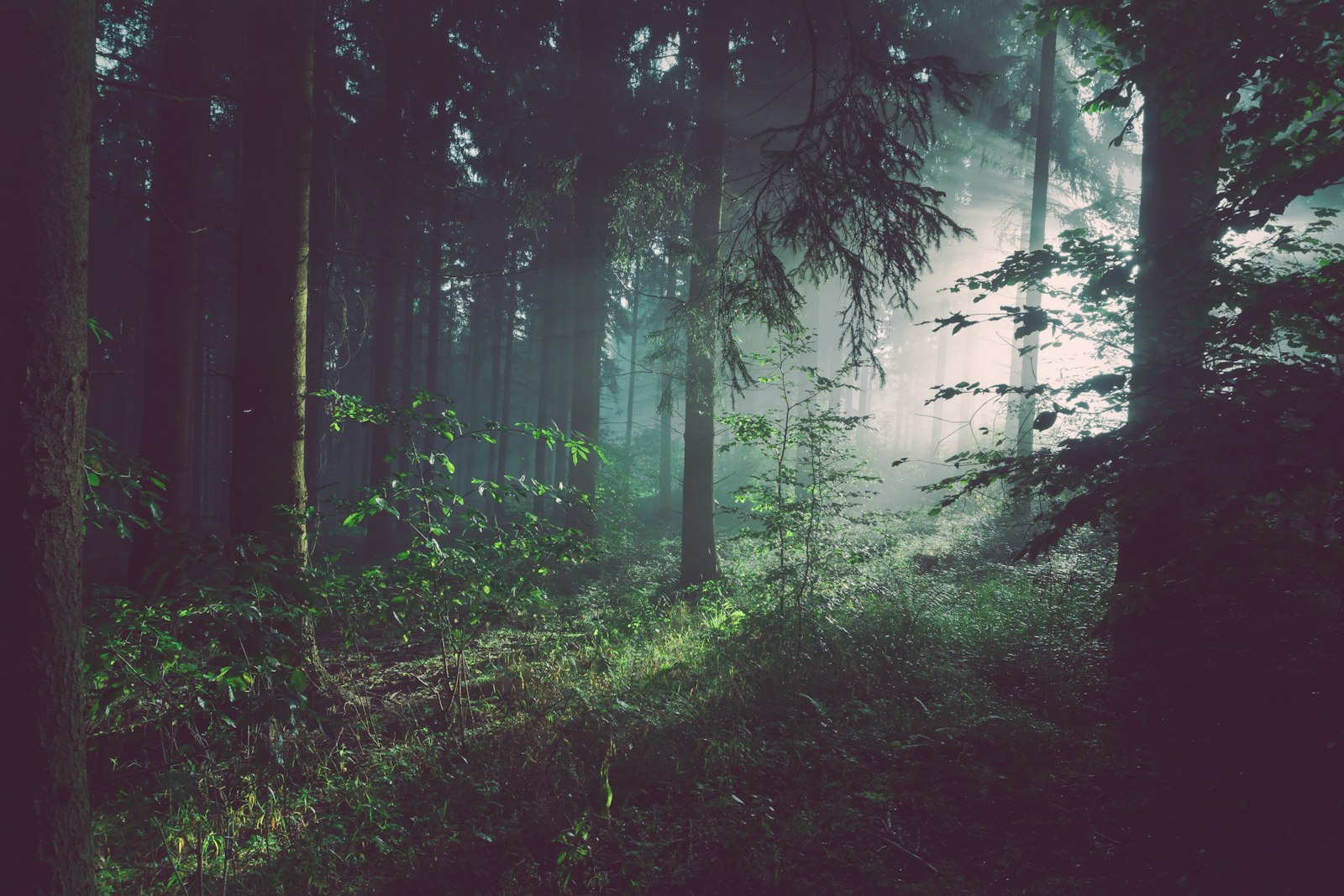
I drove to the state park on a Tuesday in late spring with a thermos of water, an old fleece, and no idea what I was doing. I had read about forest bathing for years. I had bookmarked articles. I had told myself I would try it “the next time I have a free morning,” which is a sentence that, in my life, somehow never actually arrives. So that Tuesday I picked a morning, blocked it on my calendar like a real meeting, and drove the forty minutes from my house to a Michigan DNR state park I had been to exactly once, years ago, for a quick hike with the dogs.
I left the dogs home. That was the first thing I did differently. I love walking with my dogs more than almost anything, but I knew that if I brought them I would be a dog-walker, not a forest bather. I would be watching them, redirecting them, picking up after them, scanning for other dogs. That is its own beautiful practice, but it is not the practice I had come to try.
What follows is the trip report. The actual one. Not the curated one, not the version where everything was perfect, but what really happened on my first forest bathing attempt at a Michigan state park, what I figured out by the end, and what I would tell another first-timer who is on the edge of trying this for themselves.
In This Article
Key Takeaways
- Forest bathing is not a hike with a fancy name. It is slow, intentional sensory presence.
- The first half-hour will probably feel awkward. Stay anyway.
- You do not need an instructor, a class, or perfect weather to start.
- Phone in the car. Watch off the wrist. A two-hour window is plenty for a first try.
- Michigan’s state parks are an underrated and very accessible place to practice.
What Forest Bathing Actually Is (And Isn’t)
Forest bathing, or shinrin-yoku, is a Japanese practice that emerged in the 1980s as a public health initiative. The country’s forestry agency wanted a phrase for what doctors were starting to observe in their patients: that time spent slowly and intentionally in forested environments was producing measurable changes in stress hormones, blood pressure, and mood. The word translates roughly as “bathing in the atmosphere of the forest.”
What it is not: a hike. A workout. A nature photography session. A goal-oriented anything. The Association of Nature and Forest Therapy describes the practice as moving slowly enough that you can be perceived by the forest, not just perceive it. You stop. You notice. You breathe. You let your nervous system pick up on what the trees are doing around you.
What does the research say? The National Center for Complementary and Integrative Health has noted that contemplative practices that combine sensory awareness with slow movement produce measurable shifts in stress markers, and a growing body of work from Japan and Korea has found that forest bathing specifically lowers cortisol, slows heart rate, and reduces blood pressure within an hour or two of practice. Harvard Health Publishing has written that time spent in green spaces improves mood and reduces rumination in ways that walking in city environments does not.
I am not a scientist. I am a fifty-something Michigan woman who works at a computer nine hours a day, lives alone, and was tired. I went to the woods to see if the woods would help. They did, but not in the way I expected.
Choosing the Park: What I Looked For
Michigan has more than one hundred state parks and recreation areas, managed by the Department of Natural Resources. The DNR state parks website lets you filter by features, which is how I found mine. I wanted a few specific things, and I would suggest them to any first-timer.
Trail variety, not trail intensity. I did not want a strenuous trail. I wanted gentle terrain so my body could relax instead of work. I looked for parks with a mix of short loops, ideally one mile or less, with trees old enough to feel like real woods.
Reachable on a weekday morning. I picked a park I could reach in under an hour. The drive itself is part of the practice’s friction. If you have to make it a half-day expedition you will do it less.
A Recreation Passport on my license plate. Michigan residents can add an annual Recreation Passport to their vehicle registration for a small fee, which gets you into all state parks without paying daily entry. I had already done this years ago. If you have not, this is the single best mindfulness purchase you can make in this state.
Bathrooms. I am being honest. I am in menopause, I drink a lot of water, and I had no interest in cutting my visit short because I had not thought about this. I picked a park with a maintained vault toilet near the trailhead.
I will not name the specific park because the practice happens at any forested place in this state, and naming this one feels weirdly proprietary. But I will tell you that it is in the Lower Peninsula, that it has a creek, and that it is forty minutes from my home. That is enough specificity. Your version will be different.
The Honest Prep: What I Packed and Didn’t
I overpacked the first time. I had a small backpack with water, a snack, a tiny first-aid kit, an extra layer, bug spray, a notebook, a pen, and a printed page from one of the forest therapy guides about prompts to try. By the time I got out of the car I felt like I was prepping for an expedition rather than slipping into a small practice.
Here is what I actually used: water, the extra layer (Michigan May, weather flipped), and bug spray for one stretch of the trail. The notebook stayed in the car. The prompts stayed in the car. The snack stayed in the car. I had over-prepared for a thing that, it turns out, needs almost nothing.
For your first time, I would suggest: water in a real bottle (not disposable), a layer in case Michigan does what Michigan does, bug spray during warm months, comfortable shoes you can walk slowly in, and absolutely nothing else.
One specific recommendation: leave the phone in the car. Not on silent. Not in your pocket. In the locked car. I tried to “just have it for safety” the first time and I checked it three times in twenty minutes. The forest cannot reach you while your phone can. Trust me on this one.
The First Half-Hour: All the Wrong Things
I walked into the trailhead and immediately started doing all the wrong things. I walked at my normal hiking pace, which is brisk. I started mentally cataloging what I was seeing, like a checklist. Maple. White oak. Trout lily. Sandhill crane somewhere far off. I was using the forest as content. I felt vaguely virtuous about being there. I was not bathing in anything.
I caught myself around minute ten, when I realized I had walked nearly a quarter of the trail without stopping. I sat down on a log. I noticed I was annoyed with myself. I noticed I was already drafting how I would tell people about this. I closed my eyes for a second and the part of my brain that runs spreadsheets did not stop running.
This, I will tell you now, is the part where most first-timers leave. They get the feeling that they are not doing it right, that the practice is not working, that nature is not magic for them. They walk faster, finish the loop, get back in the car, and tell themselves they tried it.
The Cleveland Clinic has written that most people require a noticeable adjustment window when they first slow down outdoors, often twenty to thirty minutes, before their nervous system begins to drop into the lower-gear state the practice is designed to produce. The agitation is not a sign you are failing. It is a sign you are working.
The Turning Point
I sat on that log for what I think was about ten minutes. I stopped trying. I let the forest be slightly boring. I noticed I could hear water, but not see it. The creek was nearby but downhill and behind some trees. I noticed the sound of the wind through new leaves is different from the sound of the wind through old leaves. I noticed an insect on the back of my hand and did not flick it away. I noticed I was breathing a little deeper than I had been when I sat down.
Eventually I got up and kept walking, but at maybe a third of my earlier pace. I would stop every few minutes, not at planned spots, just wherever something pulled my attention. I touched the bark of one tree for a long time. I watched a single small fern unfurl in my field of vision for what was probably two minutes. I sat down again, near the creek this time, and just listened.
I was there for about an hour and forty minutes total, of which I would say maybe forty-five minutes were the real practice. The rest was the warm-up and the cooldown. By the end I was different than when I started. Not transformed. Just settled. The way you feel after a really good rest.
What Actually Changed in My Body
I did not have a heart rate monitor or any way to measure what was happening. But I can tell you, plainly, what I noticed.
My shoulders dropped. They had been somewhere up near my ears, which is where they live during the work week. I did not consciously lower them. They lowered themselves.
My jaw unclenched. Same. I had not realized it was clenched until I felt it stop being.
My breath got slower and deeper without me directing it. This is the one that interests me most. I have tried so many breathing exercises. None of them work as cleanly on me as just being in the woods does.
The chatter in my head got quieter. Not silent. Quieter. I could still think, but I was not being interrupted by my own thoughts every six seconds. The Mayo Clinic has noted that mindfulness practices reduce rumination and quiet the default mode network, which is the part of the brain that runs the “what if” loop. Forest bathing did that for me without me trying.
My eyes adjusted differently. This sounds strange, but staring at a computer all week trains your eyes to operate in a very narrow visual range. The forest let my eyes look at distances again. By the end my eyes felt rested in a way they had not in months.
What I’d Tell a First-Timer
A handful of things, the way I’d say them to a friend.
Pick a Tuesday or a Wednesday. Weekday mornings at Michigan state parks are quiet. Weekends are busier, and a busier trail will pull you out of the practice.
Plan for two hours, not for “a quick visit.” Two hours is generous enough that you will not feel rushed and short enough that you will actually go.
Leave the phone in the car. I keep saying this because it matters more than anything else I am saying.
Go alone the first time if you can. The practice is different with another person. Not worse, just different. Start solo.
Do not bring the dogs the first time. I love mine. I will bring them eventually. But the first time is for you to learn what your nervous system does. The dogs can come on the next visit.
Expect the first half-hour to be uncomfortable. Walk slower than feels natural. Sit longer than feels necessary. Stay anyway.
Notice your shoulders, your jaw, your breath. Notice your eyes. Notice what your hands want to do with themselves. You are gathering information about your own state.
Plan a quiet rest of the day. Driving home from forest bathing into a packed schedule undoes most of what you just gained. Give yourself a few hours of unstructured time afterward, if you can.
A Last Note
I have been back to that park six times since that first Tuesday. I have also gone to two other Michigan state parks for the same purpose. The practice has become a real part of how I take care of myself. It costs nothing beyond the gas to get there and the Recreation Passport I already had. It produces a kind of internal change I have not gotten from any other practice in my life, and I have tried a lot.
If you live in Michigan, you have an embarrassment of riches in state parks within an hour of wherever you are. They are one of the most accessible mindfulness resources in this country, and most people use them only for hiking, fishing, or family outings. They are also, it turns out, an extraordinarily good place to slowly come back to yourself.
Pick a morning. Pack the small bag. Drive the forty minutes. Leave the phone in the car. Walk slowly enough that the forest can perceive you. See what happens. Then come tell me about it, because I want to hear.
Sources
- State Parks — Michigan Department of Natural Resources.
- What is Forest Therapy? — Association of Nature and Forest Therapy.
- Meditation and Mindfulness: What You Need To Know — National Center for Complementary and Integrative Health.
- Sour mood getting you down? Get back to nature — Harvard Health Publishing.
- Mindfulness exercises — Mayo Clinic.
Free 10-Minute Forest Bathing Meditation
Subscribe to Peacefully Proven and receive a free guided meditation to restore calm and clarity — delivered straight to your inbox.




Join the conversation and add your thoughts.