
The kitchen is the heart of the home: and, for most households, the biggest source of waste. Between food scraps, plastic packaging, paper towels, single-use bags, and containers that never get recycled, the average kitchen generates a staggering amount of trash. In fact, the EPA estimates that food waste alone accounts for 24% of all material sent to landfills in the United States.
The zero waste movement can feel intimidating from the outside, all those perfectly organized pantries with matching glass jars, not a single piece of plastic in sight. But here’s the secret: zero waste isn’t about perfection. It’s about progress. It’s about making thoughtful changes that reduce waste, save money, and often make your kitchen more functional in the process.
If you’re just getting started, this guide walks you through the easiest, highest-impact changes you can make, no complete kitchen overhaul required.
In This Article
Key Takeaways
- Zero waste is a direction, not a destination, even small reductions in kitchen waste matter
- Reducing food waste is the single highest-impact change (saves $1,500+/year for the average family)
- You don’t need to buy special “zero waste” products: use what you already have first
- Simple systems (meal planning, proper storage, composting) are more effective than individual product swaps
- A zero waste kitchen is often a simpler, more organized, and more cost-effective kitchen
The Zero Waste Mindset (It’s Not What You Think)
Let’s clear something up: “zero waste” doesn’t literally mean producing zero trash. For most people, that’s not realistic. The concept, originally coined by environmental activist Bea Johnson, is about dramatically reducing waste through five principles, in order: refuse, reduce, reuse, recycle, rot (compost).
Notice that the first principle is refuse, saying no to things you don’t need before they ever enter your kitchen. The second is reduce, buying less. Recycling, which most people think of as the main solution, comes fourth. And composting (rot) handles what’s left.
A more honest name might be “low waste” or “less waste.” The goal is continuous improvement, not an impossible standard. If you currently fill two trash bags a week from your kitchen and you get that down to one, you’ve made a 50% reduction. That matters.
Tackling Food Waste First: Your Biggest Win
If you do nothing else on this list, reducing food waste will have the largest impact on both your environmental footprint and your budget. The average American family throws away approximately 30–40% of the food they buy. That’s like coming home from the grocery store and immediately throwing one out of every three bags directly into the trash.
Plan Before You Shop
Meal planning doesn’t have to be rigid or elaborate. Even a loose plan: “We’ll have chicken Monday, pasta Wednesday, and use-it-up Friday”, dramatically reduces impulse buying and ensures you use what you purchase. Check what you already have before writing your list. This one habit alone can cut food waste by 30%.
Store Food Properly
Much food waste happens because food spoils before you can eat it. Proper storage extends life significantly:
- Store herbs like flowers, stems in a glass of water in the fridge
- Keep bananas separate from other fruit (they emit ethylene gas that accelerates ripening)
- Move older items to the front of the fridge (first in, first out)
- Store leafy greens with a dry paper towel in the container to absorb excess moisture
- Keep bread at room temperature for 2–3 days, then freeze what you won’t eat
Love Your Freezer
Your freezer is your most powerful anti-waste tool. Bread going stale? Freeze it. Bananas getting too ripe? Freeze them for smoothies. Leftover soup? Freeze it in portions. Vegetable scraps? Save them in a freezer bag until you have enough for homemade stock. Almost anything can be frozen, and doing so gives you weeks or months instead of days to use it.
Embrace the “Use It Up” Meal
Designate one meal per week as a creative “use it up” meal where you cook whatever needs to be eaten. Stir-fries, frittatas, soups, and grain bowls are all infinitely adaptable to whatever you have on hand. This is often when the most creative (and surprisingly delicious) cooking happens.
The Fridge Audit
Before your next grocery trip, do a 5-minute fridge audit. Open every drawer and check every shelf. What needs to be eaten in the next 2 days? What can be frozen right now to save it? What’s already past its prime? Use this audit to inform your shopping list and your next meal plan.
Reducing Plastic in the Kitchen
Plastic is ubiquitous in kitchens, but many common plastic items can be replaced with reusable alternatives. The key is to make swaps gradually, replacing items as they wear out rather than throwing away functional plastic to buy new “eco” versions (which would be counterproductive).
Reusable Bags and Wraps
Replace plastic wrap with beeswax wraps or silicone lids. Replace zip-top bags with reusable silicone bags or glass containers. Replace single-use produce bags with mesh or cotton drawstring bags. These swaps have a real cumulative impact, the average household uses about 500 zip-top bags per year.
Ditch Bottled Water
If you’re buying bottled water, a home filter system pays for itself within months and eliminates hundreds of plastic bottles annually. Even a basic pitcher filter is a significant improvement. Use a reusable water bottle outside the home.
Buy in Bulk Where Available
Bulk bins for grains, nuts, spices, and dried goods eliminate individual packaging. Bring your own containers or bags to stores that offer bulk options. Even large-format containers (a big bag of rice instead of individual servings) significantly reduce packaging waste per serving.
Refuse Unnecessary Packaging
Choose loose produce over pre-packaged. Skip the plastic produce bag for items with a natural skin (oranges, bananas, avocados). Buy from farmers markets where packaging is minimal. These small refusals add up to hundreds of pieces of avoided plastic per year.
Smart Storage and Organization
A well-organized kitchen naturally produces less waste because you can see what you have, use it before it expires, and avoid duplicate purchases.
Clear Containers for Visibility
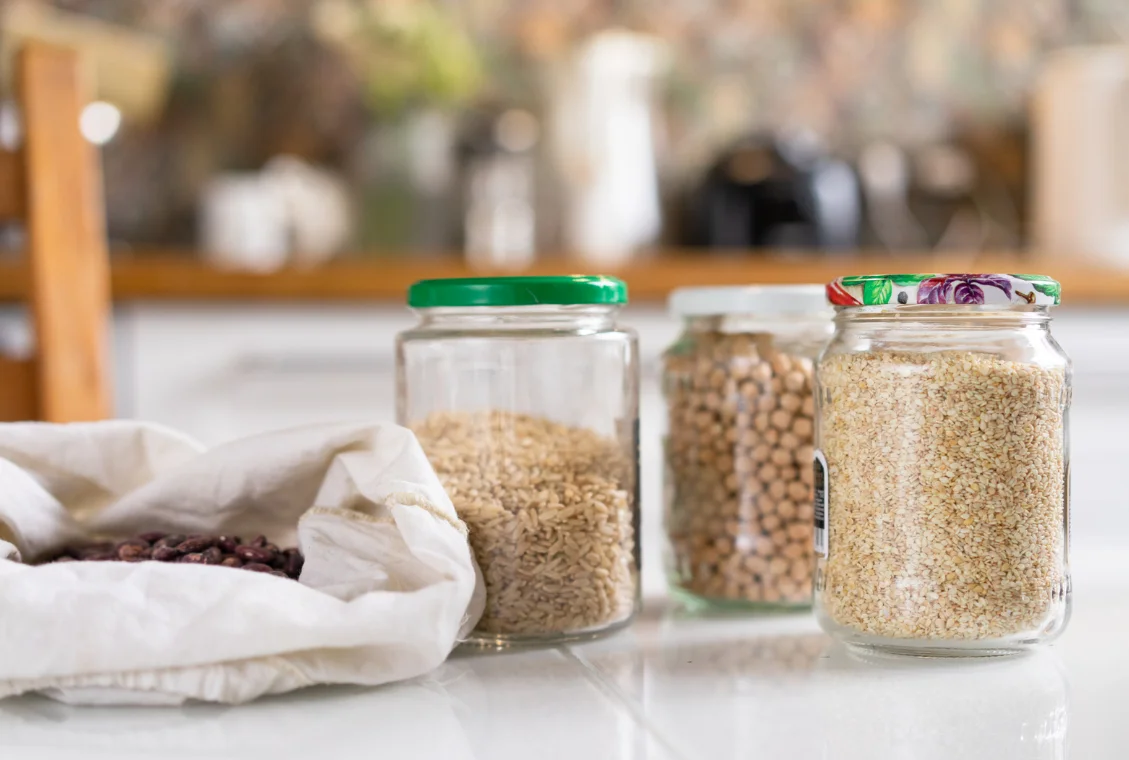
Transfer pantry staples into clear glass or food-grade plastic containers. When you can see exactly how much rice, flour, or oats you have, you’re less likely to buy more than you need. Label containers with the item name and the date you opened them.
The “Eat First” Shelf
Designate one shelf in your fridge as the “eat first” shelf. Place items approaching their use-by date, leftovers, and opened containers here. Make it the first place anyone in the household looks when hungry. This simple system prevents food from being forgotten in the back of the fridge.
Proper Fridge Organization
Different areas of your fridge have different temperatures. Use them strategically: dairy and eggs on upper shelves (most consistent temperature), raw meat on the lowest shelf (contains drips), fruits and vegetables in crisper drawers (humidity controlled), and condiments in the door (warmest area, fine for items with preservatives).
Composting: Closing the Loop
Composting transforms food scraps from waste into a resource. When organic matter goes to a landfill, it decomposes anaerobically (without oxygen) and produces methane. When it composts, it breaks down aerobically and becomes nutrient-rich soil.
Options for Every Situation
Backyard compost bin: The classic option. A simple bin or pile in your yard can handle fruit and vegetable scraps, coffee grounds, eggshells, and yard waste. Turn it occasionally and you’ll have usable compost in 3–6 months.
Countertop compost bin with pickup service: Many cities now offer curbside compost collection. Even without municipal service, private compost pickup services are growing rapidly. You fill a small countertop bin, set it out for collection, and the service handles the rest.
Vermicomposting (worm bin): Perfect for apartments and small spaces. A worm bin sits under your sink or in a closet, and red wiggler worms convert food scraps into rich worm castings. It’s odorless when maintained properly and fascinates children.
Community compost drop-off: Many farmers markets and community gardens have compost drop-off points. Freeze your scraps during the week and drop them off on market day.
Shopping for a Zero Waste Kitchen
How you shop is just as important as what you buy.
Bring Your Own Bags and Containers
Keep reusable grocery bags in your car or by the door. Bring produce bags for loose items. Some stores allow you to bring your own containers for deli, bakery, and bulk items, just ask. The habit takes about three weeks to become automatic.
Shop the Perimeter
The perimeter of most grocery stores (produce, bakery, dairy, meat) generally has less packaging than the center aisles (processed and packaged foods). Choosing whole, minimally processed ingredients naturally reduces packaging waste while also benefiting your health.
Support Stores With Sustainable Practices
Farmers markets, food co-ops, and stores that offer bulk bins and minimal packaging make zero waste shopping easier. Voting with your dollars encourages more stores to adopt these practices.
Buy Whole, Not Pre-Cut
Pre-cut fruit, vegetables, and cheese come with extra packaging and often spoil faster. Buying whole and cutting at home reduces waste and usually costs less. Keep a sharp knife and a sturdy cutting board accessible: prep time for most items is minimal.
Zero Waste Kitchen Cleaning
Kitchen cleaning products are a significant source of both packaging waste and chemical exposure. Simple, homemade alternatives handle most kitchen cleaning tasks.
The Essential Three
White vinegar: Cuts grease, deodorizes, and disinfects most surfaces. Mix 1:1 with water in a spray bottle for an all-purpose cleaner.
Baking soda: A gentle abrasive for scrubbing sinks, ovens, and countertops. Paste of baking soda and water tackles most stuck-on messes.
Castile soap: Concentrated, plant-based, and versatile. A few drops in water clean dishes, countertops, and floors. One bottle replaces multiple specialty products.
Cloth Over Paper
Replace paper towels with washable cloth towels and rags. Old t-shirts, cut-up towels, and cloth napkins all work. Keep a small bin or bag for used cloths and wash them with your regular laundry. Most families can eliminate paper towels entirely within a month.
Compostable Scrubbers
Replace plastic sponges (which are essentially small blocks of plastic) with natural alternatives: loofah sponges, coconut fiber scrub pads, or bamboo dish brushes with replaceable heads. These clean just as effectively and can be composted at end of life.
Keeping It Realistic
The biggest enemy of a zero waste kitchen isn’t convenience, it’s perfectionism. If you approach this with an all-or-nothing mindset, you’ll burn out quickly. The families who sustain low-waste practices long-term are the ones who allow for imperfection.
Your First Zero Waste Week
Don’t change what you buy. Just pay attention to what you throw away. At the end of the week, look at what’s in your trash and recycling. What items show up most frequently? That’s where to focus your first changes.
Common discoveries:
- Food scraps that could be composted (or avoided through better planning)
- Plastic packaging from individually wrapped items
- Paper towels used for tasks a cloth could handle
- Expired food that was forgotten in the fridge
Pick the biggest offender and address it first. One change at a time.
A zero waste kitchen journey is deeply personal. Your pace, your priorities, and your starting point are unique. What matters isn’t where you are today, it’s that you’re moving in a direction that aligns with your values. Every plastic bag refused, every food scrap composted, and every meal planned instead of wasted is a small act of care for the world your children and grandchildren will inherit.
Start where you are. Use what you have. Do what you can. And know that imperfect progress beats perfect intention every single time.
The Free Subscriber’s Library Is Open
Join Peacefully Proven for a growing collection of free wellness tools, guides, and printables, plus a guided forest bathing meditation to begin. All yours, always free.
Sources
- EPA. “Facts and Figures about Materials, Waste and Recycling.” epa.gov
- Johnson, B. (2013). Zero Waste Home: The Ultimate Guide to Simplifying Your Life by Reducing Your Waste. Scribner.
- NRDC. (2017). “Wasted: How America Is Losing Up to 40 Percent of Its Food.” Food Waste: A Big Problem With a Simple Solution
- ReFED. “A Roadmap to Reduce U.S. Food Waste by 20 Percent.” The Problem of Food Waste
- USDA. “Food Waste FAQs.” usda.gov





Join the conversation and add your thoughts.