
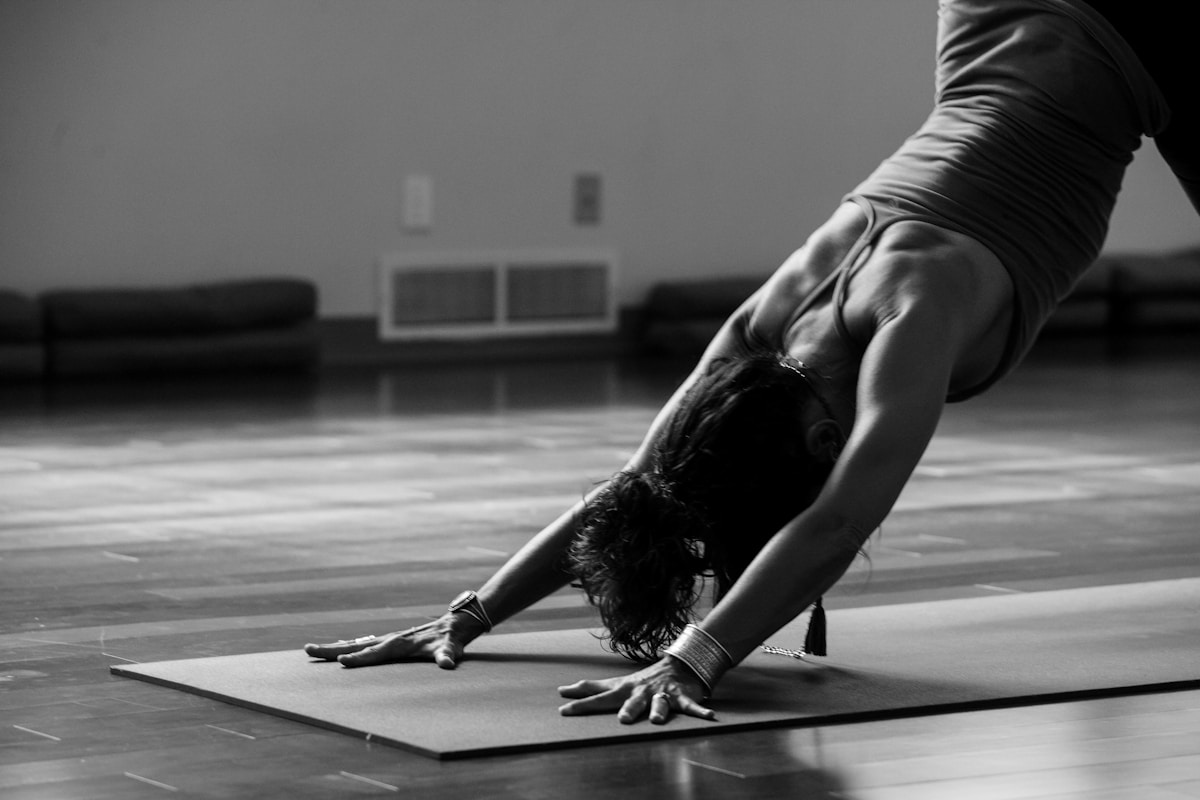
If you’ve been exploring slower, gentler forms of yoga, you’ve almost certainly encountered two styles that sound remarkably similar: yin yoga and restorative yoga. Both involve holding poses for extended periods. Both are practiced at a quiet, meditative pace. And both stand in sharp contrast to the faster, strength-focused yoga classes that dominate studio schedules. So when it comes to yin yoga vs. restorative yoga, what’s actually different — and which one is the right fit for your body and your goals?
The distinction matters more than you might think. Despite their outward similarities, these two practices have fundamentally different intentions, physical effects, and ideal applications. Understanding those differences can help you choose the practice that serves you best right now — or show you how both can play valuable roles in your overall wellness routine.
Let’s break down everything you need to know to make an informed choice between these two powerful slow practices.
In This Article
- The Core Difference in One Sentence
- What Is Yin Yoga?
- What Is Restorative Yoga?
- Side-by-Side Comparison
- Physical Effects: What Each Practice Does to Your Body
- Mental and Emotional Impact
- When to Choose Yin Yoga
- When to Choose Restorative Yoga
- Can You Practice Both?
- Getting Started with Each Practice
The Core Difference in One Sentence
Here’s the simplest way to understand it: yin yoga applies gentle stress to your connective tissues to increase flexibility and joint mobility, while restorative yoga removes all stress from your body to activate deep nervous system recovery. One is about productive discomfort. The other is about complete comfort. As Yoga Journal explains, the two practices serve different purposes despite their similar pacing, and understanding this distinction helps practitioners choose the right tool for what they need in any given moment.
Both practices are slow. Both involve long holds. But what’s happening inside your body during each one is entirely different — and that difference determines which practice will serve you best depending on what you’re working with on any given day.
What Is Yin Yoga?
Yin yoga was developed by martial arts expert and yoga teacher Paulie Zink in the late 1970s and later systematized by Paul Grilley and Sarah Powers. It’s rooted in Traditional Chinese Medicine concepts and targets the deep connective tissues of the body — fascia, ligaments, tendons, and the tissue around joints — rather than the muscles that more active yoga styles engage.
In a yin practice, you move into a pose and settle at a point where you feel moderate sensation — what teachers sometimes describe as finding your “edge.” This sensation should be noticeable but never sharp or painful. As Yoga Journal’s yin yoga guide describes, poses are typically held for three to five minutes, and the extended time allows connective tissue to gradually respond to the sustained, gentle load. Over weeks and months of consistent practice, this slow loading increases flexibility and range of motion in a way that stretching muscles alone cannot achieve.
The key principle of yin yoga is that muscles must be relatively relaxed for the stress to reach the deeper connective tissues. If you engage your muscles to hold or resist a pose, the load stays in the muscular layer and doesn’t penetrate to the fascia and ligaments beneath. That’s why yin poses are held passively, with gravity doing most of the work — but unlike restorative yoga, you are deliberately allowing yourself to feel sensation during the hold.
A typical yin class might include eight to twelve poses focused on the hips, pelvis, inner thighs, and lower spine — areas where connective tissue is particularly dense and where many people hold chronic tightness. Props like blocks and blankets are used to modify intensity, but their purpose is to find the right level of sensation rather than to eliminate sensation entirely.
What Is Restorative Yoga?
Restorative yoga, developed by Judith Hanson Lasater from the therapeutic work of B.K.S. Iyengar, has a completely different intention. Where yin yoga asks you to be with mild discomfort, restorative yoga asks you to eliminate all discomfort. As Cleveland Clinic describes, the practice uses extensive prop support to create positions where the body can rest completely, allowing the nervous system to shift from fight-or-flight mode into its rest-and-digest state.
In restorative yoga, you should feel absolutely nothing in terms of stretch or effort. If you notice any sensation pulling your attention, the instruction is to add more props, change your position, or adjust until you can genuinely forget about your body. The goal is to create conditions so comfortable that your nervous system receives an unambiguous signal of safety, triggering a cascade of physiological changes: lowered heart rate, reduced blood pressure, decreased cortisol, and deeper breathing.
A restorative class typically includes only four or five poses over an entire hour, with each pose held for ten to twenty minutes. The prop setup for each pose can be elaborate — bolsters, multiple blankets, blocks, straps, eye pillows, and even sandbags are common. Every prop serves a specific purpose: supporting a body part, creating warmth, blocking light, or adding gentle weight that promotes a feeling of groundedness.
The slowness and thoroughness of restorative yoga can be challenging in its own way — not physically, but psychologically. For people accustomed to constant activity and stimulation, the deliberate stillness can feel confronting. But that confrontation with stillness is part of the practice’s power.
Side-by-Side Comparison
| Feature | Yin Yoga | Restorative Yoga |
|---|---|---|
| Primary intention | Increase flexibility and joint mobility | Activate deep nervous system recovery |
| Physical sensation | Moderate stretch sensation (productive discomfort) | Zero sensation (complete comfort) |
| Hold times | 3 to 5 minutes per pose | 5 to 20 minutes per pose |
| Number of poses per class | 8 to 12 poses | 4 to 5 poses |
| Use of props | Moderate — to modify intensity | Extensive — to eliminate all effort |
| Target tissue | Connective tissue (fascia, ligaments) | Nervous system (parasympathetic activation) |
| Energy after practice | Open, released, sometimes emotionally stirred | Calm, restored, deeply rested |
| Best for | Flexibility, joint health, complementing active training | Stress recovery, burnout, illness recovery, sleep |
Physical Effects: What Each Practice Does to Your Body
Yin Yoga’s Physical Impact
Yin yoga creates what physiologists call “creep” in connective tissue — a gradual lengthening that occurs when tissue is held under gentle, sustained load. This is fundamentally different from the elastic stretching that happens when you hold a muscle stretch for thirty seconds. Connective tissue responds to slow, patient loading over minutes, not seconds, and the changes it produces are more lasting.
Over time, regular yin practice can increase range of motion in joints that feel perpetually tight, improve the hydration and health of fascia (the web of connective tissue that wraps every muscle, organ, and bone in your body), and reduce stiffness that comes with aging or sedentary lifestyles. As Healthline notes, yin yoga targets areas like the hips, pelvis, and lower spine where deep tissue tends to become restricted, particularly in people who sit for extended periods.
There’s also a circulatory benefit. When you hold a yin pose, you create temporary compression in certain areas of tissue. When you release the pose, fresh blood and lymph fluid rush into the area — a process sometimes described as a “squeeze and soak” effect that promotes tissue health and recovery.
Restorative Yoga’s Physical Impact
Restorative yoga’s physical effects work primarily through the nervous system rather than through mechanical loading of tissue. When your body is fully supported and there’s no effort required to maintain a position, your sympathetic nervous system (the fight-or-flight system) begins to quiet, and your parasympathetic system (the rest-and-digest system) takes over.
This shift triggers measurable physiological changes: cortisol levels drop, heart rate slows, blood pressure decreases, digestion improves, and the immune system receives support to function more effectively. Chronic muscle tension — the kind that accumulates from weeks or months of stress — begins to release not because the muscles are being stretched, but because the nervous system is no longer sending them the signal to stay contracted.
For people dealing with chronic stress, insomnia, adrenal fatigue, or recovery from illness, these nervous system effects can be profoundly healing. The body has a remarkable capacity to repair itself when the stress response is turned down and recovery mode is turned up.
Mental and Emotional Impact
Both practices have significant psychological effects, but the nature of that impact differs.
Yin yoga cultivates mental resilience. Sitting with moderate discomfort for three to five minutes requires you to develop a relationship with sensation that doesn’t involve either fighting it or fleeing from it. This practice of being present with discomfort without reacting translates directly to life off the mat. People who practice yin regularly often report greater equanimity in the face of daily stressors and improved ability to sit with uncomfortable emotions rather than immediately trying to fix or suppress them.
Restorative yoga cultivates the ability to receive. For many people — particularly high achievers, caregivers, and anyone who defines themselves by their productivity — doing nothing is deeply uncomfortable. Restorative yoga asks you to practice receiving support, letting go of control, and trusting that you’re allowed to rest without earning it first. As Yoga Journal describes, many experienced practitioners consider restorative yoga the most advanced practice because of how challenging true surrender can be.
Both practices can surface stored emotions. Yin does this through the physical sensation of tissue release — hips and pelvis, in particular, are areas where emotional tension is commonly stored. Restorative does this through the safety of deep rest — when the body finally feels secure enough to let down its guard, emotions that have been held at bay may emerge. In both cases, this is a healthy and normal part of the practice.
“Yin yoga teaches you to stay present with what’s uncomfortable. Restorative yoga teaches you to stay present with what’s peaceful. Both lessons are essential, and both are harder than they sound.”
When to Choose Yin Yoga
Yin yoga is the better choice when your primary goals are physical — when you want to work with your body’s flexibility, joint health, and tissue quality. Consider yin when:
You feel physically tight or restricted. If your hips, hamstrings, lower back, or shoulders feel stiff and limited, yin yoga addresses these areas through sustained, deep tissue work that active stretching can’t replicate.
You have a strong active practice and need balance. If you run, lift weights, cycle, or practice vigorous vinyasa yoga, yin provides an essential counterbalance by targeting the connective tissue that active training tightens. Many athletes and active practitioners find that adding two yin sessions per week significantly improves their recovery and performance.
You want to build mental resilience. The practice of being with mild discomfort develops patience, equanimity, and emotional steadiness that serves you in every area of life.
You’re relatively healthy and want maintenance. Yin is excellent for people who aren’t in active recovery from illness or burnout but want to maintain joint health, prevent stiffness, and create space for quiet reflection in their week.
You sit for long periods. Desk workers, drivers, and anyone who spends hours in a seated position accumulates tension in the hips, lower back, and shoulders. Yin specifically targets these areas and can counteract the tissue compression that comes with prolonged sitting.
When to Choose Restorative Yoga
Restorative yoga is the better choice when recovery, rest, and nervous system regulation are your primary needs. Choose restorative when:
You’re experiencing burnout or chronic stress. When your nervous system has been in overdrive for weeks or months, you need practices that restore rather than challenge. Restorative yoga directly addresses the physiological effects of chronic stress by activating the parasympathetic response.
You’re recovering from illness, surgery, or injury. When your body is healing, it needs rest more than it needs stretching. Restorative yoga supports recovery without placing any demands on an already taxed system.
Sleep is a struggle. If insomnia or poor sleep quality is affecting your life, restorative yoga practiced in the evening can dramatically improve your ability to fall asleep and stay asleep by training your nervous system to shift into rest mode.
You feel depleted rather than just tight. There’s an important distinction between feeling physically stiff and feeling energetically drained. Stiffness calls for yin. Depletion calls for restorative. If your exercise routine feels like one more thing taking from you rather than giving to you, restorative yoga fills the tank instead of emptying it.
You have chronic pain. The pain-stress cycle keeps many people trapped in a loop where pain triggers tension, tension worsens pain, and stress amplifies the entire experience. Restorative yoga interrupts this cycle at the nervous system level.
Quick Decision Guide
- Feeling stiff and restricted? Try yin yoga
- Feeling exhausted and overwhelmed? Try restorative yoga
- Want to complement an active fitness routine? Try yin yoga
- Recovering from illness or burnout? Try restorative yoga
- Want to build mental resilience and patience? Try yin yoga
- Struggling with sleep or anxiety? Try restorative yoga
- Want to maintain joint health long-term? Try yin yoga
- Need permission to do absolutely nothing? Try restorative yoga
Can You Practice Both?
Absolutely — and many people find that combining both practices creates a more complete approach to slow, intentional movement. Yin and restorative yoga address different needs, and most of us have both sets of needs at various times.
A weekly rhythm that includes both. One practical approach is to practice yin yoga once or twice per week on days when you feel energetically stable and want to work on flexibility, and to practice restorative yoga once per week (or more during high-stress periods) when recovery is the priority. This combination addresses both the physical body and the nervous system.
Seasonal adjustments. Some people find that their needs shift with the seasons or with life circumstances. During busy, demanding periods, you might lean more heavily on restorative practice. During calmer times when you have more energy, yin yoga might take a larger role. Listening to what your body actually needs rather than defaulting to one practice creates a more responsive relationship with your own wellness.
Within a single session. Some teachers offer classes that blend both approaches — beginning with yin poses to create openness in the body, then transitioning to restorative poses to allow deep integration and rest. If you practice at home, you might experiment with twenty minutes of yin work followed by twenty minutes of restorative rest.
Getting Started with Each Practice
Starting a Yin Practice
Begin with three foundational poses. Butterfly (soles of feet together, fold forward), Dragon (low lunge), and Sphinx or Seal (gentle backbend) target the most commonly restricted areas and will give you a clear sense of what yin yoga feels like.
Hold for three minutes initially. Five-minute holds can feel very long when you’re new to the practice. Start with three minutes per pose and gradually increase as you develop comfort with the extended stillness.
Find your appropriate edge. You should feel noticeable sensation but never pain. If sensation is sharp, electric, or creates anxiety, you’ve gone too far. Back off until the feeling is more like a dull, manageable pressure.
Starting a Restorative Practice
Begin with Legs Up the Wall. This is the simplest, most accessible restorative pose. No props are required (though a blanket under your hips is nice), and it delivers immediate nervous system benefits.
Prioritize comfort over correctness. There’s no wrong way to do restorative yoga as long as you’re completely comfortable. If a suggested prop setup doesn’t feel right, change it until it does. Your comfort is the compass.
Give yourself at least ten minutes. The nervous system shift that makes restorative yoga so powerful takes time to engage. Shorter holds may feel relaxing, but the deeper physiological benefits begin accumulating around the five to ten minute mark.
A Combined Yin and Restorative Home Practice (45 Minutes)
Try this balanced sequence that includes both approaches:
- Butterfly (Yin) — 4 minutes (gentle hip opening)
- Dragon/Low Lunge (Yin) — 3 minutes each side (hip flexor release)
- Caterpillar/Seated Forward Fold (Yin) — 4 minutes (hamstrings and spine)
- Transition: lie down, set up props — 2 minutes
- Supported Reclining Bound Angle (Restorative) — 10 minutes (full-body release)
- Supported Savasana (Restorative) — 10 minutes (deep integration)
The beauty of both yin and restorative yoga is that they remind us that wellness doesn’t always require effort, intensity, or sweat. Sometimes what serves us most is learning to slow down, listen to what our body actually needs, and respond with the appropriate kind of care. Whether that means sitting with gentle sensation as your tissues open, or lying in perfect stillness as your nervous system finally exhales — both practices honor the same fundamental truth: healing happens when we create the right conditions for it and then get out of the way.
The Free Subscriber’s Library Is Open
Join Peacefully Proven for a growing collection of free wellness tools, guides, and printables, plus a guided forest bathing meditation to begin. All yours, always free.





Join the conversation and add your thoughts.