
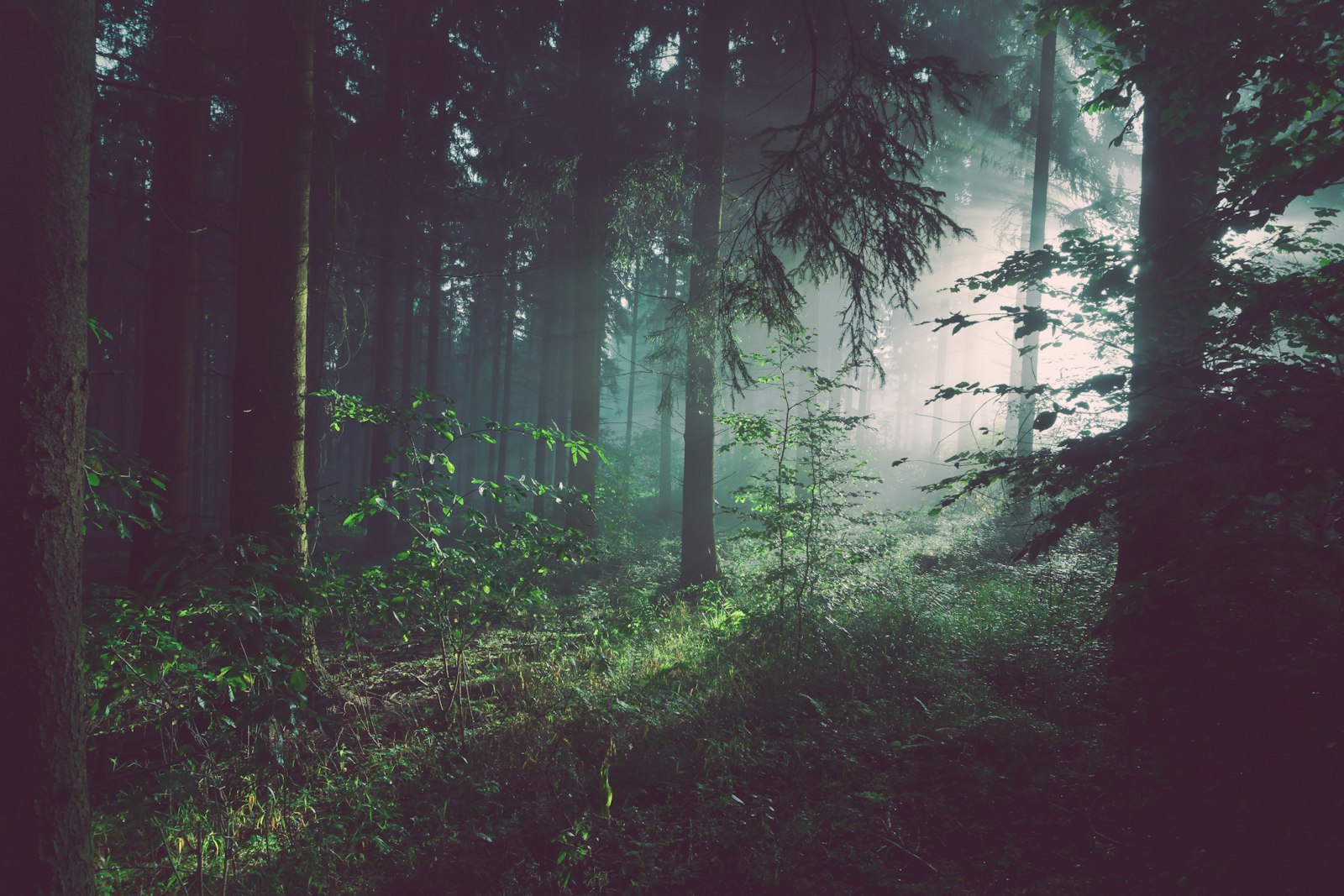
The first week of June I made myself a small promise. Every weekday, between noon and twelve-thirty, I would walk the short path that winds through the trees on my property and try a different fifteen-minute mindfulness practice. Just one practice a day. Just fifteen minutes. Just one week.
The context: I work from home, on a computer, for about nine hours most days. By noon my shoulders are usually up around my ears, my eyes are tired, and I have not spoken out loud to a human since the morning’s first meeting. I live alone in Michigan with my dogs and cats, and while I love every one of those creatures, none of them count as conversation. By twelve-thirty most days, I am ready for the screen to stop talking to me for a minute.
I had been doing lunch walks for years. What I had not been doing was bringing any intention to them. I usually just walked. My head was still in the morning’s emails. My phone was still in my hand. I would come back to my desk fifteen minutes later having moved my body but not having put it down. So I decided to try five different practices, one a day, and see what each one did. This is the report.
In This Article
Key Takeaways
- A fifteen-minute lunch walk with intention is functionally different from a fifteen-minute lunch walk without it.
- Different practices serve different days; pick by what you actually need that hour.
- The phone stays in the pocket. Non-negotiable. That single rule did most of the work.
- You do not need a forest or a long drive. A small neighborhood park is enough.
- One week of deliberate practice is enough to find one or two you’ll keep for years.
Why a Small Loop, Specifically
I should be straight about my own situation, because it is not the hard case. I live on four acres of woods in Michigan. Trees are not something I have to go find. What I do have to do is leave my desk, and it turns out that is the harder problem by a wide margin.
The loop I walked for this week is small. Maybe a third of a mile, a stand of maples and oaks that are densely leafy by June, and somewhere to sit. That is the whole thing, and it is enough. If you are working with a neighborhood park or a strip of trees down the block rather than acreage, the practices below are built to work there, because the size of the green space turns out to matter far less than whether you actually go.
The research on why this matters is consistent. Time in green spaces, even small ones, is associated with measurable reductions in stress markers. The National Center for Complementary and Integrative Health notes in its overview of mindfulness research that mindfulness practices reduce stress, anxiety, and depression in multiple studies, and pairing those practices with outdoor settings appears to amplify the benefit. You do not need a wilderness. You need a place with some sky and some living things, where you can walk slowly for fifteen minutes without bumping into anyone you’d have to make small talk with.
My path has both of those. So that became the laboratory.
Monday: Counting My Steps in Sets of Ten
This is the simplest walking meditation I know. You count your steps. One, two, three, all the way to ten, and then you start over at one. When your mind wanders (it will), you notice, and you start again at one. That’s the whole technique.
On Monday at 12:02 PM I parked my phone in my front pocket, walked out the door, and started counting. By the third time along the path I had probably restarted at one fifty or sixty times. My mind was in everything I had to finish that afternoon. But each restart was itself a tiny rep of catching the wandering and returning. By the time I walked back to my house at 12:21, my shoulders were lower. I felt clearer. I went into my one o’clock meeting noticeably more present than I usually am.
What I noticed: the counting is mechanical enough that the mind keeps trying to escape it, which is the entire point. You cannot be thinking about a work email and counting at the same time. The counting wins, or the work email wins, but they cannot run together. I liked this practice. It would become my default for stressed days.
Tuesday: Naming Five Colors
Tuesday I tried a sensory practice. As I walked, I named the colors I was seeing, out loud (quietly, but out loud). “Green. Brown. Gray. Yellow. Blue.” Each time I saw a color I had not yet named, I added it. I was not looking for unusual colors. I was just letting my eyes find what was there.
This sounds almost too small to do anything. It did a lot. Within about three minutes my eyes had stopped scanning for nothing and started actually looking. I noticed the specific yellow-green of the maple leaves just past peak unfurling. I noticed the silver-gray of a fallen branch beside the path. I noticed the muddy brown-red of a robin’s chest. The Cleveland Clinic has a helpful primer on grounding techniques like the five senses exercise, and what this color version did for me is exactly what they describe: it pulled me out of my head and into the body and the world.
What I noticed: this practice is wonderful for high-anxiety days, when the brain is in a loop. It is harder to do on days when you are already calm because you do not feel the contrast as strongly. I would later use this one specifically for spinning-thoughts days.
Wednesday: A Body Scan While Walking
Wednesday was the day the litter I had been raising for PAWS with a Cause went home to their foster families, which meant I needed to land in my body before a hard goodbye. I walked the path and ran a body scan as I went. Feet (heavy on the soft ground). Calves (a little tight from yesterday’s missed stretching). Knees (good). Hips (mildly stiff from desk-sitting). Belly (relaxed). Chest (a small flicker of nervous about the goodbye). Shoulders (high, dropping as I noticed). Jaw (clenched, releasing). Top of head (warm sun).
I did one full scan, slowly, taking about eight or nine minutes. Then I just walked for the remaining time. By the time I got home, the nervous flicker in my chest had named itself and quieted. The foster families arrived twenty minutes later and I met them in a different state than I usually would have. The handoff went well. I was more present for it. The body scan did that.
Harvard Health Publishing has an accessible overview of how mindfulness practices including body scans support nervous system regulation, and what I had just done was a working version of that in real time. I would keep this one for any day with an emotionally heavy commitment afterward.
Thursday: Loving-Kindness Toward Strangers
Thursday I had errands, so instead of my own path I walked into town, which turned out to be exactly the right day for this one. I tried loving-kindness, in the form I find easiest. As I walked I silently offered a wish to each person I passed. The form was simple: “May you be well. May you be at ease.” I did this without making eye contact (which would have been weird and would have made the practice about being seen). Just internally, as I noticed each person.
On Thursday I passed: a young dad pushing a stroller with a toddler who was throwing Cheerios on the path; an older man walking a small white dog; a teenager with headphones running laps; another woman who looked about my age and gave me a small smile as she passed in the other direction.
What I noticed: this practice softens you in a way that surprised me. By the third or fourth person, my chest felt different. I felt less like a stranger and more like a neighbor. The American Psychological Association has summarized research on loving-kindness meditation showing that these practices are associated with increased positive emotions, social connectedness, and reduced self-criticism. I felt all three within fifteen minutes. I would keep this one for days when I had been alone too long and needed to remember I was a person among other people.
Friday: Just Listening
Friday I tried the simplest practice of the week. As I walked, I just listened. I noticed each sound as it came in. The crunch of my own footsteps. A car going by. A child laughing. The low buzz of an air conditioner on the back of a building. Wind in the leaves. A robin. A dog barking three streets over.
I did not try to identify, judge, or categorize. I just heard. When I noticed I had drifted into thinking about something, I came back to whatever sound was happening at that moment.
What I noticed: the woods were much louder than I had previously realized. Also much more layered. There were probably six or seven distinct sound sources playing at any given moment, and I had been treating it as silence because none of it was attached to my attention. Once I started listening, the whole soundscape opened. I would keep this one as a Friday wind-down practice, by the end of the week my mind needs the lowest possible cognitive load, and just listening is about as low as it gets.
What I Kept After the Week
One week. Five practices. Three of them I’m still doing months later.
Step counting (Monday) is now my default for stressed work days. When my morning has been chaotic and my afternoon looks bad, I walk and count. The mechanical-ness is the medicine.
Body scan walks (Wednesday) are now my standing practice before a litter goes home, and on any day before a heavier emotional commitment. The scan lands me in my body before I have to be present for someone else’s.
Loving-kindness toward strangers (Thursday) has become my Sunday afternoon walk, when I have usually been more alone than I want to be by the end of the weekend. Fifteen minutes of silently wishing well to passing strangers reconnects me to a kind of community without requiring conversation.
The other two I dropped. Naming colors I now use occasionally when I am specifically anxious, but it is not part of my regular rotation. Just listening was beautiful but slightly too unstructured for me; I drift more easily in that one.
The bigger thing I kept was the phone-in-pocket rule. Once I saw what fifteen minutes without a screen can do, I could not unsee it. My lunch walks now are not optional. They are the bridge that lets the rest of the workday function.
A Last Note
If you work from home like I do, you probably have a small green space within walking distance of where you live. A park, a strip of trees, a quiet block of older trees on a residential street. You probably also have a lunch break that you usually spend eating in front of a screen.
The trade I would offer you is the trade I made for myself: try one week of fifteen-minute deliberate lunch walks. Phone in your pocket. A different practice each day. See which ones land. Keep the ones that do. Drop the ones that don’t.
The week itself is small. The shift it makes is not.
Sources
- Meditation and Mindfulness: Effectiveness and Safety, National Center for Complementary and Integrative Health.
- What Is Grounding and How Can It Help You?, Cleveland Clinic.
- Eight weeks to better brain health, Harvard Health Publishing.
- What is meditation?, American Psychological Association.
Free 10-Minute Forest Bathing Meditation
Subscribe to Peacefully Proven and receive a free guided meditation to restore calm and clarity, delivered straight to your inbox.






Join the conversation and add your thoughts.