
Disclosure: Some of the brand links in this article are affiliate links, which means if you click through and buy something, I may earn a small commission at no extra cost to you. I only link to brands I personally use and trust.
There was a period of time, maybe eighteen months into perimenopause, when I genuinely thought something was wrong with my brain. Not low-grade wrong. Neurologically wrong. I was counting on my fingers to add two single-digit numbers. I was making mistakes in work I’d done competently for twenty years. I’d walk into a room and have absolutely no idea why I was there, multiple times a day, not as a joke but as a real and frightening thing. I started researching early-onset dementia. I told almost nobody because I was scared and embarrassed. And then I got on HRT, shifted my diet to fully plant-based and anti-inflammatory, and within a few months I could think again. The relief was so profound I nearly cried.
I want to lead with that story because I think a lot of us dismiss our perimenopause mood and cognitive symptoms as stress, or aging, or “just being tired.” They’re not. They’re hormonal, they’re real, and they respond to treatment. This article is specifically about the food side of that treatment, what I changed in my diet that contributed to lifting the depression and the fog, alongside HRT.
What’s actually happening to your brain in perimenopause
Estrogen isn’t just a reproductive hormone. It’s deeply involved in how your brain makes and uses serotonin, dopamine, and acetylcholine. When estrogen starts fluctuating and eventually dropping in perimenopause, those neurotransmitter systems get disrupted. This is why depression, irritability, brain fog, and cognitive blunting are so common during this transition. It’s not a character flaw. It’s not weakness. It’s chemistry.
Inflammation makes it worse. Chronically elevated inflammatory markers are associated with both depression and cognitive decline, and menopause itself tends to increase systemic inflammation. The good news is that food is one of the most direct levers you have on inflammation, and on neurotransmitter production, without a prescription.
The foods that made a noticeable difference for me
My diet is fully vegan and as organic as possible, and I genuinely believe the overall shift to whole foods was a significant part of my mood recovery. But within that, here are the specific things I credit most:
- Omega-3 fatty acids. This is the one I’d put at the top of the list. DHA and EPA (the long-chain omega-3s) and ALA (found in walnuts, flaxseed, chia seeds) are critical for brain cell membrane health and for reducing neuroinflammation. I eat ground flaxseed daily, add chia seeds to my morning Kachava shake, and eat walnuts regularly. I also supplement with an algae-based omega-3 (the plant-based source of DHA and EPA directly, so I’m not depending entirely on the ALA conversion pathway). The research on omega-3s and depression is some of the strongest in nutritional psychiatry.
- My morning Kachava ritual. Every single morning I make a shake with two scoops of Kachava, and I add a custom adaptogenic powder blend: ashwagandha, rose powder, ginkgo biloba, a mushroom blend, amla, and saw palmetto. Ginkgo biloba in particular has research behind it for cognitive function and circulation. Ashwagandha is one of the better-studied adaptogens for stress response and cortisol. The mushroom blend (lion’s mane is the one I’m most interested in for brain health) adds another layer. This shake is completely non-negotiable. On days I’ve had to skip it, I feel sluggish and mentally flat for the rest of the day. I notice its absence immediately.
- Fermented foods and gut health. The gut-brain axis is real and increasingly well-documented. Your gut produces a significant portion of your serotonin, and a disrupted gut microbiome is associated with depression and anxiety. I eat sauerkraut, kimchi, and miso regularly. I also eat a high-fiber diet (which is basically automatic on a whole-food plant-based diet), because fiber feeds the beneficial bacteria that keep the gut-brain axis functioning.
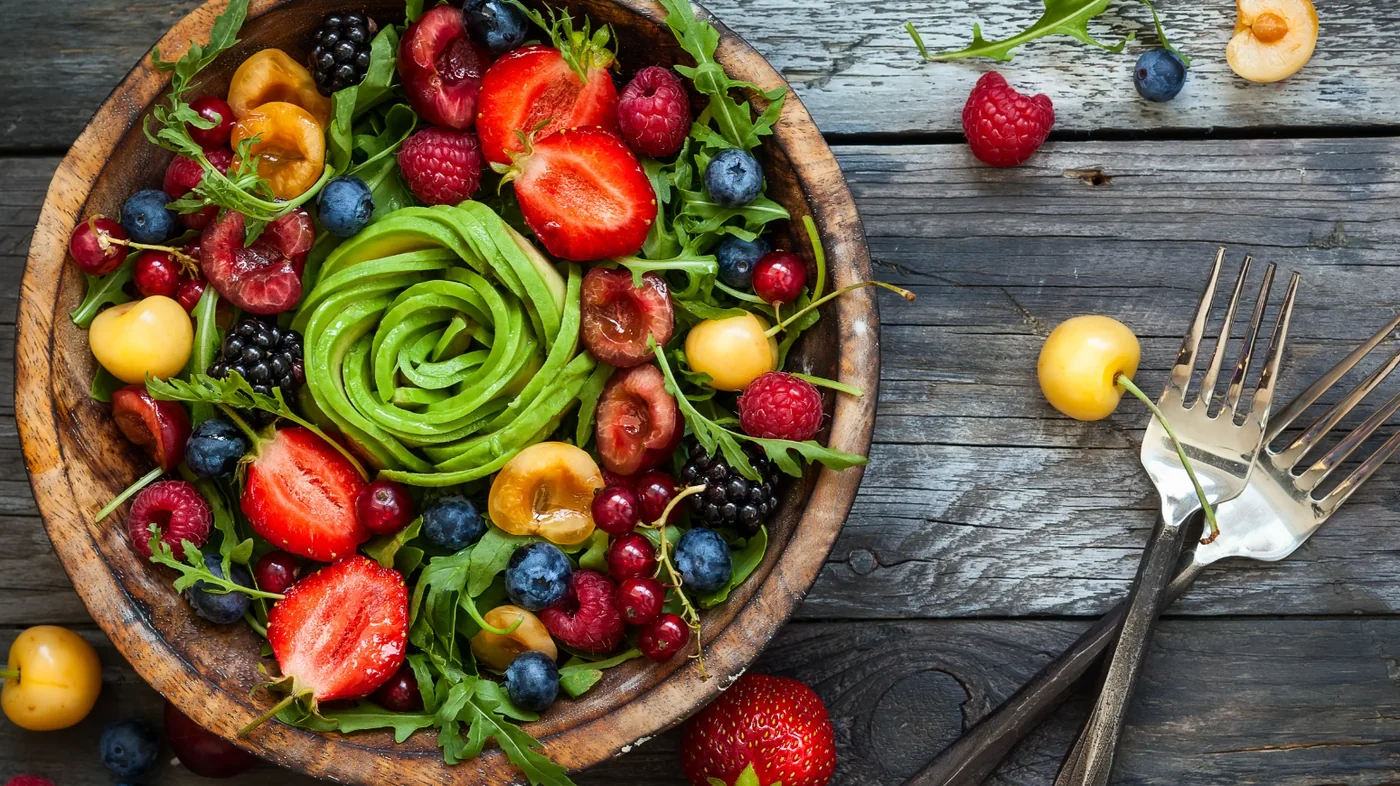
- Dark leafy greens. Folate is critical for neurotransmitter synthesis, and most of us in perimenopause are not getting enough of it from food. Spinach, kale, arugula, and Swiss chard are all high-folate options I build my meals around. I also believe the magnesium in these greens contributes to nervous system calm.
- Foods high in tryptophan. Tryptophan is the amino acid precursor to serotonin. Plant-based sources include pumpkin seeds, tofu, tempeh, oats, and chickpeas. I don’t eat these with the conscious intention of boosting serotonin every time, but they’re staples in my diet and I think they matter cumulatively.
- Berries and colorful produce. The antioxidants in berries, especially blueberries, are associated with reduced neuroinflammation and better cognitive function in aging adults. I eat frozen wild blueberries almost daily, often added to my Kachava shake or eaten with breakfast. They’re one of the most nutrient-dense, anti-inflammatory foods available and they’re inexpensive when bought frozen.
- Turmeric. Curcumin, the active compound in turmeric, has meaningful anti-inflammatory and potentially neuroprotective properties. I cook with it constantly and add it to sauces, soups, and grain dishes. It absorbs much better with black pepper, so I add both.

The lifestyle stack that compounds the food work
I want to name these because I don’t think food works in isolation for mood. The practices that have compounded what I do nutritionally are: gratitude journaling first thing in the morning (even two to three lines, it shifts something), a short daily meditation, one-to-two minute deep breathing breaks when I notice my nervous system spiking during the workday, and time with my dogs and cats. Genuinely, sitting on the floor and letting a dog lean against you while you breathe is underrated medicine. It costs nothing and it resets something.
What didn’t make a noticeable difference for me (your mileage may vary)
I want to be honest here, because I’ve tried a lot of things and not all of them delivered what they promised:
- St. John’s Wort. I tried it before HRT when I was desperate. I noticed nothing. I know it has some evidence behind it for mild depression, but my perimenopause depression was not mild, and it did nothing I could detect. It also has significant interactions with a lot of medications, so it’s worth being careful with.
- A heavily supplement-focused approach without dietary change. Early on I was adding adaptogens and B vitamins without changing the underlying diet. The supplements barely registered on their own. The real shift came when I overhauled the food itself and used supplements as a layer on top, not a substitute for the foundation.
- Juice cleanses and fasting during the worst of the brain fog. Well-intentioned, wrong timing. Restricting food during a period when my brain was already starved for stable glucose and neurotransmitter precursors made everything worse. If brain fog is your main issue right now, this is not the moment to fast aggressively.
The HRT conversation I have to have
I would be doing you a genuine disservice if I wrote an article about perimenopause mood and didn’t talk about HRT, because food was a meaningful contributor to my recovery but HRT was the single biggest mood game-changer I experienced. The lift in brain fog after starting HRT was the most significant cognitive shift I’ve had as an adult. Within weeks I could think in complete sentences again. The depression lifted in a way that nothing else had touched.
If you’re in perimenopause and you’re struggling with depression, brain fog, or what feels like early cognitive decline, please talk to your doctor about HRT. If your doctor dismisses you, find another doctor. Perimenopause symptoms can start up to ten years before your last period, and many women spend years white-knuckling through them while being told they’re “just stressed.” You are not just stressed. You deserve an actual assessment and a real conversation about your options. You don’t have to suffer through this.
For me, HRT plus the food shift I described above worked together in a way that neither would have alone. The food gave the HRT a better environment to work in, and the HRT restored enough baseline hormone function that the food actually had something to build on.
Quick reference: mood-supporting foods to prioritize
- Ground flaxseed and chia seeds (omega-3 ALA, plus fiber for gut health)
- Walnuts (omega-3, melatonin precursors)
- Wild blueberries, berries generally (antioxidants, anti-inflammatory)
- Dark leafy greens: spinach, kale, Swiss chard (folate, magnesium)
- Fermented foods: sauerkraut, kimchi, miso (gut-brain axis support)
- Pumpkin seeds, tofu, tempeh, oats (tryptophan for serotonin production)
- Turmeric with black pepper (curcumin, anti-inflammatory)
- Legumes and whole grains (stable blood sugar, B vitamins)
Final thought
The version of me that was counting on her fingers, scared she was losing her mind, needed to know that it wasn’t dementia. It was hormones. And hormones respond to treatment. If you’re in that place right now, with the fog and the flat affect and the sense that you’ve somehow become a less functional version of yourself, hold on. There are real things you can do. Food is one of them. It’s not the whole answer, but it’s a meaningful piece, and you can start today.
If sleep is also part of your picture, as it was for mine, the food piece overlaps in useful ways. Read how I approach eating specifically for sleep during menopause. And for the full mood and burnout recovery picture, including the identity layer that nobody talks about, see my piece on midlife burnout and perimenopause. For the bigger picture of how all of this connects, start at my full guide to menopause.






Join the conversation and add your thoughts.