

I want to be upfront about something before I write another word, because it changes how you should read this article.
I live on four acres of woods in Michigan. I have a lot of outdoor space and covered porches. When I want to practice forest bathing, I walk out my door. I know exactly how lucky that is, and it would be dishonest to write a piece about working around the lack of a forest as though I were working around it myself.
So this one is not my workaround story. It is the guide I would hand a friend who does not have what I have, built from the research and from what I have learned about the practice itself. Because here is the thing I keep running into: the word “forest” in forest bathing turns people away who could get almost all of the benefit without one.
If you live in a condo, an apartment, a small townhouse, or any setting without your own piece of accessible green space, the practice is far more adaptable than the language around it suggests. Here is how to build it in tiers that fit an ordinary life.
In This Article
Key Takeaways
- Forest bathing is a sensory immersion practice. The forest is the ideal setting, not the only one.
- A weekly tier (a small park near you), a monthly tier (a bigger park), and an occasional tier (a state park) covers most of the benefit.
- The defining ingredients are slowness, sensory presence, and no goal, not the size of the trees.
- A balcony or porch with even a few plants can serve the daily-dose version of the practice.
- Indoor substitutes like forest sound tracks and houseplants do not deliver the same benefits. Real outdoor time does.
What Forest Bathing Actually Is (And Isn’t)
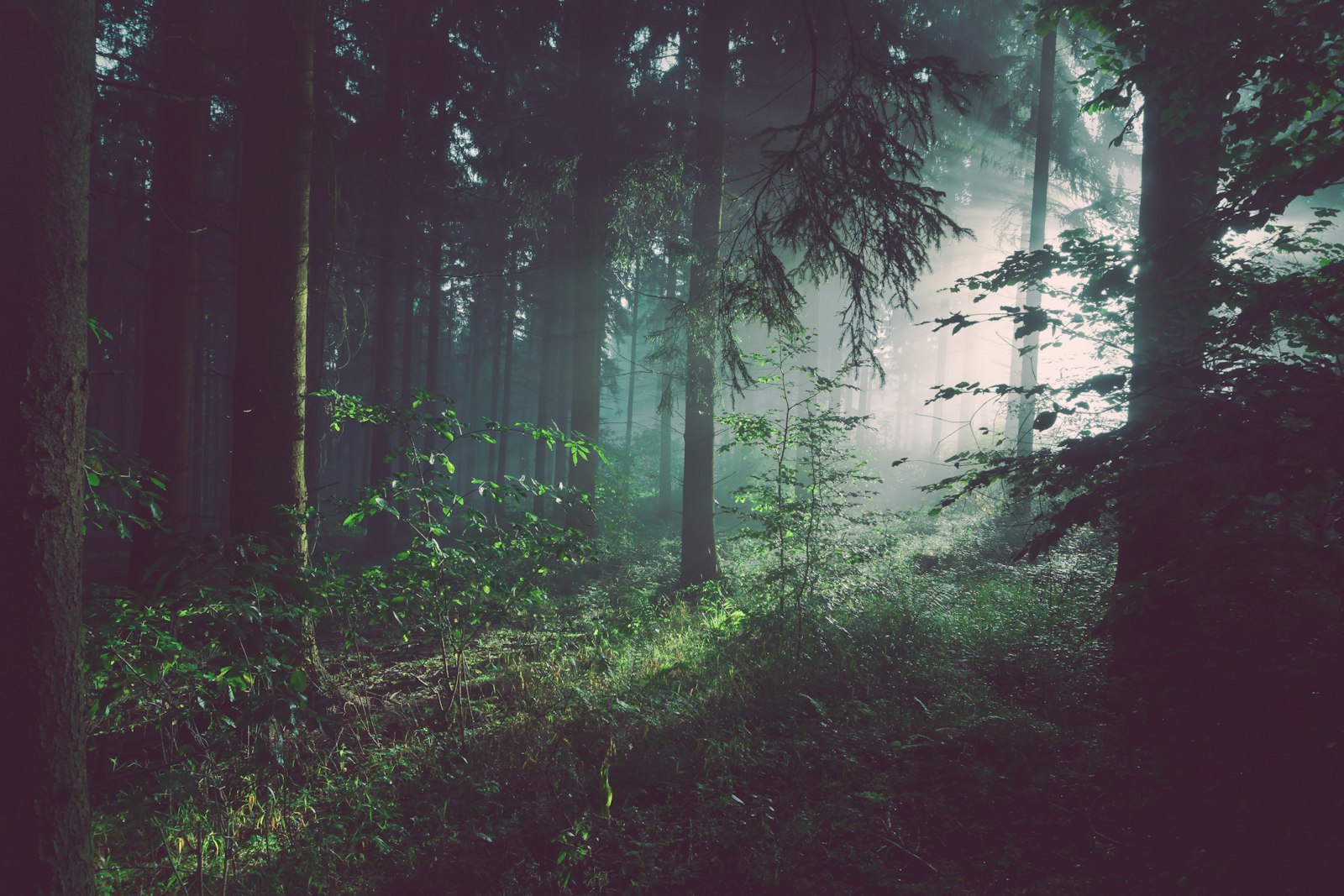
Forest bathing, or shinrin-yoku, is a Japanese practice that emerged formally in the 1980s as a public health intervention. The name is misleading in two directions. You do not get wet, and you do not necessarily go deep into a forest. You move slowly through a green environment with deliberate sensory attention, usually for an hour or two, without a destination or a phone or a goal beyond presence.
The Yale School of the Environment summarizes it well, noting that shinrin-yoku is fundamentally about sensory immersion and slowness, and that the documented physiological benefits (reduced cortisol, lowered blood pressure, improved immune function from inhaled phytoncides released by trees) come from time spent unhurried among living plants.
The key word in that sentence is unhurried. The practice is not a hike. It is not exercise. It is not nature photography. It is moving slowly, looking, listening, smelling, sometimes touching, sometimes sitting still, in a place with living plants. That definition is much more accommodating than the word “forest” suggests.
The Association of Nature and Forest Therapy makes the point even more clearly in their public education materials: a forest is helpful but not required, and a small park, a tree-lined street, or even a single sustained encounter with a tree can serve the practice. That is the permission most people are waiting for without knowing it.
What the Research Actually Requires
The peer-reviewed research on nature time and stress is interesting precisely because it does not require a forest. A widely cited study from Stanford found that 90 minutes of walking in a natural setting versus an urban one reduced rumination and activity in brain regions associated with depression. The contrast being tested was urban grid versus green space. It was not forest versus not-forest.
Other research summarized by the Mayo Clinic notes that even short doses of time outdoors in green areas are associated with lower stress, improved mood, and better cognitive function. The dose-response curve does not require wilderness. It requires green.
The practical implication is the whole point of this article. If you can get to a place with trees and grass and sky for thirty to ninety minutes a week, you are inside the part of the research where benefits show up. The amount of green matters less than the consistency.
Tier One: The Weekly Practice at a Small Park
This is the tier that does the real work, and it is the one most people skip because it looks too modest to matter.
Find the closest park with mature trees. It does not need to be impressive. Twenty trees, a paved loop, and a patch of grass is a complete inventory for this purpose. Walking distance is ideal, because anything that requires a car becomes an event, and events get cancelled.
Pick a fixed time and protect it. Early on a weekend morning tends to work best, before the rest of the world is awake and before the day fills up. Leave your phone at home, or put it away for the duration. Bring water if you want. Wear shoes you do not have to think about.
Then, once you are there, slow down. Really slow down, to about a third of your normal walking pace. Look at things. Notice a single leaf for fifteen seconds. Touch the bark of a tree. Sit on a bench for ten minutes and listen. Walk a loop, sit, walk another loop, sit, walk home. Aim for about an hour.
What you are doing is sensory immersion in whatever green you have access to. The park being small does not matter. The slowness is the practice. The sensory attention is the practice. The lack of agenda is the practice.
Consistency is what makes this tier work. Forty-something weeks a year is a realistic target. You will miss some to travel, illness, and weather that is genuinely not worth it. That is fine, and it is not failure.
Tier Two: The Monthly Bigger-Park Practice
Once a month, drive twenty to thirty minutes to a larger park. Michigan has a lot of these: metroparks, county parks, and regional parks with real trails through real woods. Most parts of the country have some version. Keep the drive short enough that it does not turn into a production.
The practice is identical. The dose is larger and the sensory environment is denser. Walk slowly for around two hours. You will be surrounded by more trees, less road noise, and more small wildlife sound: chipmunks, songbirds, sometimes deer. Many people find that about an hour into a walk like this, something shifts that does not shift the same way at the smaller park. That tracks with the Stanford finding, where the longer dose in denser green produced the measurable effect.
Go alone if you can. No podcast, no music. Water, and a small notebook if you like to write a sentence down. Phone in the car, or in your pocket on airplane mode.
Tier Three: Occasional Real-Forest Days
A few times a year, make the longer trip. An hour or two of driving to a state park with genuinely forested trails, and a half day once you are there. Pack a lunch. Walk slowly for three or four hours.
These are the closest thing to the canonical forest bathing experience, and they are worth the effort. They are also the tier you can do least often, which is exactly why they should not be the tier you build your practice around. The lower tiers carry the weekly load. This one provides the occasional deeper reset. Together they cover the ground.
Your Balcony, Stoop, or Porch Counts Too
This is the tier people give themselves the least credit for, and it deserves more.
A balcony or patio, even a small one, holds more than you would think. Two chairs and a small plant stand with potted herbs and a few flowering plants is enough. It is not a garden, and it does not need to be. If you rent, or your building or association limits what you can put outside, work inside those limits and do not treat the constraint as a disqualification.
On warm mornings, take your breakfast out there. Sit. Look at the plants you have. Notice the leaves on whatever tree is nearest, even if it is a street tree you did not choose. Listen to whichever bird is around. This counts. Not as a replacement for the park visits, but as a daily dose of slow sensory time outside, which is the ingredient the research keeps pointing at.
If you have a stoop, a fire escape, or even a window you can sit at with a few plants nearby, you have something to work with. The Audubon Society has written extensively about how even small backyard or balcony bird observation supports mental health. The size of the space is not what matters. The attention you bring to it is.
What Doesn’t Work as a Substitute
These are things I have tried myself, and they do not deliver the same benefits no matter how much I wanted them to.
Indoor forest sound tracks while working. Pleasant, and not the same. I have run forest sound tracks for hours at my desk and felt no shift at all. Whatever the practice is doing, it is not happening through the ears alone.
Houseplants in the office. Lovely, and not the same. I love my houseplants. They are not forest bathing.
Driving through a wooded area without stopping. Nothing. You have to be on foot, slow, and present. The car is the wrong vehicle for this.
Photographing trees on a fast walk. Counterproductive, actually. The camera turns it into a hunt for an image, and the practice is about the immersion. Bring a camera once a year if you want a record. Do not bring it weekly.
What does work is what is on the tiered list above. Slow, sensory, goal-less, in actual living green.
A Last Note
I said at the top that I have four acres of woods, and I want to come back to that, because it is the reason I feel strongly about this.
Having the forest did not teach me that the forest is required. It taught me the opposite. What actually produces the effect is slow, unhurried, sensory attention in living green, and I can get there on a covered porch watching rain come through the trees just as reliably as I can on a long walk through the woods. The acreage is a luxury. It is not the mechanism.
So if you have been quietly believing that forest bathing is closed to you because you do not have a forest, please consider that you may have a tier-and-frequency problem rather than a geography problem. Walk three blocks. Find your small park. Go for an hour on a weekend morning without your phone. Move slowly. Look at one leaf for fifteen seconds. Then do it again next week. Next month, drive twenty minutes to somewhere bigger. Twice a year, take a half day in a real forest.
Your nervous system is not asking for wilderness. It is asking for consistent slow time in green, in doses you can actually sustain.
Sources
- Japan’s Forest Bathing Is a Soothing Balm for Our Too-Busy Lives, Yale Environment 360.
- Stanford researchers find mental health prescription: Nature, Stanford News.
- Mayo Clinic Minute: The mental health benefits of being in nature, Mayo Clinic.
- The Importance of Bird Watching and Mental Health, National Audubon Society.
- Association of Nature and Forest Therapy, anft.org.
Free 10-Minute Forest Bathing Meditation
Subscribe to Peacefully Proven and receive a free guided meditation to restore calm and clarity, delivered straight to your inbox.





Join the conversation and add your thoughts.