
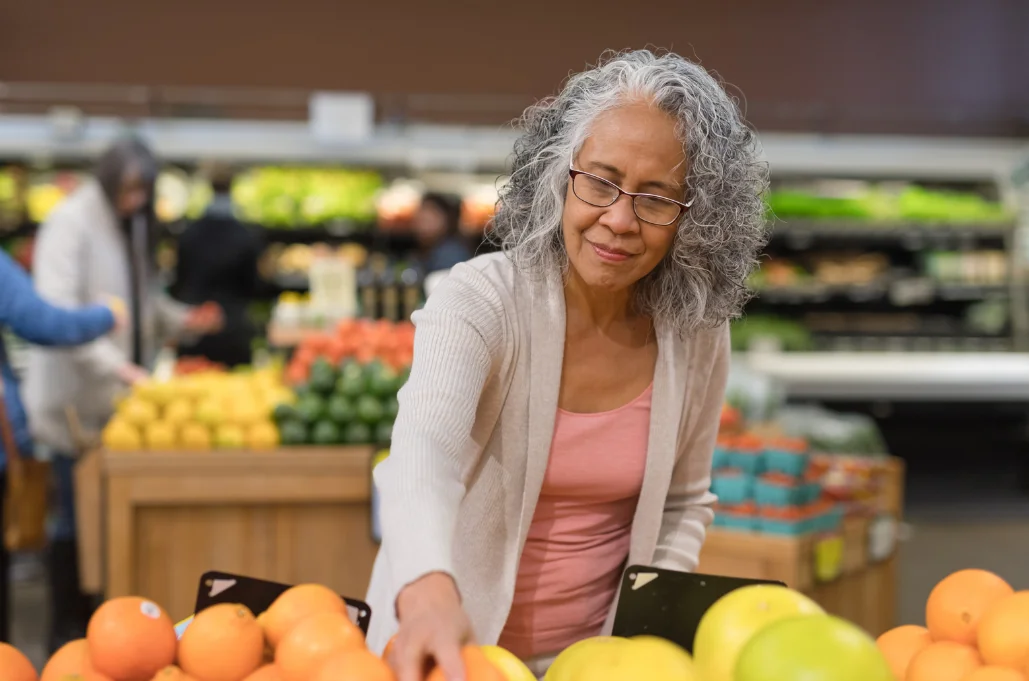
I had been driving past the Plum Market location near me for years without ever going in. I had a vague sense that it was the fancy organic grocery store, that it was probably overpriced, and that I had perfectly good vegan staples coming from my regular store. Then a friend mentioned that Plum had a real bulk bin section, the kind where you bring your own jars and refill, and I drove over the next Saturday to see for myself.
This was during the same general experiment in which I was trying to cut plastic in my pantry. I’d outgrown my regular grocery store’s tiny bulk section, which had maybe eight bins of rice and trail mix tucked behind the cereal. I needed a real one. And it turned out, sitting twenty minutes from my house in Michigan, there was one of the better-stocked bulk sections I’ve shopped.
This is the walk-through I wish I’d had before that first trip. What the bulk section actually looks like at Plum, how the system works mechanically, what’s worth buying there as a vegan, what’s not, and what I’d do differently knowing what I know now after months of going back. If you’ve been bulk-curious and live anywhere near a Plum Market location, this is for you.
In This Article
Key Takeaways
- Plum Market is a Michigan-based specialty grocer headquartered in Bloomfield Hills with multiple locations.
- Their bulk section is substantial: grains, beans, nuts, seeds, dried fruit, flours, granolas, spices, and more.
- You can bring your own jars and have them tared at customer service before you fill.
- For vegans, this is one of the best places I’ve found for staple pantry refills in southeast Michigan.
- The prices are competitive on staples, premium on specialty items. Worth it for some categories, not all.
What Plum Market Actually Is
Plum Market is a Michigan-grown specialty grocery chain. The company is headquartered in Bloomfield Hills and operates a handful of stores across Michigan and a few other states, with a focus on organic, natural, and locally sourced products. If you’ve shopped at Whole Foods, the vibe is similar, bright, well-merchandised, with a strong prepared foods section and a deep produce department, but it has a more local feel, with quite a bit of Michigan-made product on the shelves.
The reason I mention all this is that bulk bin selection varies enormously between specialty grocery stores. Some have a small token section. Some have an entire wall. Plum lands closer to the wall end, which is what made it worth the drive for me.
What the Bulk Section Looks Like
The bulk section at the location I visited is organized into a few distinct zones. Walking through it the first time felt a little overwhelming, so let me describe what’s there.
The gravity bins
The largest portion of the section is gravity bins, clear plastic dispensers mounted on a wall, with a small handle or lever at the bottom that releases the product into your container. The gravity bins held grains (white rice, brown rice, jasmine rice, basmati, quinoa, farro, oats in several forms), beans (black, pinto, kidney, white, chickpeas), and lentils (green, red, black, French).
The scoop bins
Larger items, nuts, seeds, dried fruit, candies, granolas, sit in clear bins with hinged lids and a scoop you use to fill your container directly. This section had almonds, walnuts, cashews, pecans, pumpkin seeds, sunflower seeds, hemp hearts, and several mixes. The dried fruit section had apricots, dates, figs, mango, raisins, and tart cherries.
The spice and tea bins
Smaller jars with small scoops, organized alphabetically. The spice selection was deeper than I expected: not just cumin and turmeric but a serious range of dried herbs, whole spices, salts, and specialty blends. I do not drink tea, but the loose tea section was extensive too.
The flour and baking bins
Various flours, sugars (cane, brown, powdered), baking essentials. I was happy to see oat flour and almond flour in the lineup, both of which I use in vegan baking.
Liquid refill stations
Olive oil and a couple of other oils on tap. I have not personally used these because I go through olive oil in glass bottles and the price difference wasn’t worth the logistics for me, but they’re there.
How the System Works (Tare Weight and All)
The mechanics of bulk shopping intimidate people more than they need to. Here’s the actual process at Plum.
Step one: bring containers
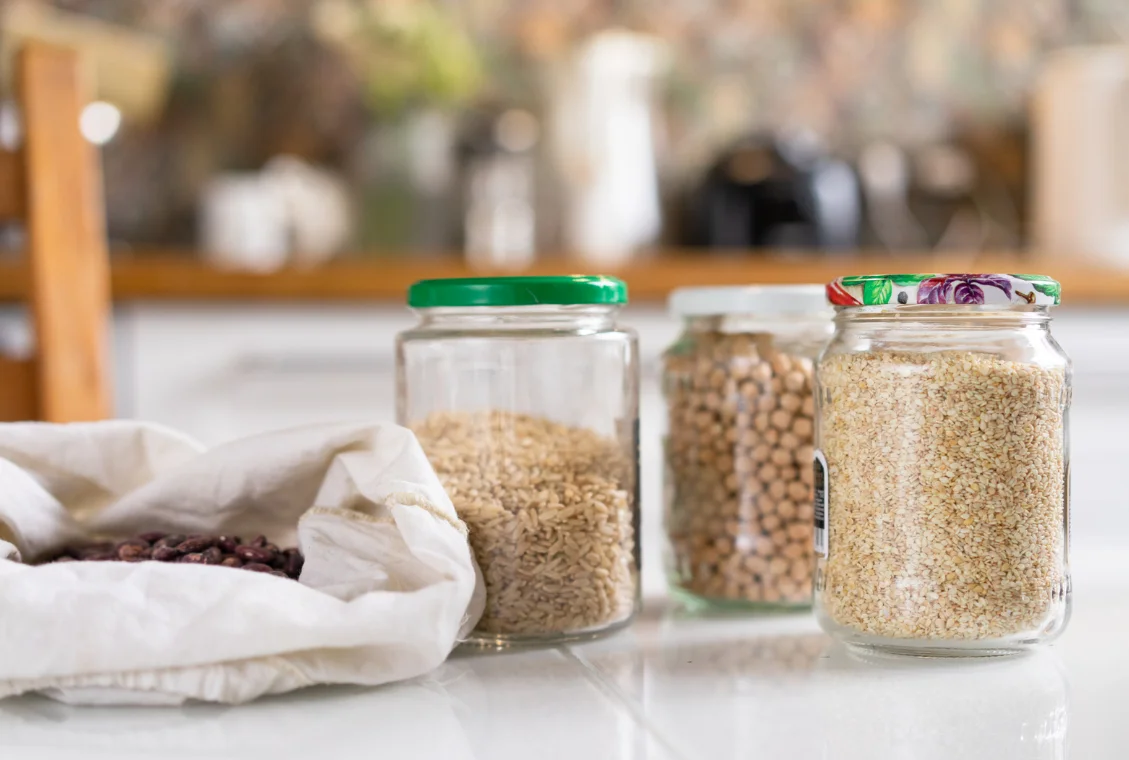
You can bring your own glass jars, cloth bags, or any clean container with a lid. Plum also has paper bags and plastic bags available at the bulk section for free, if you forgot or didn’t know. I bring a stack of one-quart and one-pint mason jars and a few cotton drawstring bags for nuts.
Step two: get your containers tared at customer service
This is the step most first-timers miss. Tare weight is the weight of your empty container, which the store has to subtract from your total at checkout so you only pay for the food. You bring your empty jars to the customer service desk before you start shopping. They weigh each one and write the tare weight on the lid in marker, or print a sticker. Takes about ninety seconds for a stack of five jars.
If you forget this step you’ll pay for the weight of your jars at checkout, which can be a few dollars over a large trip. I forgot this once and felt foolish but it’s not a big deal.
Step three: fill and label
You fill your container at the bin, then either remember the bin number (each bin has a number on it) or write it down. At Plum the bin numbers are big and clear. I take a quick phone photo of each bin label as I fill, which has saved me at checkout more than once when I couldn’t remember which jar was which kind of rice.
Step four: checkout
At checkout you tell the cashier the bin number for each container, they punch it in along with the tare weight, and that’s it. The first time felt clunky. By the third trip it was background.
What I Actually Bought on Trip One
Here’s my actual receipt from that first Plum trip, for transparency.
- Two pounds of organic jasmine rice
- One pound of green lentils
- One pound of black beans
- One pound of rolled oats
- Half a pound of raw almonds
- Half a pound of pumpkin seeds
- Quarter pound of nutritional yeast
- A small jar of organic ground cinnamon
- A small jar of organic turmeric
Total: $34.18. I felt good about every item.
The nutritional yeast was the standout. At my regular store, the small plastic tub of nutritional yeast costs about $8 for what I would estimate is two ounces. At Plum’s bulk bin it cost me $4.40 for four ounces, and the flakes were larger and fresher. This single item has paid for the drive every time since.
What’s Worth Buying There as a Vegan
After six months of going back, here’s what I’ve consistently found worth the trip from Plum’s bulk section if you eat plant-based.
Pantry staples bought in bulk quantity
Rice, beans, lentils, oats, quinoa. The unit pricing at Plum is competitive with my regular store on these, and the quality (especially of organic versions) has been better. I buy these in quantities I’ll use over a couple of months.
Nuts and seeds
Bulk turnover means fresher nuts. I have not gone back to bagged nuts since I started buying them this way. Almonds, walnuts, cashews, pumpkin seeds, sunflower seeds, and hemp hearts are all staples in my vegan kitchen.
Nutritional yeast
Already covered. Cannot recommend enough. If you live near a Plum and you’re vegan, this is the single best reason to make the trip.
Spices in small quantities
I refill the same small glass jars over time. Bulk spices are often a third the price of the packaged versions and fresher, because the turnover is faster. The Environmental Working Group has noted that organic spices and dried herbs are particularly worth seeking out because pesticide residues can concentrate in dried form.
Whole grains for batch cooking
Farro, barley, brown rice, wheat berries. These are my batch-cooking staples and bulk pricing is meaningfully better than packaged.
What I’d Skip
Not everything in the bulk section is a value. Here’s what I’ve stopped buying at Plum’s bulk bins specifically.
Dried fruit
The bulk dried fruit at Plum is good but expensive. I’ve found organic dried fruit elsewhere for less. I buy it occasionally but it’s not a regular pantry item from there.
Granolas and trail mixes
These tend to be premium-priced even at bulk. I make my own granola occasionally; for trail mix I usually just combine my bulk nuts and dried fruit at home for less money than buying premade.
Candies and chocolate-covered things
Cute but not a staple, and the prices are high. I treat these as occasional treats and buy them elsewhere.
Specialty flours I won’t use up
I learned this one the expensive way. I bought a pound of buckwheat flour because I had a vision of making pancakes. Six months later, the rest of it is still in my pantry. Now I buy specialty flours in small quantities only when I have an actual plan to use them within a month.
Tips for Your First Visit
A few things that would have saved me time on trip one.
Bring a list of what you actually need. Bulk sections are seductive. Walking in with no plan, I’d have bought twice as much as I could use. With a list, I came out with exactly what I came for.
Bring more containers than you think you need. I underbought on my first trip and ended up using a paper bag from the bulk section. It worked fine, but I would have rather had a jar. Now I keep a tote in my car with eight to ten empty jars ready to go.
Get tare weights done before you shop. Save the customer service detour at the end. It’s a small thing but it streamlines the trip.
Take photos of bin numbers as you fill. You will not remember which jar is which kind of rice. Trust me.
Try one new thing each trip. A new spice. A grain you’ve never cooked with. A nut you don’t usually buy. The bulk section is a low-stakes way to try things in small quantities. Some of my favorite ingredients now came from “let me grab a quarter pound and see.”
Don’t expect everything to be cheaper. Some bulk items are genuinely less expensive than packaged equivalents. Some are about the same. Some are more, in exchange for higher quality or organic certification. The savings story is real but uneven. Going in with realistic expectations helps.
A Last Note
Plum Market is now part of my regular rotation. I go about every six weeks, usually on a Saturday morning when the store is quiet, with a stack of empty jars and a list. The trip takes about an hour. I come home with most of my pantry staples for the next two months, in glass, no plastic packaging to deal with, often at better prices than I’d pay at my regular store.
If you live in Michigan or anywhere with a Plum Market location and you’ve been wanting to make the bulk bin leap, I would offer the same encouragement I needed when I started. It is not complicated. It is not expensive. The system works exactly the way it sounds like it should. And after the first slightly awkward trip, you will know what you’re doing and it will become routine.
The first thirty seconds at the bulk bin are the hardest part. After that, it’s just shopping. Better shopping, in my experience. Worth the small learning curve.
Sources
- About Plum Market, Plum Market.
- 2025 Shopper’s Guide to Organic Products, Environmental Working Group.
- Zero Waste Grocery Shopping: Where to Find Bulk Bins, Plastic Pollution Coalition.
- Single-Use Plastics 101, Natural Resources Defense Council.
The Free Subscriber’s Library Is Open
Join Peacefully Proven for a growing collection of free wellness tools, guides, and printables, plus a guided forest bathing meditation to begin. All yours, always free.





Join the conversation and add your thoughts.