
Your Complete Guide to Healing, Plant-Based Slow Cooker Meals That Freeze Beautifully
I’m going to let you in on my favorite meal prep secret: a single Sunday afternoon with your slow cooker can set you up with weeks of wholesome, homemade dinners. No more scrambling on busy weeknights, no more reaching for takeout when you’re exhausted, and no more guilt about not eating well when life gets hectic.
Over the past year, I’ve developed a collection of nine vegan slow cooker recipes inspired by healing cuisines from around the world, from Indian Ayurvedic dal to Korean kimchi stew to Moroccan tagine. Every recipe is 100% plant-based, uses ingredients from regular grocery stores, and (this is the best part) freezes beautifully in individual serving containers for easy weeknight meals.
Each recipe makes 8 to 10 servings. That means you eat one or two servings fresh and freeze the rest. Do this with two or three recipes on a Sunday, and you’ve stocked your freezer with 15 to 25 individual meals: each one a nourishing, globally-inspired dinner that goes from freezer to table in under five minutes.
This guide covers everything you need to know: why slow cooking is so good for you, how to freeze and reheat meals perfectly, a quick reference for all nine recipes, and a weekly meal prep schedule to get you started.
Why Slow Cooking Preserves Nutrients (and Flavor)
There’s a reason slow cookers have stood the test of time. Beyond the obvious convenience, slow cooking actually preserves nutrients better than many other cooking methods.
Lower temperatures protect delicate compounds. Many vitamins and antioxidants are sensitive to high heat. Because slow cookers operate at lower temperatures (around 200°F on low and 300°F on high) compared to stovetop cooking or roasting, heat-sensitive nutrients like vitamin C and certain B vitamins are better preserved.
Everything stays in the pot. When you boil vegetables on the stove, many water-soluble vitamins leach into the cooking water: which often gets poured down the drain. In a slow cooker, all of those nutrients stay right in the broth or sauce, so you’re eating every bit of goodness.
Long, gentle cooking unlocks hidden nutrients. Some beneficial compounds actually become more available through slow cooking. The lycopene in tomatoes, for example, becomes more bioavailable when heated slowly. The same is true for many of the healing compounds in spices like turmeric, cinnamon, and ginger, slow simmering gives them time to fully infuse into your food.
Flavor development. Beyond nutrition, slow cooking allows flavors to meld and deepen in ways that quick cooking simply can’t replicate. The complex, layered flavors in these recipes (the warming spices of Moroccan tagine, the umami depth of miso mushroom stew) develop because they have hours to interact and build on each other.
The Complete Freezer Meal Prep Guide
Choosing the Right Containers
The container you choose makes a big difference in how well your meals freeze and reheat. Here are my recommendations:
- 16 oz glass containers with snap lids. My top choice. They’re microwave-safe, dishwasher-safe, and won’t absorb flavors or stains. Brands like Pyrex and Anchor Hocking make great options.
- BPA-free plastic deli containers (16 oz), Affordable and lightweight. Perfect if you’re building a big freezer stash. Just make sure they’re labeled microwave-safe.
- Silicone freezer bags, Great for flat freezing (which saves space). They’re reusable and eco-friendly.
- Avoid: Regular glass jars (they can crack from expansion), thin plastic containers (they warp), or anything not labeled freezer-safe.
The Golden Rules of Freezing
- Cool completely before freezing. Putting hot food in the freezer raises the temperature inside, which can partially thaw other frozen items. Let food cool on the counter for about an hour, then in the fridge for another hour before transferring to the freezer.
- Leave 1/2 inch of headspace. Liquids expand when they freeze. If you fill containers to the brim, lids will pop off or containers will crack. Always leave room at the top.
- Label everything. Write the recipe name and the date on every container. Use masking tape and a permanent marker, or invest in freezer labels. Three months from now, you won’t remember what’s in that mystery container.
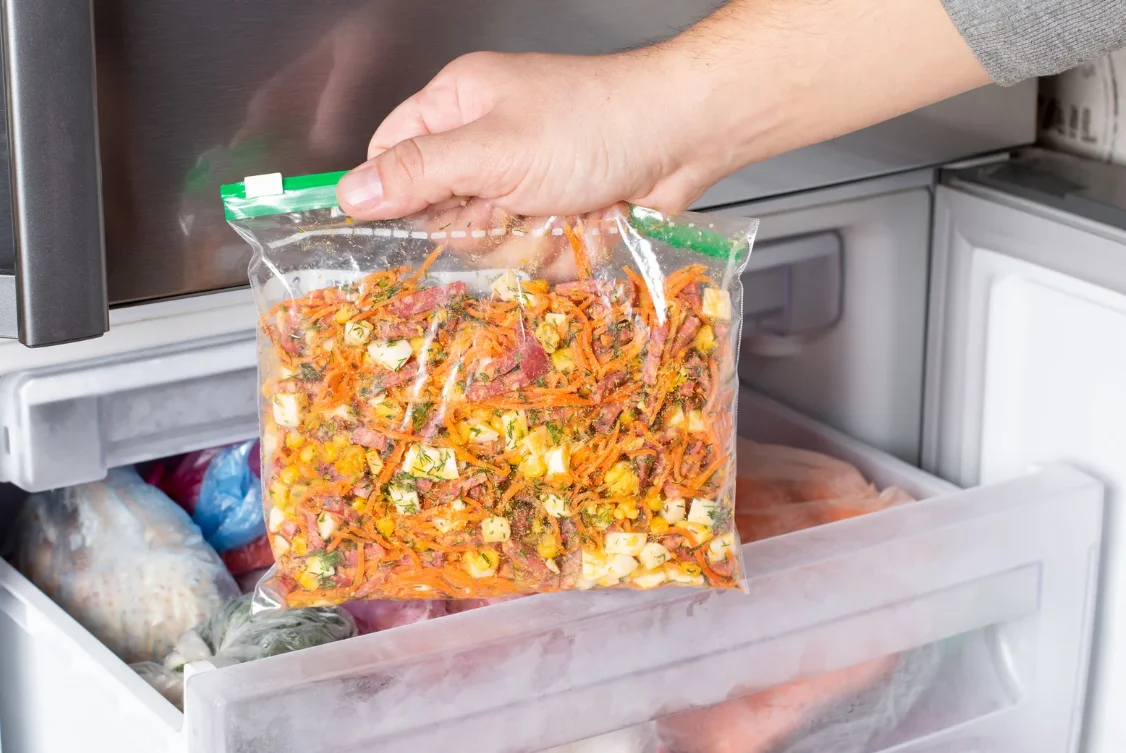
- Freeze flat when possible. If using bags, lay them flat on a baking sheet in the freezer until solid, then stack them vertically like files. This saves an incredible amount of freezer space.
- Use within 3 months. All of these recipes freeze well for up to 3 months. After that, they’re still safe to eat but the quality starts to decline.
Reheating for Best Results
Microwave method (fastest): Remove the lid or open the bag slightly. Microwave for 3-4 minutes, stopping halfway to stir. If the meal seems dry or thick, add a splash of water or broth before microwaving.
Stovetop method (best quality): Thaw overnight in the refrigerator. Transfer to a saucepan and reheat over medium-low heat, stirring occasionally. Add a splash of broth, water, or coconut milk as needed. This method gives you the most control over texture and temperature.
Pro tip: Keep a small container of vegetable broth in the fridge for reheating days. A splash of broth brings any frozen meal back to life.
Quick Reference: All 9 Healing Slow Cooker Recipes
| Recipe | Cuisine | Key Healing Benefit | Cook Time (LOW) |
|---|---|---|---|
| Thai Coconut Lentil Soup | Thai | Ginger for digestion, coconut for healthy fats | 6-8 hours |
| Golden Dal (Ayurvedic) | Indian | Turmeric anti-inflammatory, cumin for digestion | 7-8 hours |
| Moroccan Chickpea Tagine | Moroccan | Cinnamon for blood sugar, chickpea protein | 6-8 hours |
| Miso Mushroom Stew | Japanese | Miso probiotics, shiitake immune support | 6-7 hours |
| Vegan Pozole Verde | Mexican | Hominy traditional healing, oregano antimicrobial | 7-8 hours |
| Mediterranean White Bean & Artichoke Stew | Mediterranean | Longevity diet, artichoke for liver health | 6-7 hours |
| Ethiopian Misir Wot | Ethiopian | Berbere warming spice blend, lentil protein | 7-8 hours |
| Korean Kimchi Tofu Stew | Korean | Fermented kimchi probiotics, capsaicin metabolism | 6-7 hours |
| Caribbean Sweet Potato & Black Bean Curry | Caribbean | Sweet potato beta-carotene, allspice healing | 6-8 hours |
Your Weekly Meal Prep Schedule
Here’s how I approach meal prep with these recipes. You don’t have to make all nine at once. That would be a lot! Instead, I rotate through them over several weeks.
Week 1: The Starter Batch
Saturday evening: Choose 2 recipes. Do your grocery shopping, rinse your lentils, chop your vegetables, and measure your spices. Store prepped ingredients in containers in the fridge.
Sunday morning: Start Recipe 1 in the slow cooker first thing (8-9 AM). While it cooks, prep Recipe 2 ingredients. When Recipe 1 is done (around 3-5 PM), remove it, let it cool, and start Recipe 2. Or, if you have two slow cookers (or a slow cooker and an Instant Pot), run them simultaneously.
Sunday evening: Portion everything into individual containers. Label and freeze. You now have 16-20 individual meals in your freezer.
Week 3: The Second Batch
Repeat the process with 2 different recipes. Now you have 30+ meals from four different cuisines in your freezer. That’s more than a month of weeknight dinners, assuming you eat from your freezer stash 4-5 nights per week.
Ongoing Rotation
As your freezer supply dwindles, pick 1-2 recipes and make a new batch. Over time, you’ll develop your own favorites and your own rhythm. I find that making a batch every 2-3 weeks keeps my freezer stocked without ever feeling like a chore.
Tips for Slow Cooker Success
- Don’t lift the lid. Every time you open the slow cooker, you lose heat and add 15-20 minutes to the cooking time. Trust the process.
- Layer properly. Root vegetables (potatoes, sweet potatoes, carrots) go on the bottom where it’s hottest. Beans, lentils, and lighter vegetables go on top.
- Don’t overfill. Your slow cooker should be between half and two-thirds full for the best results. If it’s too full, food won’t cook evenly.
- Invest in slow cooker liners if you want easy cleanup. They’re completely optional, but they save a lot of scrubbing.
- Add delicate ingredients last. Fresh herbs, greens (spinach, kale), citrus juice, miso paste, and coconut milk should be added in the last 15-30 minutes to preserve their flavors and nutrients.
What You Need to Get Started
The beauty of this system is that it requires very little special equipment:
- A slow cooker (6-quart is the ideal size for these recipes)
- Freezer-safe containers (16 oz size, about 20-30 to start)
- Masking tape and a permanent marker for labeling
- Basic pantry staples, most of the spices used across all 9 recipes overlap: cumin, turmeric, cinnamon, ginger, garlic, and coriander appear in multiple recipes
A Few Final Thoughts
When I started this collection, I wanted to prove something I’ve always believed: that the world’s healthiest, most healing food traditions are also the most delicious. From the Ayurvedic wisdom of Indian dal to the probiotic power of Korean kimchi stew, from the longevity secrets of the Mediterranean to the ancient traditions of Mexican pozole, every one of these recipes represents centuries of culinary knowledge about how food can nourish and heal.
The slow cooker makes all of this accessible, even on your busiest days. And the freezer makes it sustainable, because no one can cook from scratch every single night (and no one should have to). This system gives you the best of both worlds, homemade, healing meals with almost zero weeknight effort.
I hope these recipes bring as much warmth and nourishment to your kitchen as they’ve brought to mine. Start with whichever one speaks to you, make a big batch, fill up your freezer, and enjoy the peace of mind that comes with knowing a wholesome meal is always just a few minutes away.





Join the conversation and add your thoughts.