
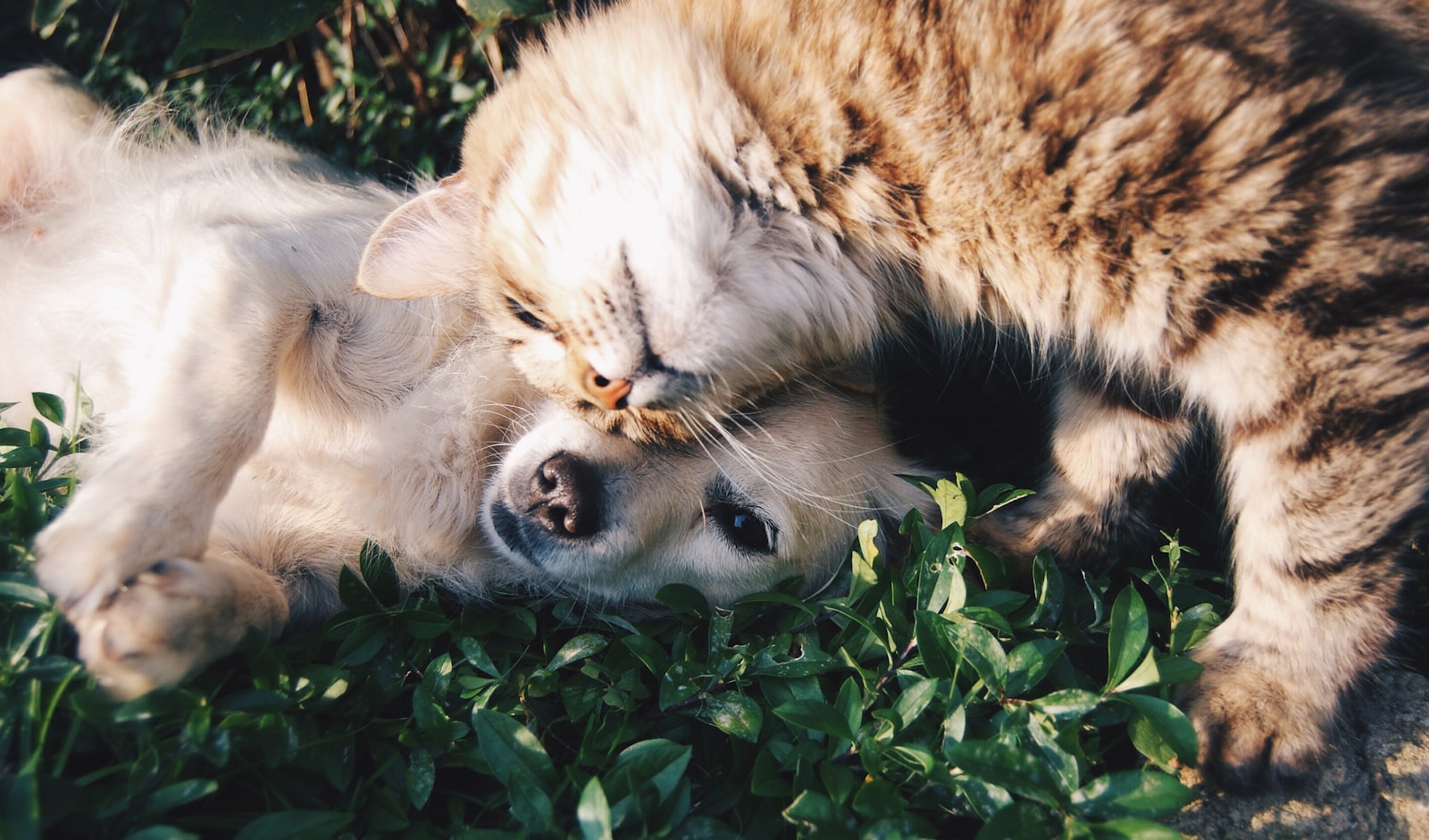
My oldest dog, Kali, is fifteen. She’s a forty-five-pound retired momma dog from PAWS with a Cause, with a graying muzzle, eyesight that is not what it was, and a serious devotion to the spot of sunlight that moves across my living room floor every morning. Last October her bloodwork came back from our vet with a polite but pointed note about kidney values, and we started her on a daily medication regimen. We’ve added to it twice since then. Today she takes four medications across three different times of day, plus a joint supplement, plus a special diet, plus subcutaneous fluids twice a week.
If you’d told me four years ago this would be my life, I would have laughed and said I wasn’t that person. I am vegan, I work from home, I have a small but real network of friends in Michigan who know me as someone who manages a lot of moving parts already. I had two other dogs and my cats. I didn’t have time for a medical regimen for a fifteen-year-old dog.
Eight months in, I can tell you: I made the time, because Kali is family, and because the system I built turned out to be doable. Barely doable, sometimes. But doable. This is the actual kit, the actual schedule, and the actual emotional practice I’ve developed. I’m sharing it because if you’re early in caring for a senior dog on daily medications and the whole thing feels overwhelming, it can become routine. Here’s how mine did.
In This Article
Key Takeaways
- Senior dog caregiving is real caregiving: emotionally, physically, and financially.
- A small physical kit kept in one place is the single best logistics decision you can make.
- Anchor medications to routines you already have (meals, walks, bedtime), not to clock times.
- A one-line daily log is enough. You don’t need a complicated tracking system.
- Build emotional support into the routine, not as an afterthought. You’re going to need it.
What “Senior Dog Caregiving” Actually Means
The American Veterinary Medical Association considers dogs to be senior around age seven, with larger breeds aging faster and smaller breeds slower. By the time most dogs are eleven or twelve, they’re squarely in the geriatric phase, and the percentage of dogs who develop chronic conditions (arthritis, kidney disease, heart disease, cognitive dysfunction) climbs steeply. Cornell’s veterinary college notes that canine cognitive dysfunction alone affects an estimated 28% of dogs aged 11-12 and over two-thirds of dogs aged 15-16. The math means that most of us, if we’re lucky enough to keep our dogs that long, will spend some years as caregivers.
Senior dog caregiving is different from puppy raising or healthy-adult dog ownership in a specific way: it has a medical component, a logistics component, an emotional component, and a financial component, and they all run continuously. You don’t get to take a vacation from the medication schedule. You don’t get to skip a day because you’re tired. The dog needs what they need, every day, until they don’t anymore. That’s the whole shape of it.
I lead with this because new senior dog caregivers often underestimate the weight of the role and then feel like they’re failing when they get tired. You’re not failing. You’re doing a meaningful job that has weight. Naming the weight makes it easier to carry.
The Physical Kit: What’s in My Cabinet
I built my kit one mistake at a time. Eight months in, here is what lives in a single dedicated cabinet next to my refrigerator. Centralizing was the best decision I made.
Medication storage
- A weekly pill organizer with AM/PM compartments. I fill it every Sunday evening while I’m prepping food for the week. Five minutes, done for the week.
- A clear plastic bin holding all the actual prescription bottles, with the most-used bottles in front. Out of sight from the kitchen counter so visitors don’t ask.
- A laminated card with the current medication list, doses, times, and last refill dates. I update it whenever something changes. This card has saved me at multiple vet appointments.
Administration tools
- Empty gel capsules. Game-changer. Some of Kali’s pills are bitter and she started refusing food on the days she got them. Now I tuck each pill inside a vegan gel cap and she swallows them clean.
- A small jar of organic, low-sodium nut butter for pill burritos. She gets the same brand and flavor every time so it stays a special treat.
- A dropper-style oral syringe for liquid meds. I learned to use it after a few messy weeks of trying to squeeze syrup into the side of her mouth from the bottle.
- Treats specifically reserved for after-medication moments. Not food she gets at other times. The association matters.
Subcutaneous fluid supplies
- A wall hook in the cabinet for the IV fluid bag.
- A small basket holding needles, the giving line, alcohol pads, and a sharps container.
- A folded fleece blanket on top of the dryer where we do fluids. She’s gotten so used to the routine that she climbs on by himself now.
Comfort gear
- Two orthopedic memory foam beds, one in my office, one in the living room. The expensive ones. Worth it.
- A heated pad rated for pets, used on cold Michigan nights.
- Non-slip rugs on every hardwood surface she uses. Her back legs slip more than they used to.
- A small set of pet stairs at the couch so she doesn’t have to jump.
- A car ramp for vet visits.
The Schedule: Anchoring Meds to Routines
This was the single biggest practical shift in my caregiving. I used to think about medications in terms of clock times: 7:00 AM dose, 1:00 PM dose, 7:00 PM dose. I would forget them constantly because they had no anchor in my actual day.
Now I think about them in terms of routines: breakfast meds, lunch meds, dinner meds. They go with the meal. Kali eats; I open the daily compartment of the pill organizer; we do the pill ritual together. She gets her after-meds treat. I close the compartment. Total time: ninety seconds.
The same principle applies to fluids (Wednesdays and Saturdays after our morning walk), supplements (in her breakfast bowl), and joint medication (with her evening meal). Every medical task is attached to something already-existing in our routine. I cannot forget breakfast. So I cannot forget breakfast meds.
This works whether you have one dog or three. The brain is bad at remembering free-floating timed tasks. It’s good at remembering tasks attached to other tasks. Build your schedule that way and most of the “I forgot to give it to her” problem dissolves.
Tracking: How I Know What’s Working
For Kali, I keep a single notebook on the kitchen counter. Each day I write one line. The date, her weight if I weighed her that week, her appetite (low/normal/eager), her energy (low/normal/eager), and any noticeable change. Sometimes the line is just “good day, normal.” That’s a valid entry.
This costs me ten seconds. Over months it gives me data I would otherwise lose. When her kidney values shifted last spring, I could go back through the notebook and tell our vet, “Her appetite started dropping about three weeks ago, here are the dates.” She made a faster, better decision because of the log.
The CSU Veterinary Health System recommends keeping detailed observation notes for any senior dog with chronic conditions, because subtle behavioral changes are often the earliest warning signs of declining health. They will see it before bloodwork does, if you’re watching. The notebook is how you watch without it consuming your day.
The Financial Reality
This part is harder to talk about. Senior dog care is expensive. Kali’s monthly direct cost, counting medications, prescription food, supplements, fluids and supplies, runs about $360. Her vet visits run another $150 a month on average, sometimes more. Plus the one-time costs of orthopedic beds, ramps, mobility gear.
I have made budget choices around this. I don’t have pet insurance (she was too old to enroll when her conditions started, which is a real and frustrating limitation of the industry). I do set money aside for her every month in a separate account, which has slowly built a buffer for the unexpected bills that come.
I share the numbers not to scare anyone, but to normalize that this is what it actually costs and to validate the financial weight of senior pet caregiving. If you’re a primary caregiver and the financial load is real for you too, you’re not bad at money. You’re doing something that costs real money. That deserves acknowledgment.
The Emotional Practice
I think about Kali’s mortality more than I used to. Of course I do. She is fifteen, she is on four medications, and there will be a year, and I do not know when, in which I lose her. I have decided to let myself know this without letting it consume me, and that is its own discipline.
What helps: I take a lot of photos of her. Not big productions, just my phone, casual snapshots of her sleeping in the sun, eating her breakfast, looking up at me from her bed. I have hundreds. I will be grateful for every one.
What also helps: I tell her I love her out loud. Every day, multiple times. I do not save it. I do not assume she knows. I say it. The neighbor probably thinks I’m strange. I do not care.
The National Institutes of Health has documented that the human-animal bond produces measurable benefits for human health: lowered cortisol, improved mood, reduced loneliness, better cardiovascular markers. What they don’t always say is that the bond also produces measurable grief and weight when the animal is in decline. The bond goes both directions. The weight is the cost of the gift.
I sit with that. I don’t try to outrun it. And then I get up and go give her her dinner meds, because today is today and she is here.
When the Hard Days Come
Some weeks Kali declines noticeably and then comes back up. Some weeks I’m exhausted from caregiving and start questioning all of it. Some weeks I’m fine, until I see her struggle to stand up and then I’m not fine.
On the hard days I do a few things. I text one specific friend who has been through this with her own senior dog. I take a longer walk by myself, without dogs, just to move my body and let my thoughts run. I let myself rest in a way I usually wouldn’t. I remember that I am also a creature with a nervous system and a heart, and I deserve some of the same gentleness I give Kali.
I also call our vet sooner rather than later when something seems off. Eight months in, I trust my read on her more than I used to, and our vet trusts it too. The relationship matters. If you’re a senior dog caregiver, finding a vet who takes your observations seriously is one of the most important things you can do.
A Last Note
Kali is asleep in the patch of sun right now. The system holds. The kit is stocked. The notebook is on the counter. I will go give her the evening meds in about an hour. She will eat her treat afterward and look up at me as if to say, well, that’s done.
If you’re caring for a senior dog and you’re in the early overwhelm of figuring out medications and routines and money and the long quiet ache of loving someone whose time you can already feel running, I want to say two things to you. First: it gets more navigable. Build the kit, anchor the schedule, keep the notebook. Second: you are doing real work, and the love you’re putting in is not lost. They feel it. You feel it. Even the hard days are inside the love.
Sources
- Senior Dog Dementia, Cornell University College of Veterinary Medicine.
- New Diagnostic Tools for Identifying Early Stages of Canine Dementia, American Veterinary Medical Association.
- If You Have an Older Pet, Be on the Lookout for Signs of Cognitive Decline, CSU Veterinary Health System.
- The Power of Pets: Health Benefits of Human-Animal Interactions, NIH News in Health.
The Free Subscriber’s Library Is Open
Join Peacefully Proven for a growing collection of free wellness tools, guides, and printables, plus a guided forest bathing meditation to begin. All yours, always free.






Join the conversation and add your thoughts.