
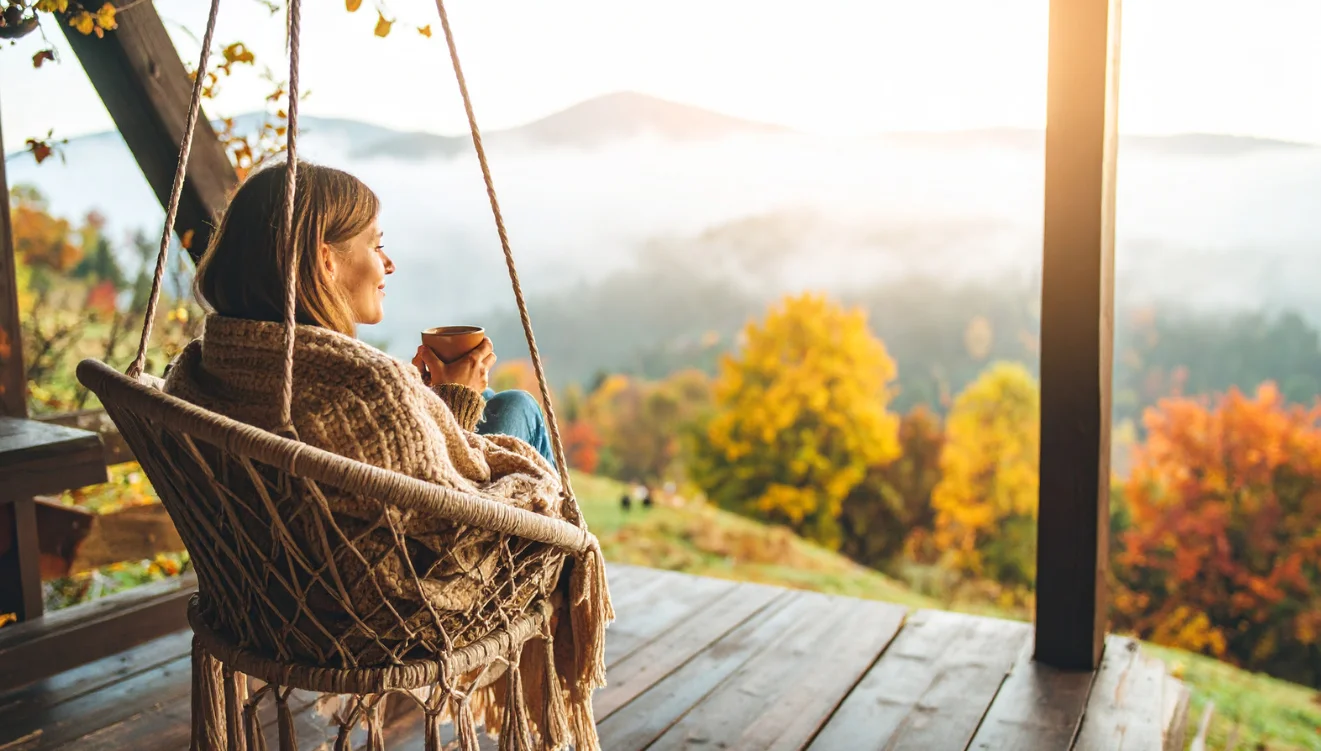
Since menopause, I need much more quiet time alone than I did before. It is one of the changes menopause brought, and it shapes how I spend my days. I run my own consulting business from home, I am on the computer most of the day, and I am often on calls. I am also single, and I love it. I live in a house on four acres of woods in Wayland, Michigan, and quiet time at home matters to me more now than it ever has.
To keep that quiet time, I have to say no to some things. I say no to other people so I can protect my own wellbeing. I do not see that as selfish. I see it as one of the kindest things I can do for myself. It can be kind to the people around us too, since most of us are calmer and more present when we have had the rest we need.
If you have ever said yes to something while every part of you wanted to say no, this article is for you. We will look at what research says about time alone and happiness, why saying no feels so hard, and some simple, kind ways to do it. PP already has a full guide on how to set healthy boundaries without guilt. This one takes a different angle: what saying no gives back to you, and how protecting your quiet time can make you happier.
In This Article
Key Takeaways
- If you need more time alone in midlife and menopause, that is not a flaw. It is worth listening to.
- Research suggests that time alone you choose for yourself can lower stress and help you feel calm and free from pressure.
- Studies show people tend to overestimate how upset others will be when we turn down an invitation.
- A kind, short no is often better for everyone than a yes you do not mean.
- Time alone works best when you still have people you connect with. Solitude and friendship can support each other.
Why I Need More Quiet Time Since Menopause
Menopause changed a lot of things for me. Some of the changes I have written about before, like the brain fog that made me fear early dementia and the hot flashes that felt like burning from the inside out. Hormone therapy helped with many of those. But one change has stayed: I need more time to myself than I used to.
I do not think of that as a problem to fix. It is simply what my body and mind ask for now, and when I give myself that time, I feel happier.
If you have been wanting more space, more quiet, and fewer obligations as you move through your forties, fifties, and beyond, you are not being antisocial or difficult. You may simply be listening to what you need.
Being single fits me well here. My dogs and cats keep me company, and snuggling with them is one of the things that helps my mood most. But even with a quiet house, the outside world still asks for a lot. Work, messages, invitations, favors, and requests keep coming. Protecting quiet time means making choices about which of those I say yes to.
Needing more quiet time is not a sign that something is wrong with you. It may be a sign that you are finally listening to yourself.
What Research Says About Time Alone
Loneliness and isolation are real and serious, and they deserve attention. But researchers have also looked at the good side of solitude, especially when it is something we choose.
Time alone can calm strong feelings
In a set of four studies, researchers at the University of Rochester looked at what happens to our feelings when we spend a short time alone. Their paper, Solitude as an Approach to Affective Self-Regulation, found that being alone tended to lower high-energy feelings. That included the pleasant ones, like excitement, and the unpleasant ones, like anger and anxiety. In other words, time alone helped people settle.
One of their findings matters a lot for this topic. In their fourth study, time alone led to relaxation and less stress when people chose to be alone. The choice made a difference. The paper also describes earlier research showing that people who felt forced into time alone were more likely to feel lonely, while people who chose their time alone did not have that problem.
Choice changes how solitude feels
A later study built on that idea. In a 21-day diary study of 178 people published in Scientific Reports, researchers tracked how many hours people spent alone each day and how they felt. On days when people spent more time alone, they felt less stress. They also felt more of what researchers call autonomy, which the authors describe as feeling volitional, authentic, and free from pressure.
The study was honest about the other side, too. People felt lonelier and less satisfied on days with more hours alone. But those downsides were reduced, or disappeared, when the time alone was something people chose and when it did not pile up day after day. The researchers also found there was no single perfect balance of time alone and time with others that worked for everyone.
That rings true to me. The amount of quiet time that helps me might be too much or too little for you. What seems to matter most is whether it is your choice.
Time alone may feel better as we age
There is also encouraging research for those of us in midlife and beyond. A study in the journal Innovation in Aging, Appreciating Time Alone, followed adults aged 21 to 94. The authors note that older people spend considerably more time alone than younger people and, on the whole, enjoy better mental health.
Their findings were mixed in a useful way. Across everyone, time alone was linked to a less positive emotional profile, and older adults who spent a lot more time alone than average showed a slight dip in wellbeing. But older adults who had plenty of social contact reported significantly more positive emotions when they were alone, compared with other age groups. The authors suggest time alone may be appreciated with age, as long as time with others does not become scarce.
Awe can make solitude more peaceful
The Greater Good Science Center at UC Berkeley shared another interesting finding in This Emotion Makes Solitude More Enjoyable. People who were shown awe-inspiring images or videos, such as the night sky or beautiful nature scenes, felt more positive about being alone, and they could feel alone without feeling lonely. A week of daily awe videos also increased peace of mind. If you enjoy nature, spending some of your quiet time noticing something beautiful may make that time feel even richer.
Why Saying No Feels So Hard
If quiet time is so helpful, why is it so hard to protect? For many of us, the answer is the word no. Saying it can bring up worry, guilt, and the fear of letting someone down.
Research suggests those fears are often bigger than they need to be. In a paper titled Saying No: The Negative Ramifications From Invitation Declines Are Less Severe Than We Think, Julian Givi of West Virginia University and Colleen Kirk of the New York Institute of Technology looked at what happens when we turn down invitations to everyday social activities, like dinners and get-togethers. In a pilot study, 77% of people said they had accepted an invitation to something they did not want to attend because they were worried about what would happen if they declined.
Then the researchers tested those worries. As Phys.org reported, they ran five experiments with more than 2,000 participants. Again and again, the people saying no expected the other person to be more angry and disappointed than that person turned out to be. They also expected the other person to think they did not care, and to stop inviting them. Those fears were exaggerated.
Here is the part I find most encouraging. In their studies, the reason for declining was kept the same: the person simply wanted to stay home. Not a prior commitment, not a family event, not a busy schedule. Just a wish for a night at home. And the people who were turned down still took it much better than expected.
The researchers also found one reason we worry so much. We tend to believe the other person will focus on the act of saying no. Their work suggests people give more weight than we expect to the thinking behind the answer. That does not mean no one will ever be disappointed. It means the people who care about us are usually more understanding than our worried minds predict.
The people who care about you are usually more understanding than your worried mind expects.
Saying No to Protect Your Happiness
Most advice about saying no focuses on the other person: how to phrase it, how to soften it, how to avoid hurting feelings. Those things matter, and the boundaries guide linked above covers them well. Here I want to look at the other side: what you gain.
Every yes uses some of your time and energy. When you say yes to something you do not want to do, you are also saying no to something else, often without noticing. That something else might be rest, a slow evening, a meditation, or simply an hour with nothing planned.
Here are a few questions you might ask yourself before you answer a request:
- Do I want to do this, or do I feel I should? Both can be fine, but it helps to know which one it is.
- What will I give up if I say yes? Look at your week and see what quiet time is left.
- How will I feel the morning after? Rested and glad, or tired and resentful?
- Can I say yes to this gladly? A yes given with resentment helps no one.
These questions are not meant to make you say no to everything. Time with friends and people you care about is important, and the research above shows that social connection and solitude work best together. The goal is to make your yes a real choice, so that your time alone is a real choice too.
Kind Ways to Say No
You do not need a long explanation to say no. In fact, a short, warm answer is often easier for both people. Here are some ideas you can adapt to your own words.
Keep it simple
“Thank you so much for thinking of me. I am going to pass this time.” That is a complete answer. You do not owe anyone a detailed reason.
Be honest about needing rest
“I have had a full week, and I need a quiet evening at home. I hope you have a wonderful time.” Remember the research: wanting to stay home is a perfectly acceptable reason, and people tend to accept it better than we expect.
Offer something smaller, if you want to
“I cannot make the dinner, but I would love to catch up by phone next week.” Only offer this if you mean it. A smaller yes should still be a real yes.
Give yourself time to decide
“Let me check my week and get back to you tomorrow.” A pause gives you space to ask yourself the questions above instead of saying yes out of habit.
For work requests
“I want to do this well, and I do not have room for it right now. Could we look at it again next month?” Or, “I can take on one of these, but not both. Which one matters most?” Clear answers help everyone plan.
What Helps Me Use the Quiet Time Well
Saying no is only half of it. The other half is what you do with the time you protect. These are the things that help my mood most, and I share them in case one of them helps you too.
My gratitude journal
Writing down what I am grateful for helps me notice the good in my day. It does not need to be long. If you would like to start one, our guide to the gentle power of gratitude journaling is a good place to begin.
Meditation
I have been meditating for about thirteen years. Quiet time gives me space to sit, breathe, and let my mind settle. You do not need years of practice for this to help. A few minutes of sitting and noticing your breath is enough to start.
Short breathing breaks
During my workday, I take one- or two-minute deep breathing breaks. They are small, but they give me a moment of quiet even on a busy day of calls. If you cannot protect a whole evening this week, a two-minute breathing break is a quiet time you can have right now. Our guide to breathwork for stress relief has a few simple techniques.
My dogs and cats
Snuggling with my dogs and cats is one of the simplest ways I lift my mood. Time alone does not have to mean time without comfort. If you have pets, time with them can be part of your quiet time too.
Simply being alone
Sometimes the most helpful thing is not an activity at all. It is simply quiet time alone, which since menopause feels to me more like a need than a luxury.
When the Guilt Shows Up Anyway
Even when you know saying no is the right choice, guilt can still show up. That is normal. Guilt is often a sign that you care about the other person, not a sign that you did something wrong.
Here are a few gentle ways to handle it:
- Notice it without arguing with it. You can say to yourself, “I feel guilty, and I still made a good choice.” Both can be true.
- Remember the research. The other person is likely less upset than you imagine. They may have already moved on.
- Look at how you feel afterward. After a quiet evening you protected, how do you feel? Rested? Calmer? That feeling is worth paying attention to.
- Be as kind to yourself as you would be to a friend. If a friend told you she needed a night at home, you would understand. You can give yourself the same understanding.
- Write it down. A few lines in a journal can help you sort out whether the guilt is pointing to something real or just an old habit. Our journaling prompts for hard days may help.
Over time, you may find the guilt gets smaller as you see that your relationships are still fine, and that you feel better for having rested.
Finding Your Own Balance
Protecting your quiet time does not mean pulling away from everyone. The research is clear that time alone and time with others work best together. In the aging study, older adults with plenty of social contact were the ones who felt most positive during their time alone. And the diary study found no single right amount of solitude for everyone.
So your balance will be your own. You might need one quiet evening a week, or you might need most evenings. You might love a busy weekend once a month and quiet ones the rest of the time. Pay attention to what leaves you feeling calm and content, and let that guide your yes and your no.
It also helps to watch for the difference between solitude and loneliness. Solitude feels restful and chosen. Loneliness feels empty and unwanted. If your time alone starts to feel lonely, or if you notice signs of depression like losing interest in things you usually enjoy, please reach out to a friend or talk with your doctor. You do not have to handle that on your own.
For me, the balance right now includes a lot of quiet. I say no to protect it, and I am happier for it. My hope is that you give yourself permission to do the same, in whatever amount feels right for you. Your quiet time is worth protecting.
Sources
- Solitude as an Approach to Affective Self-Regulation, Personality and Social Psychology Bulletin (Nguyen, Ryan, and Deci).
- Balance between solitude and socializing: everyday solitude time both benefits and harms well-being, Scientific Reports (Weinstein, Vuorre, Adams, and Nguyen).
- Appreciating Time Alone: Age and Social Interaction Opportunities Enhance Emotional Well-Being When Alone, Innovation in Aging (Pot and Carstensen).
- This Emotion Makes Solitude More Enjoyable, Greater Good Magazine, Greater Good Science Center at UC Berkeley.
- Saying No: The Negative Ramifications From Invitation Declines Are Less Severe Than We Think, Journal of Personality and Social Psychology (Givi and Kirk).
- People overestimate social consequences of saying no to an invitation, finds study, Phys.org.
Free 10-Minute Forest Bathing Meditation
Subscribe to Peacefully Proven and receive a free guided meditation to restore calm and clarity, delivered straight to your inbox.




Join the conversation and add your thoughts.