
The word “self-care” has gotten so big and so vague that it almost stopped meaning anything. Bubble bath, spa day, glass of wine, fine, sometimes. But none of these were touching the deeper kind of tired I kept feeling. The exhaustion that didn’t lift after a weekend off. The wired-but-worn-out hum that lingered even after a vacation.
What I needed wasn’t more self-care. It was actual restoration, practices that reach the nervous system, not just the surface. The kind of rest that puts something back, instead of just briefly distracting from what’s draining out.
This article is about restorative wellness: what it actually is, why most of what passes for it doesn’t qualify, and the practices that genuinely help your body and mind recover when you’ve been running on fumes.
In This Article
Key Takeaways
- Distraction and restoration both feel like rest, but only one of them puts something back.
- Real recovery happens at the level of the nervous system, restorative practices help it shift out of fight-or-flight.
- There are at least seven kinds of rest; most of us are deficient in two or three.
- Daily small restoration matters more than occasional big ones.
- The biggest barrier isn’t logistics: it’s the belief that rest has to be earned.
Restoration vs. Distraction
One of the quietest reasons modern life feels so depleting is that we’ve largely replaced restoration with distraction. Both feel like rest in the moment. Only one of them refills the well.
Distraction takes you out of your immediate state: scrolling, streaming, eating something sweet, having another drink. It can feel necessary in small doses, and sometimes it is. But it doesn’t replenish; it just pauses the drain. When the distraction ends, your baseline is roughly where it was before, often a little worse.
Restoration, by contrast, leaves you with more than you had. After it, your nervous system is calmer, your body feels less tense, your mind is clearer. The hour spent restoring, even if it cost you the same hour you would have spent distracting, gives back more than it took.
The first move in building a restorative practice is being honest about which is which. Be ruthless without being judgmental. Notice which activities leave you genuinely better and which just fill time. Both have their place: but only one of them is what your body is actually asking for.
Why It’s All About the Nervous System
Real recovery happens at the level of the nervous system. When we’re stressed, our autonomic nervous system tilts toward sympathetic activation, the “fight or flight” mode that mobilizes us to handle demands. In short bursts, this is exactly what we need. In chronic doses, it wears the body down.
Restoration is the process of shifting back into the parasympathetic state, “rest and digest”, where the body repairs, digests, and rebuilds. Most modern lives keep us mildly sympathetic almost constantly. The rest we get is rarely deep enough to drop us back into the recovery state.
This is why so many “self-care” activities feel underwhelming. A glass of wine doesn’t shift you into parasympathetic state. It numbs the sympathetic activity briefly. Scrolling doesn’t downshift you. It keeps your nervous system mildly stimulated. Restorative practices, by contrast, give the nervous system clear permission to come down.
The Different Kinds of Rest
One reason we stay tired despite “resting” is that there are multiple kinds of rest, and the kind we get isn’t always the kind we need. A useful framework distinguishes at least seven:
- Physical rest, sleep and physical inactivity that lets the body repair.
- Mental rest: time without focused thought, decision-making, or problem-solving.
- Emotional rest: time when you don’t have to manage anyone else’s feelings or your own performance.
- Sensory rest: quiet, dim, low-input environments that reduce the load on overstimulated senses.
- Social rest, time alone or with people who don’t require effort.
- Creative rest, time spent in beauty and inspiration without producing anything.
- Spiritual rest: time connecting to meaning, faith, or something larger than the daily grind.
Take a moment to scan that list. Which kinds are you getting plenty of? Which kinds have you not had in a while? The answer often surprises people. The mom who naps every afternoon may still be drained because she gets no emotional or sensory rest. The introvert who works alone may still be exhausted because she gets no creative or spiritual rest.
Practices That Actually Restore
Once you know what kind of rest you need, the question becomes how to actually get it. A few practices reliably help:
Quiet time without input. Sitting somewhere (porch, garden, comfortable chair) without a phone, a podcast, a book, or a task. Even ten minutes of this drops most nervous systems noticeably. It’s harder than it sounds; the urge to fill the silence is strong. The reward is real.
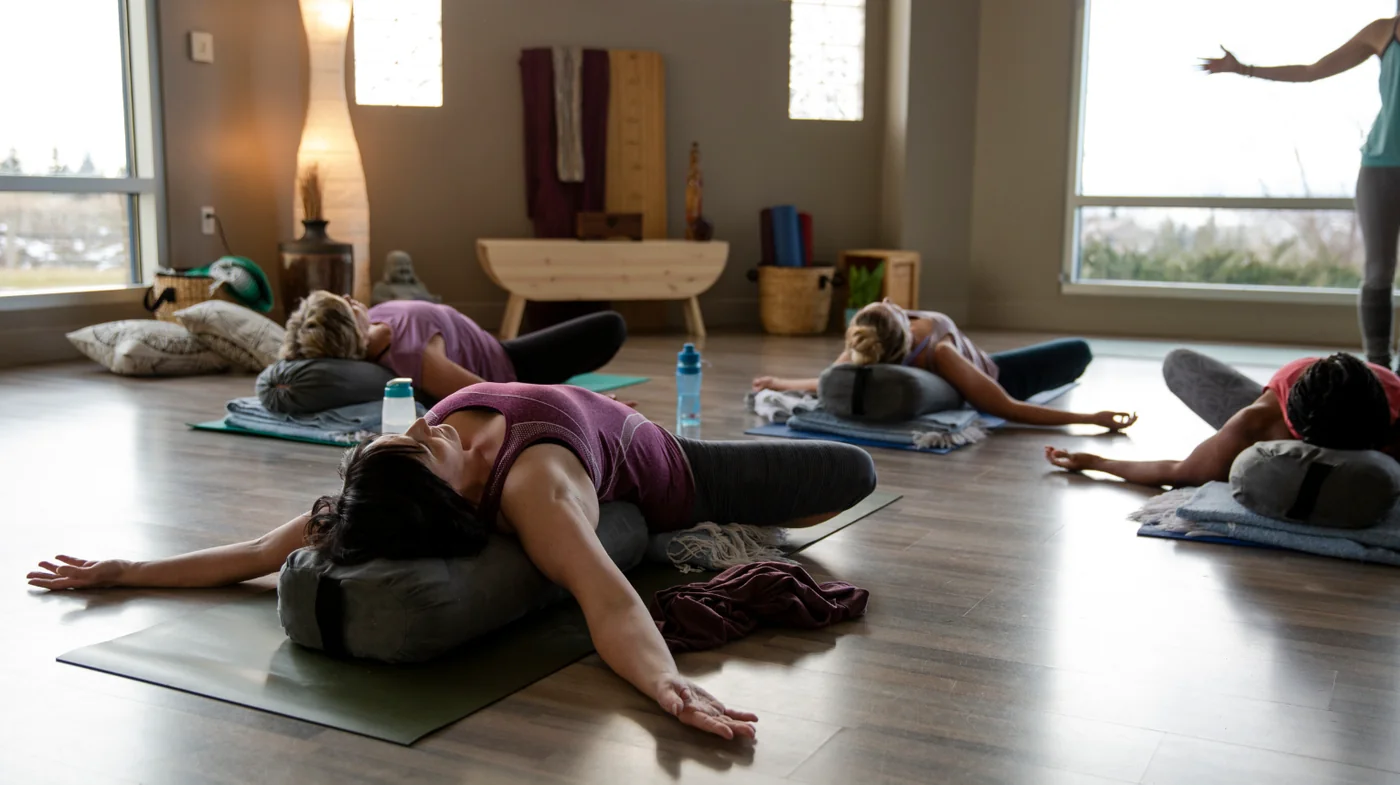
Slow, intentional movement. Walking without trying to get anywhere. Gentle yoga that emphasizes long holds. Stretching with attention. Tai chi or qigong if you’re drawn to it. The combination of movement and stillness is uniquely restorative.
Breathing practice. Slow exhales, twice as long as the inhale, directly activate the parasympathetic nervous system. Five minutes of slow breathing can shift you in measurable ways.
Warm water. Baths, showers, hot tubs, footbaths. Heat plus stillness plus sensory input on the skin downshifts the nervous system. It’s an old practice for a reason.
Hands-on activities. Gardening, knitting, cooking something slow, light woodworking. The combination of physical engagement and lower mental demand is deeply restorative for many people.
Time with safe relationships. A close friend, a partner who knows you, a pet who needs nothing performed. Relationships that don’t require management replenish in ways that solitude alone can’t.
Restorative Sleep, Not Just Sleep
Sleep is the foundation, but not all sleep restores equally. Six hours of unbroken, deep sleep often leaves you better than eight fragmented hours full of waking. The shape of the sleep matters as much as the length.
The basics matter: a cool, dark, quiet room, a consistent sleep window, screens off well before bed. Beyond that, the question is whether your body is actually entering restorative depth. Stress, late meals, alcohol, anxiety, and inconsistent timing all reduce sleep depth even when total hours look fine.
If sleep feels unrefreshing despite reasonable length, the issue is usually quality, not quantity. The interventions that improve depth are largely the same as the ones that align circadian rhythm: light, timing, evening wind-down, and stress regulation during the day. Sleep is the harvest of how you spent the rest of the day.
Nature as a Reset
The research on time in nature has reached the point where it’s silly not to take it seriously. Even short doses (twenty minutes in a park, a walk in trees, time near water) measurably lower stress hormones, slow heart rate, and shift mood in ways nothing indoors quite matches.
You don’t need wilderness. A neighborhood park, a backyard, a tree-lined street, a window that opens onto something green. The dose-response curve is steep at the low end: a little nature does a lot of work. The first twenty minutes are particularly powerful.
If you want to layer effects, take your other restorative practices outside. Slow breathing on a porch is more powerful than slow breathing indoors. A walk in a park is more restorative than a walk on a treadmill. Tea on a balcony with the morning light is meaningfully different from tea at a kitchen counter under fluorescent bulbs.
Building It Into Daily Life
The mistake most of us make is to treat restoration as something we’ll do later, on the weekend, on vacation. By the time later arrives, we’re already drained, and the catch-up rest feels like emergency medicine. Far better is to build small daily restorative pockets into ordinary weeks.
Choose one or two practices that fit your life and that you can do most days. A slow morning cup of something warm before the day starts. Ten minutes of stillness after lunch. A short walk in the late afternoon. A real wind-down before bed. None of these need to be long. The effect of small daily restoration compounds far more reliably than a single big intervention every few months.
When the cup is fuller most days, the occasional emergency drains are easier to absorb. When the cup is chronically empty, every demand feels like one too many. The work is to keep the daily refill happening, not to wait until you’re depleted to start.
The Permission Problem
The biggest barrier to restorative practice for most people isn’t logistics. It’s a quiet belief that rest has to be earned, that taking care of yourself is what you do after everything else is done, that being depleted is a sign of how seriously you take your life.
None of this is true, and most of us know it intellectually. But the belief runs deep, and it shows up as the small voice that says you should answer one more email before sitting down with the tea, or that the walk can wait until tomorrow, or that resting before bed is somehow indulgent.
Letting yourself rest before the work is finished, because the work is never finished, is the actual practice. The cup gets refilled because you decided it could be, not because you earned it. The shift, when it comes, isn’t dramatic. It’s that you start to feel less wired. Sleep gets a little deeper. Mornings feel a little less like dragging yourself uphill. The quality of attention you bring to your own life shifts a few degrees, and a few degrees, sustained, changes everything downstream.
Restoration also tends to spread. The hour you take to genuinely rest doesn’t only benefit you: it makes you more available, more patient, more present with the people in your life. The version of you that has been replenished shows up differently. Your kids feel the difference. Your partner feels the difference. The colleagues you work with feel the difference. Tending to yourself isn’t a withdrawal from the people who depend on you; it’s an investment in the version of you they actually want to spend time with.
Your body doesn’t need permission to be tired; it needs permission to recover. Today, however small, is a good day to give it that.
Sources
- Caring for Your Mental Health, National Institute of Mental Health.
- How Much Sleep Do We Really Need?, Sleep Foundation.
- Stress and Your Health, Office on Women’s Health (OASH).
- Spending time in nature can promote mental health, Harvard T.H. Chan School of Public Health.
- Stress effects on the body, American Psychological Association.
The Free Subscriber’s Library Is Open
Join Peacefully Proven for a growing collection of free wellness tools, guides, and printables, plus a guided forest bathing meditation to begin. All yours, always free.







Join the conversation and add your thoughts.