
Every morning, after the dogs are out, the dogs and cats are fed, their medicine is given, and the bed is made, I make my breakfast. It is the same breakfast nearly every day: a Kachava shake made with two scoops, plus a blend of six powders I add in: ashwagandha, rose powder, ginkgo biloba, a mushroom blend, amla, and saw palmetto.
If you are curious about a blend like this, you probably have two questions. What are all of those things? And do they work? I want to answer both as honestly as I can. So this article is not a promise that any herb will fix anything. It is a plain look at what each of the six is, what the research says (and does not say), and the safety points I think every woman should know before she adds a single herb to her morning shake.
One more thing before we start. I am in menopause, I am on HRT, and I am a strong advocate for it. HRT is what made the biggest difference for my symptoms. My shake add-ins are part of how I like to start the day, but they are not a replacement for talking with your doctor about what you need.
In This Article
Key Takeaways
- My breakfast is a Kachava shake (two scoops) with six add-ins: ashwagandha, rose powder, ginkgo biloba, a mushroom blend, amla, and saw palmetto.
- Research on these herbs ranges from “some promise” to “no clear benefit.” None of them is proven to treat a health condition.
- Ginkgo may raise the risk of bleeding, especially for people who take blood thinners.
- Herbs can interact with medicines, including hormone therapy. Talk to your doctor or pharmacist before you add any of them.
- Dietary supplements are not approved by the FDA before they are sold, so products can vary from one brand or batch to the next.
Why I Add Herbs to My Morning Shake
My mornings have a steady rhythm. I wake to a gentle alarm, and I do not look at my phone until I sit down to work. Breakfast is my Kachava shake (the brand spells it Ka’Chava), an all-in-one nutrition shake, and after that comes a cup of herbal tea and a water bottle of iced herbal tea. No coffee and no caffeinated tea. I turn on the diffuser, in the fall and winter I light the fireplace, and at 9 AM soft music starts on my Sonos.
A shake is an easy place to add powders, which is why Kachava shake add-ins are such a simple habit for me. Powders blend right in, so there is no handful of capsules to remember at different times of day. I have been vegan for about four years and eating organic for about nine, and food as medicine has been part of how I think about eating for about eight years. Adding plant powders to a plant-based breakfast fits the way I like to eat.
I also want to be clear about what I am not sharing. I am not giving amounts, and I am not naming the brands of powders I use. Every body is different, every product is different, and the right amount for you (if any) is a question for your doctor or pharmacist, not a blog post. One thing will not work for everyone.
If you love the idea of Kachava beyond a shake, my Kachava chia pudding routine is another simple way to use it.
Ashwagandha
What it is
Ashwagandha is an evergreen shrub that grows in parts of India, Africa, and the Middle East. It is sometimes called Indian ginseng, and it has a long history in Ayurveda, the traditional medicine of India. Ashwagandha supplements are often sold for stress, anxiety, and sleep.
What the research says
According to the National Center for Complementary and Integrative Health (NCCIH), some ashwagandha preparations may help with stress and insomnia. The evidence for anxiety is unclear. For menopause, NCCIH says there is not enough evidence to know whether it helps. Many of the studies are small, and they used different preparations, which makes it hard to compare results.
Safety notes
NCCIH says ashwagandha may be safe for short-term use of up to 3 months, but its long-term safety is not known. Rare cases of liver injury have been linked to ashwagandha supplements. It should be avoided during pregnancy and while breastfeeding, and it is not recommended for people with thyroid conditions or for people who are about to have surgery. It may also interact with several kinds of medicine, including those for diabetes, blood pressure, and thyroid conditions, as well as sedatives. Some people notice drowsiness or an upset stomach.
If you want to compare ashwagandha with another popular adaptogen, our guide to ashwagandha vs. rhodiola goes into more detail.
Rose Powder
What it is
Rose powder is usually made from dried rose petals that are ground fine. It has a soft floral taste and a pretty pink color. Much of the research on rose as a plant medicine focuses on the Damask rose, Rosa damascena, which is also used to make rose water and rose oil.
What the research says
A review in the Iranian Journal of Basic Medical Sciences, Pharmacological Effects of Rosa Damascena, gathered studies on many possible effects of the Damask rose, from relaxation to antioxidant activity. The important detail is where that research came from: nearly all of it was done in animals, cells, or lab settings, not in people. The review notes that dried rose petals are eaten in Iran and have a traditional use for digestion, and that rose water is widely used in food.
So it makes sense to think of rose powder as a food with a long history and a nice flavor, not as a treatment. The human research is too thin to say more than that.
Safety notes
Because there is so little research in people, there is also little information on how rose powder might interact with medicines. If you buy rose powder, choose one that is labeled for eating (food grade), not a product made for crafts or cosmetics.
A long tradition of use is worth respecting, and it is worth being honest about too. Tradition tells us people have used a plant for a long time. It does not tell us what it does in the body.
Ginkgo Biloba
What it is
Ginkgo is a tree with fan-shaped leaves that NCCIH notes is often called a living fossil. Extracts made from its leaves are the most common form sold as a supplement. Ginkgo has a long history in Chinese medicine and is often promoted for memory and brain health.
What the research says
Memory is a tender subject for me. Brain fog started for me at 38, and it took about 15 years to understand that it was tied to perimenopause and menopause. At its worst I was counting on my fingers to add single digits and making mistakes at work on tasks I had done for decades. I feared early dementia. What resolved it was HRT, and it is my biggest win.
So I want to be very clear about what the research says about ginkgo and the brain. According to NCCIH’s ginkgo page, ginkgo has not been shown to prevent or slow dementia. In the large Ginkgo Evaluation of Memory (GEM) study, more than 3,000 people aged 75 or older took ginkgo or a placebo for a median of 6 years, and rates of dementia and Alzheimer’s disease were the same in both groups. Whether ginkgo helps memory or thinking in healthy people is uncertain. NCCIH sums it up this way: “There’s no conclusive evidence that ginkgo is helpful for any health condition.”
If brain fog is part of your menopause experience, please do not count on a supplement to sort it out. Our article on the FDA removing the boxed warning from menopause hormone therapy explains what changed and why it matters for women deciding whether HRT is right for them.
Safety notes: bleeding risk
This is the most important safety point in this whole article. NCCIH says ginkgo may increase the risk of bleeding in people who take blood thinners (anticoagulants) such as warfarin. Its clinical digest on herb-drug interactions notes that taking ginkgo with warfarin has been linked to a higher risk of major bleeding than warfarin alone. If you take a blood thinner, or if you have surgery or a dental procedure coming up, talk to your doctor before taking ginkgo.
NCCIH also notes that fresh ginkgo seeds are toxic, and that ginkgo may be unsafe during pregnancy. Common side effects of the leaf extract include headache, dizziness, and stomach upset.
A Mushroom Blend
What it is
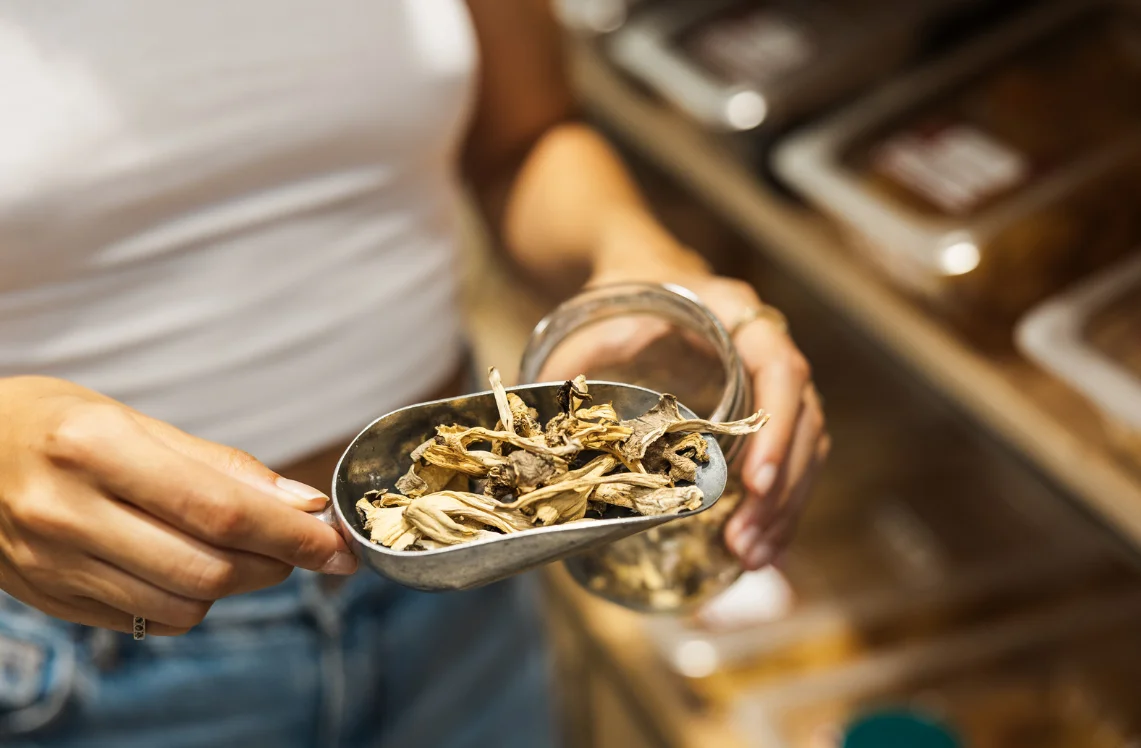
Mushroom powders sold for wellness can include types such as reishi, turkey tail, shiitake, and maitake, and a blend combines more than one kind. Some of these, like shiitake, are also everyday cooking mushrooms. Each type has its own history of traditional use, and each has its own research (or lack of it).
If you would like to learn about individual mushrooms, our guide to functional mushrooms walks through several of the most common ones.
What the research says
The National Cancer Institute’s summary on medicinal mushrooms notes that more than 100 types of mushrooms are used in Asia alongside cancer treatment, and much of the research has been in that setting. It also says the FDA has not approved reishi as a treatment for cancer or any other medical condition.
Safety notes
The same summary points out something worth knowing for any blend: because the FDA does not regularly review how supplements are made, all batches and brands of mushroom supplements may not be the same. That is one more reason to choose carefully and to tell your doctor exactly what is in the product you use.
Amla
What it is
Amla is the Indian gooseberry, a small, very sour green fruit. Its scientific names are Emblica officinalis and Phyllanthus emblica. Like ashwagandha, it is an important plant in Ayurveda, and the dried fruit is ground into a tart powder that mixes easily into a shake.
What the research says
Amla has some of the more encouraging human research of the six. A 2023 review that pooled the results of randomized controlled trials, The impact of Emblica Officinalis (Amla) on lipid profile, glucose, and C-reactive protein, included five trials. Taking amla was linked to lower fasting blood sugar, lower total and LDL cholesterol, lower triglycerides, lower C-reactive protein (a marker of inflammation), and higher HDL cholesterol.
That sounds promising, and the authors did call it promising. They also said more research is needed. The trials were small, and they lasted only 3 to 12 weeks, so we do not know much about long-term use.
Safety notes
Because amla has been studied for blood sugar and cholesterol, it makes sense to mention it to your doctor if you take medicine for either one, so they can keep an eye on your numbers.
Saw Palmetto
What it is
Saw palmetto is a small palm tree native to the southeastern coast of North America and the West Indies. The supplement is made from its berries. It is most often marketed to men for urinary symptoms linked to an enlarged prostate, and sometimes for hair loss.
What the research says
According to NCCIH’s saw palmetto page, a 2023 review of 27 studies found that saw palmetto alone gave little or no benefit for prostate symptoms. A few small studies have looked at it for hair loss, but the evidence is too limited to draw conclusions, and those studies focused on male-pattern hair loss.
Hair thinning is one of my menopause symptoms that has not gone away. So I want to be honest with any woman reading this for the same reason: there is no good evidence that saw palmetto treats hair thinning in women.
Safety notes
NCCIH describes saw palmetto as generally well tolerated, with mild and uncommon side effects such as stomach upset, dizziness, and headache. It may be unsafe during pregnancy or while breastfeeding.
Safety First: Talk to Your Doctor or Pharmacist
Herbs can interact with medicines, including HRT
NCCIH’s herb-drug interactions digest explains that herbs, prescription drugs, over-the-counter drugs, and even some foods can affect one another, and that good human studies on many of these combinations are limited. Some medicines need extra care, such as warfarin and digoxin, because a small change in how much reaches the blood can matter a lot.
If you take any prescription, and that includes hormone therapy, bring a list of every herb and supplement you take to your doctor or pharmacist. Pharmacists are a wonderful, often overlooked resource for this. They can check your full list and tell you if anything needs a closer look.
Questions to ask before you add a new powder
- Does this herb interact with any medicine I take, including HRT?
- Is it safe with my health conditions (for example, a thyroid condition, liver problems, or a bleeding disorder)?
- Should I stop it before surgery or a dental procedure?
- How will I know if it is causing side effects?
A few more gentle reminders
- Add one thing at a time. If you start several new powders at once and feel off, you will not know which one is the cause.
- “Natural” does not mean risk-free. Ashwagandha has been linked to rare liver injury, and ginkgo can affect bleeding. Plants are powerful, which is why they deserve care.
- Supplements are not checked before they are sold. NCCIH notes that the FDA does not approve dietary supplements before they go on the market. Look for products that are tested by an independent group, and buy from sellers you trust.
- Pregnancy and breastfeeding. Several of these herbs, including ashwagandha, ginkgo, and saw palmetto, may be unsafe during pregnancy or breastfeeding.
- Stop and call if something feels wrong. Unusual bruising or bleeding, yellowing skin or eyes, or a big change in how you feel are reasons to stop and call your doctor.
You do not have to suffer through menopause, and you do not have to figure it out alone. A good doctor and a good pharmacist are on your side. If your doctor will not talk with you about your symptoms, it is okay to find one who will.
How I Make My Shake
Here is the simple version. I am not including amounts on purpose. If you decide to try any of these herbs, your doctor or pharmacist can help you decide whether they are right for you and how much makes sense.
- Start with the base. Add two scoops of Kachava to your blender or shaker bottle.
- Add the powders. Add the herb powders your doctor has okayed. My blend is ashwagandha, rose powder, ginkgo biloba, a mushroom blend, amla, and saw palmetto.
- Add your liquid. Pour in the liquid you like for your shake.
- Blend or shake until smooth. Herb powders can clump, so give it a good mix and check the bottom for anything that did not dissolve.
- Taste and adjust. Amla is sour and some herbs are earthy or bitter. If a new powder changes the taste more than you like, try a smaller amount the next day.
- Enjoy it with your morning. I have mine for breakfast, followed by a cup of herbal tea.
My morning shake is a small ritual I enjoy, and I like knowing what each ingredient is and what the science says about it. I hope this gives you a clearer picture, too. If you are curious about any of these herbs, start with a conversation with your doctor or pharmacist, add one thing at a time, and pay attention to how you feel. That kind of care is always worth it.
Sources
- Ashwagandha: Usefulness and Safety, National Center for Complementary and Integrative Health.
- Ginkgo: Usefulness and Safety, National Center for Complementary and Integrative Health.
- Saw Palmetto: Usefulness and Safety, National Center for Complementary and Integrative Health.
- Herb-Drug Interactions, NCCIH Clinical Digest.
- Medicinal Mushrooms (PDQ®)-Patient Version, National Cancer Institute.
- Pharmacological Effects of Rosa Damascena, Iranian Journal of Basic Medical Sciences (Boskabady and colleagues, 2011).
- The impact of Emblica Officinalis (Amla) on lipid profile, glucose, and C-reactive protein: A systematic review and meta-analysis of randomized controlled trials, Diabetes & Metabolic Syndrome (Setayesh and colleagues, 2023).
Free 10-Minute Forest Bathing Meditation
Subscribe to Peacefully Proven and receive a free guided meditation to restore calm and clarity, delivered straight to your inbox.





Join the conversation and add your thoughts.