
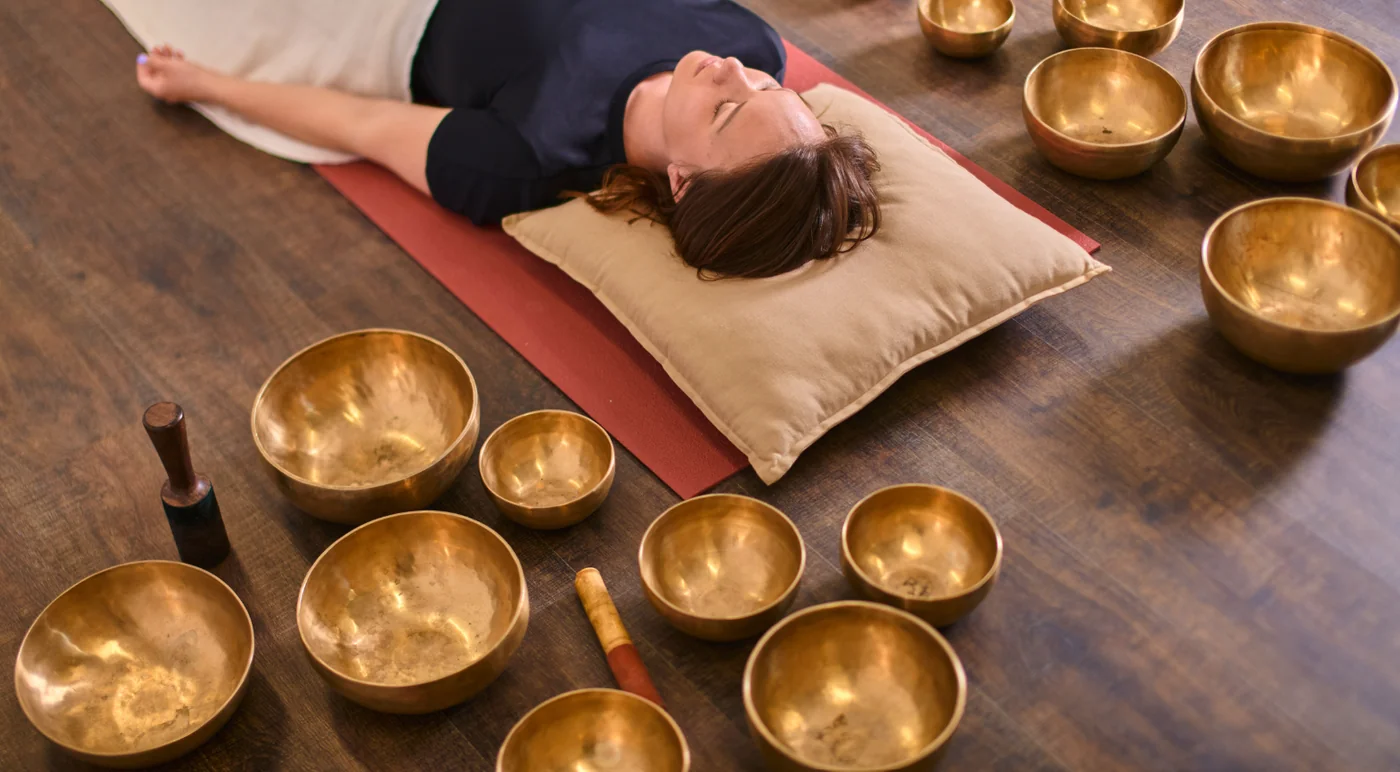
There is a particular kind of exhaustion that comes not from physical labor but from being disconnected from your own body. You carry tension in your shoulders without realizing it. Your jaw clenches during meetings and stays clenched for hours. Your breath becomes shallow and rapid without any conscious awareness that it has changed. The body speaks constantly, but most of us have lost the ability — or the habit — of listening. Body scan meditation is the practice of learning to listen again. It is a systematic, gentle journey through your own physical landscape, region by region, sensation by sensation, teaching you to notice what your body is holding and to offer it the one thing it most needs: your unhurried, nonjudgmental attention.
As one of the foundational practices of mindfulness-based stress reduction (MBSR), body scan meditation has been studied extensively and is now one of the most evidence-backed meditation techniques available. It reduces stress, improves sleep, decreases chronic pain, enhances body awareness, and creates a deep state of physical and mental relaxation that many practitioners describe as unlike anything they experience in ordinary rest. And unlike some meditation practices that require you to clear your mind or focus on abstract concepts, body scan meditation gives your attention a specific, concrete task: feel what is happening in your body, one area at a time, from your toes to the crown of your head.
In This Article
- What Is Body Scan Meditation?
- The Science of Body Scanning: What Research Reveals
- How Body Scans Regulate the Nervous System
- A Complete Step-by-Step Body Scan Practice
- Body Scan Meditation for Chronic Pain
- Using Body Scans for Better Sleep
- The Emotional Dimensions of Body Awareness
- Body Scan Variations for Different Needs
- Building a Consistent Body Scan Practice
What Is Body Scan Meditation?
Body scan meditation is a mindfulness practice in which you systematically direct your attention through different regions of your body, noticing whatever physical sensations are present without trying to change them. You move your awareness slowly from one area to the next — typically beginning at the feet and progressing upward to the head, or vice versa — spending anywhere from a few seconds to several minutes with each body region. The practice cultivates interoception (the ability to sense internal bodily states) and teaches a quality of attention that is curious, accepting, and non-reactive.
As Mindful.org describes in their beginner’s guide to body scan meditation, the practice is not about achieving a particular state or making specific sensations arise. It is about meeting your body exactly as it is in the present moment — with whatever tension, comfort, numbness, warmth, tingling, or stillness happens to be there — and offering that experience your full, patient attention. The paradox that practitioners consistently discover is that this act of noticing without trying to change often produces profound change on its own. Tension that has been held unconsciously for hours or days begins to soften simply because it has been seen.
The body scan was popularized by Jon Kabat-Zinn as a core component of the MBSR program he developed at the University of Massachusetts Medical Center in 1979. It was specifically designed to be accessible to people with no meditation experience, including hospital patients dealing with chronic pain, anxiety, and stress-related conditions. The practice requires no particular physical ability, no special equipment, and no prior training. You simply lie down, close your eyes, and begin paying attention to your body. That simplicity is part of its power.
The Science of Body Scanning: What Research Reveals
The scientific literature on body scan meditation has grown substantially, with studies demonstrating measurable effects on stress biomarkers, pain perception, sleep quality, emotional regulation, and brain structure and function.
Research compiled by UC Berkeley’s Greater Good in Action program indicates that regular body scan practice increases interoceptive awareness — the brain’s ability to accurately perceive internal bodily signals. This enhanced interoception has far-reaching implications. People with better interoceptive awareness tend to have superior emotional regulation, make better decisions, experience less anxiety, and respond to stress more adaptively. The body scan trains this capacity directly by repeatedly asking the brain to attend to and interpret physical sensations across the entire body.
Neuroimaging studies have shown that body scan meditation activates the insula — a brain region centrally involved in interoception, emotional awareness, and empathy — while simultaneously decreasing activity in the default mode network, the brain system associated with mind-wandering, rumination, and self-referential thought. This neural signature suggests that body scanning pulls the practitioner out of abstract mental loops and into direct, embodied experience — a shift that is associated with reduced anxiety, improved mood, and greater psychological flexibility.
As the Cleveland Clinic explains in their overview of body scan meditation benefits, the practice has been shown to reduce cortisol levels, lower blood pressure, improve heart rate variability, and decrease the subjective experience of stress and anxiety. These effects are not limited to the period during the practice itself. Regular body scan practitioners show improved stress resilience throughout the day, suggesting that the practice produces lasting changes in how the nervous system processes and responds to stressful stimuli.
How Body Scans Regulate the Nervous System
The nervous system regulation effects of body scan meditation are among its most significant therapeutic mechanisms. The practice works through several interconnected pathways that shift the autonomic nervous system from sympathetic dominance (stress, tension, vigilance) toward parasympathetic dominance (relaxation, restoration, repair).
First, the slow, deliberate pace of a body scan naturally slows respiration. As you move your attention gradually through your body, your breathing tends to deepen and lengthen without conscious effort. This shift in breathing pattern directly activates the vagus nerve, the primary neural pathway of the parasympathetic nervous system, triggering a cascade of relaxation responses: reduced heart rate, lowered blood pressure, decreased cortisol production, and increased digestive activity.
Second, the act of directing attention to specific body regions activates the somatosensory cortex and the insula in a systematic, organized way. This organized neural activation appears to have a calming effect on the brain — it gives the mind a structured, embodied task that reduces the scattered, anxious mental activity that often accompanies stress. The brain shifts from the diffuse, threat-scanning mode of anxiety to the focused, present-moment mode of sensory awareness, and this shift is inherently calming.
Third, body scan meditation directly addresses the muscle tension that both accompanies and perpetuates the stress response. When you bring conscious awareness to an area of held tension — a clenched jaw, tight shoulders, a contracted belly — the act of observation often produces an involuntary softening. This is not muscular relaxation through effort (as in progressive muscle relaxation, where you deliberately tense and release muscles). It is relaxation through awareness — a more subtle but often more profound release that occurs when the nervous system recognizes that the tension is no longer needed and allows it to dissipate on its own.
A Complete Step-by-Step Body Scan Practice
Preparation (2 minutes)
Lie on your back on a comfortable surface — a yoga mat, a bed, or a carpeted floor. If lying flat is uncomfortable, place a pillow under your knees or bend your knees with feet flat on the floor. Let your arms rest at your sides with palms facing up. Close your eyes or soften your gaze toward the ceiling. Take five slow, deep breaths, allowing each exhale to be slightly longer than the inhale. With each breath, feel your body settling more fully into the surface beneath you. There is nowhere to go and nothing to do for the next fifteen to twenty minutes except to feel what your body feels.
Feet and Toes (2-3 minutes)
Bring your attention to your left foot. Begin with the toes — notice any sensations present. Warmth, coolness, tingling, pressure, numbness, or nothing at all. There is no right sensation to have. Simply notice what is there. Expand your awareness to include the sole of the left foot, the arch, the heel, the top of the foot, the ankle. Breathe naturally and imagine that your breath is flowing down into your left foot, filling it with gentle awareness. After one to two minutes, shift your attention to the right foot and repeat the same exploration. Then hold both feet in your awareness simultaneously for a few breaths.
Lower Legs, Knees, and Upper Legs (3-4 minutes)
Move your attention upward to your lower legs — the shins, the calves, the muscles along the sides of each leg. Notice the weight of your legs against the surface beneath you. Move to your knees — feel any sensations in and around the knee joints. Continue upward into the thighs — the large muscles of the quadriceps, the hamstrings, the inner thighs. These are among the largest muscles in the body and often hold significant tension. Simply notice what is present without trying to relax or change anything. Breathe into whatever you find.
Hips, Pelvis, and Lower Back (2-3 minutes)
Bring your awareness to the hips and pelvis — the hip joints, the sit bones, the bowl of the pelvis. Notice where this region contacts the surface beneath you. Move your attention to the lower back — an area where many people hold chronic tension. Observe without judgment whatever you find here: tightness, dull aching, warmth, or ease. You might notice that simply directing attention to the lower back changes the quality of sensation there. Allow whatever response arises naturally.
Abdomen and Chest (2-3 minutes)
Shift your awareness to the belly. Feel the gentle rise and fall of your abdomen with each breath. Notice whether the belly feels soft and relaxed or tight and guarded. The abdomen is deeply connected to emotional experience — stress, anxiety, and emotional holding often manifest as abdominal tension. Simply observe. Move your attention to the chest — the ribcage expanding and contracting, the heartbeat, the space around the heart. Notice the rhythm of your own aliveness in this region.
Hands, Arms, and Shoulders (2-3 minutes)
Bring your attention to both hands simultaneously. Feel the fingers, the palms, the backs of the hands. Notice any tingling, warmth, pulsing, or stillness. Move up through the wrists, forearms, elbows, and upper arms. Then bring your awareness to the shoulders — one of the primary holding areas for stress in the human body. Notice whether the shoulders are drawn up toward the ears or resting naturally. Notice any tension, heaviness, or restriction. Offer the shoulders your full, patient attention without trying to force them to relax.
Neck, Jaw, and Face (2-3 minutes)
Move your attention to the neck — front, back, and sides. Notice the muscles that support your head throughout the day. Move to the jaw — another area of significant stress-related tension. Is the jaw clenched, slightly open, or relaxed? Notice the tongue resting in the mouth. Bring awareness to the face: the lips, the cheeks, the muscles around the eyes, the forehead, the temples. The face contains dozens of small muscles that often hold patterns of tension, worry, or concentration. Simply notice what is there.
Whole Body Integration (2-3 minutes)
Having moved through each region individually, now expand your awareness to hold your entire body in a single field of attention. Feel yourself as a complete, interconnected whole — from the soles of your feet to the crown of your head. Notice the breath moving through the entire body. Feel the body’s weight, warmth, and aliveness as one unified experience. Rest in this whole-body awareness for several breaths, allowing whatever sensations are present to simply be, without preference or interference. When you are ready, begin to deepen your breath, gently wiggle your fingers and toes, and slowly open your eyes.
Body Scan Meditation for Chronic Pain
Body scan meditation was originally developed within the context of chronic pain management, and it remains one of the most effective mindfulness-based interventions for people living with persistent pain conditions. The mechanism is not pain elimination but pain transformation — changing the relationship between the person and their pain in ways that reduce suffering even when the physical sensation remains.
As HelpGuide explains in their detailed guide to body scan meditation, chronic pain is sustained not only by the physical signal from the body but by the emotional and cognitive reactions that accompany it — fear, resistance, catastrophizing, frustration, and the tension of bracing against anticipated pain. These reactions amplify the pain experience, creating a feedback loop in which the emotional response to pain increases the perception of pain, which increases the emotional response, and so on.
Body scan meditation interrupts this feedback loop by training a different response to painful sensations: curious, accepting observation rather than resistance and reactivity. When you practice attending to uncomfortable sensations with equanimity during a body scan, you are training your nervous system to respond to pain with less emotional amplification. Over time, this training produces measurable reductions in pain intensity, pain unpleasantness, and pain-related distress, even when the underlying physical condition has not changed.
For people with chronic pain, the body scan also addresses the common tendency toward body avoidance — the habit of mentally disconnecting from the body because attending to physical sensations feels threatening. This disconnection, while understandable, actually worsens pain outcomes because it reduces interoceptive accuracy (the brain’s ability to correctly interpret body signals) and increases anxiety about physical sensations. The body scan gently reverses this pattern, rebuilding the connection between awareness and body in a safe, controlled, and paced way.
Using Body Scans for Better Sleep
Body scan meditation is one of the most effective practices for improving sleep onset and sleep quality, and the reasons are both physiological and psychological. The practice creates the exact conditions the nervous system needs to transition from wakefulness to sleep: reduced muscle tension, slower heart rate, deeper breathing, quieted mental activity, and a shift from sympathetic to parasympathetic nervous system dominance.
The systematic nature of the body scan is particularly well-suited to the sleep context because it gives the wandering mind a gentle, repetitive task that prevents the rumination and worry that commonly keep people awake. Rather than lying in bed trying not to think (a strategy that reliably fails because the effort of not thinking is itself a form of mental activity), the body scan provides a focus for attention that is inherently calming and progressively sedating.
As Headspace describes in their body scan meditation guide, many practitioners find that they fall asleep before completing the full scan — and this is perfectly fine. Unlike other meditation practices where falling asleep might be considered a failure, in the sleep context, falling asleep is the desired outcome. The body scan simply provides a gentle, systematic pathway from wakefulness to sleep that aligns with the nervous system’s natural transition process rather than working against it.
For optimal sleep benefit, practice the body scan while lying in your sleeping position, in your bed, at the time you intend to fall asleep. Move through the body slowly — there is no rush. If you notice areas of significant tension, spend extra time there, breathing into the tightness and allowing it to soften naturally. The slower and more deliberate your pace, the more deeply the practice will engage the parasympathetic nervous system and the more effectively it will support the transition to sleep.
The Emotional Dimensions of Body Awareness
One of the most profound and sometimes surprising aspects of body scan practice is its capacity to surface emotional material that has been stored in the body. Emotions are not purely mental events — they are embodied experiences with specific physical signatures. Grief often manifests as heaviness in the chest. Anxiety frequently presents as tightness in the stomach or throat. Anger may show up as heat in the face and tension in the jaw and fists. When you systematically attend to physical sensations throughout the body, you may encounter emotional content that has been held below conscious awareness.
This is not something to fear. The body scan provides a safe container for emotional awareness because it does not require you to analyze, explain, or resolve whatever arises. You simply notice. You might feel sadness in your chest during a body scan and have no idea what it is connected to — and that is fine. The practice is not about understanding emotions intellectually but about allowing them to be felt physically, which is often the first step in their natural processing and release.
Over time, regular body scan practice develops a kind of emotional literacy of the body — the ability to recognize early physical signals of emotional states before they escalate into overwhelming experiences. You begin to notice the first flutter of anxiety in your stomach before it becomes full-blown panic. You feel the initial tightening of frustration in your jaw before it erupts as anger. This early recognition creates a window for conscious response rather than automatic reaction, fundamentally changing how you navigate emotional experience in daily life.
Key Benefits of Body Scan Meditation
- Deep physical relaxation — systematically releases held tension throughout the entire body
- Stress reduction — activates parasympathetic nervous system and lowers cortisol levels
- Improved sleep — creates ideal nervous system conditions for natural sleep onset
- Chronic pain management — changes the relationship with pain and reduces suffering
- Enhanced interoception — improves ability to sense and interpret internal body signals
- Emotional regulation — develops body-based awareness of emotional states for earlier intervention
- Reduced anxiety — interrupts worry loops by anchoring attention in physical sensation
- Accessible to beginners — requires no experience, equipment, or physical ability
Body Scan Variations for Different Needs
The Quick Scan (5 minutes)
When time is limited, a condensed body scan can still provide meaningful benefit. Rather than spending several minutes with each body region, move through larger zones in thirty-second segments: feet and legs, hips and belly, chest and back, arms and hands, neck and head. The key is maintaining the same quality of attention — curious, accepting, unhurried — even though the pace is faster. A five-minute quick scan can be used as a midday reset, a pre-meeting grounding practice, or a brief stress management tool.
The Tension-Release Scan (15 minutes)
This variation combines body scan awareness with gentle physical release. As you move your attention to each body region, first notice whatever tension is present, then on an exhale, consciously invite that area to soften and release. You might gently adjust your position to support the release — letting your shoulders drop, unclenching your hands, softening your belly. This variation is particularly effective for people who carry significant physical tension and find that awareness alone does not produce sufficient release.
The Gratitude Scan (15 minutes)
In this variation, as you bring attention to each body region, you also bring a quality of gratitude and appreciation. As you scan your feet, appreciate their ability to carry you through the world. As you scan your hands, appreciate everything they have done today. As you scan your heart, appreciate its tireless, faithful beating. This gratitude-infused body scan creates a warm, loving quality of attention that many practitioners find deeply nourishing, particularly if they have a difficult or conflicted relationship with their body.
The Seated Scan (10 minutes)
While the traditional body scan is practiced lying down, a seated variation can be used in contexts where lying down is not practical — at work, in a waiting room, during travel. Sit comfortably with feet flat on the floor and hands resting in your lap. Close your eyes and move your attention through the same sequence of body regions, adapting the practice to the sensations available in a seated posture. The seated scan is particularly useful as a workplace mindfulness practice.
Building a Consistent Body Scan Practice
Week One: Guided Practice
Begin with guided body scan recordings. Having a voice lead you through the practice eliminates the need to remember the sequence and allows you to focus entirely on the experience of sensing. Practice three to four times during the first week, choosing a time when you can lie down undisturbed for fifteen to twenty minutes. Many people find that bedtime is the most natural time for body scan practice, though morning or afternoon sessions are equally valuable if they fit your schedule better.
Week Two: Developing Sensitivity
During the second week, begin to notice the subtle differences between body regions. Some areas may feel vibrant and alive with sensation. Others may feel numb or blank. Some may hold obvious tension. Others may surprise you with unexpected sensations — tingling, warmth, pulsing, or heaviness. There is no right or wrong experience. The goal is simply to become a more sensitive, attentive observer of your own physical landscape.
Week Three: Self-Guided Practice
Begin practicing without a guided recording. Set a timer for fifteen to twenty minutes and move through the body at your own pace, spending more time with areas that feel particularly rich or important. You may find that certain body regions consistently hold tension or emotional material, and you may choose to spend extra time with these areas. The transition from guided to self-guided practice deepens your relationship with the body scan and makes the practice more personal and responsive to your individual needs.
Week Four: Integration and Adaptation
By the fourth week, body scan meditation should be a familiar, comfortable practice. Begin adapting it to your life: use a quick five-minute scan at your desk during a stressful afternoon, a full twenty-minute scan before bed when sleep is difficult, a gratitude scan when you need emotional nourishment. The body scan is not a single, rigid practice but a flexible template that you can adjust to meet the moment’s need.
The Free Subscriber’s Library Is Open
Join Peacefully Proven for a growing collection of free wellness tools, guides, and printables, plus a guided forest bathing meditation to begin. All yours, always free.
Body scan meditation teaches a truth that modern life works hard to obscure: you are not just a mind carried around by a body. You are a body — a living, breathing, sensing, feeling organism that is constantly communicating with you through the language of sensation. Every area of tension is information. Every pocket of ease is a message. Every subtle shift in warmth, pressure, or tingling is your body’s way of telling you something about your state, your needs, and your relationship with the world around you.
The body scan is simply the practice of learning to listen to that language. And like any language, it becomes richer and more nuanced the more attention you give it. Begin with a single practice. Move slowly through your body. Notice what you find without trying to change it. That gentle, radical act of attention is where healing begins — not in fixing what is broken, but in finally, fully arriving in the body that has been carrying you all along.







Join the conversation and add your thoughts.