


I first learned about the vagus nerve on a particularly rough afternoon — the kind where your chest feels tight for no obvious reason and your thoughts won’t stop circling. A friend mentioned something about humming to calm the nervous system, and honestly, I thought she was being a little too woo-woo for me. But I was desperate enough to try it. Three minutes of low, steady humming later, something shifted. My shoulders dropped. My breathing slowed. I felt like I’d returned to my body after being somewhere very far away.
That was my introduction to vagus nerve stimulation, and it changed the way I think about stress management entirely. The vagus nerve is your body’s built-in calm-down switch, and the exercises that activate it are so simple they almost feel too good to be true. But the science behind them is real, and the effects can be remarkably fast.
Here are ten of my favorite vagus nerve exercises — all of which you can do at home, right now, without any special equipment.
What Is the Vagus Nerve and Why Does It Matter?
The vagus nerve is the longest cranial nerve in your body, running from your brainstem all the way down through your neck, chest, and abdomen. The word “vagus” comes from the Latin for “wandering,” and that’s exactly what this nerve does — it wanders through your major organs, connecting your brain to your heart, lungs, gut, and more.
According to the Cleveland Clinic, the vagus nerve is the main component of the parasympathetic nervous system — the branch responsible for rest, digestion, and recovery. When your vagus nerve is well-toned (meaning it responds efficiently), you’re better able to calm down after stress, regulate your heart rate, digest food properly, and even manage inflammation.
Vagal tone — a measure of how well your vagus nerve functions — has been linked to emotional resilience, heart health, and even immune function. The higher your vagal tone, the more quickly your body can shift from stress mode back to rest mode. And the beautiful thing is that vagal tone can be improved with practice.
1. Cold Water Face Immersion
This is one of the fastest vagus nerve activators available to you. When cold water contacts your face — particularly around the forehead, eyes, and cheeks — it triggers what’s called the dive reflex, immediately slowing your heart rate and activating the parasympathetic branch.
How to do it: Fill a bowl with cold water and ice. Take a deep breath, then immerse your face for 15 to 30 seconds. If that feels too intense, try splashing cold water on your face or holding a cold, damp washcloth against your forehead and cheeks. Even a few seconds can create a noticeable shift.
2. Humming and Chanting
The vagus nerve passes right through your vocal cords and the muscles at the back of your throat. When you hum, chant, or make sustained vocal sounds, the vibrations directly stimulate the nerve. This is one reason why practices like chanting “Om” in yoga traditions have been used for thousands of years — they were activating the vagus nerve long before anyone had a name for it.
How to do it: Choose any comfortable pitch and hum steadily for two to three minutes. Feel the vibration in your chest and throat. You can also try chanting a long, drawn-out “Voo” sound, which some somatic therapists recommend for deep vagal activation. The key is the sustained vibration, not the melody.
3. Deep Belly Breathing
Slow, diaphragmatic breathing is perhaps the most well-researched vagus nerve exercise. A 2021 study published in the journal Frontiers in Human Neuroscience found that even a single session of slow, deep breathing significantly improved vagal tone and reduced anxiety.
How to do it: Place one hand on your chest and one on your belly. Breathe in slowly through your nose for four counts, directing the breath into your belly so that your lower hand rises while your chest stays relatively still. Exhale slowly through your mouth for six to eight counts. Repeat for five to ten rounds. The extended exhale is what signals the vagus nerve to activate the relaxation response.
4. Gargling
This one surprises most people, but gargling vigorously with water stimulates the muscles at the back of the throat that are connected to the vagus nerve. It’s a technique frequently recommended in functional neurology for improving vagal tone.
How to do it: Take a large sip of water and gargle aggressively — enough that it’s slightly challenging and your eyes might water a bit. That intensity is what creates the vagal stimulation. Do this for 30 seconds to a minute, once or twice daily. Morning routines are a great time to incorporate this.
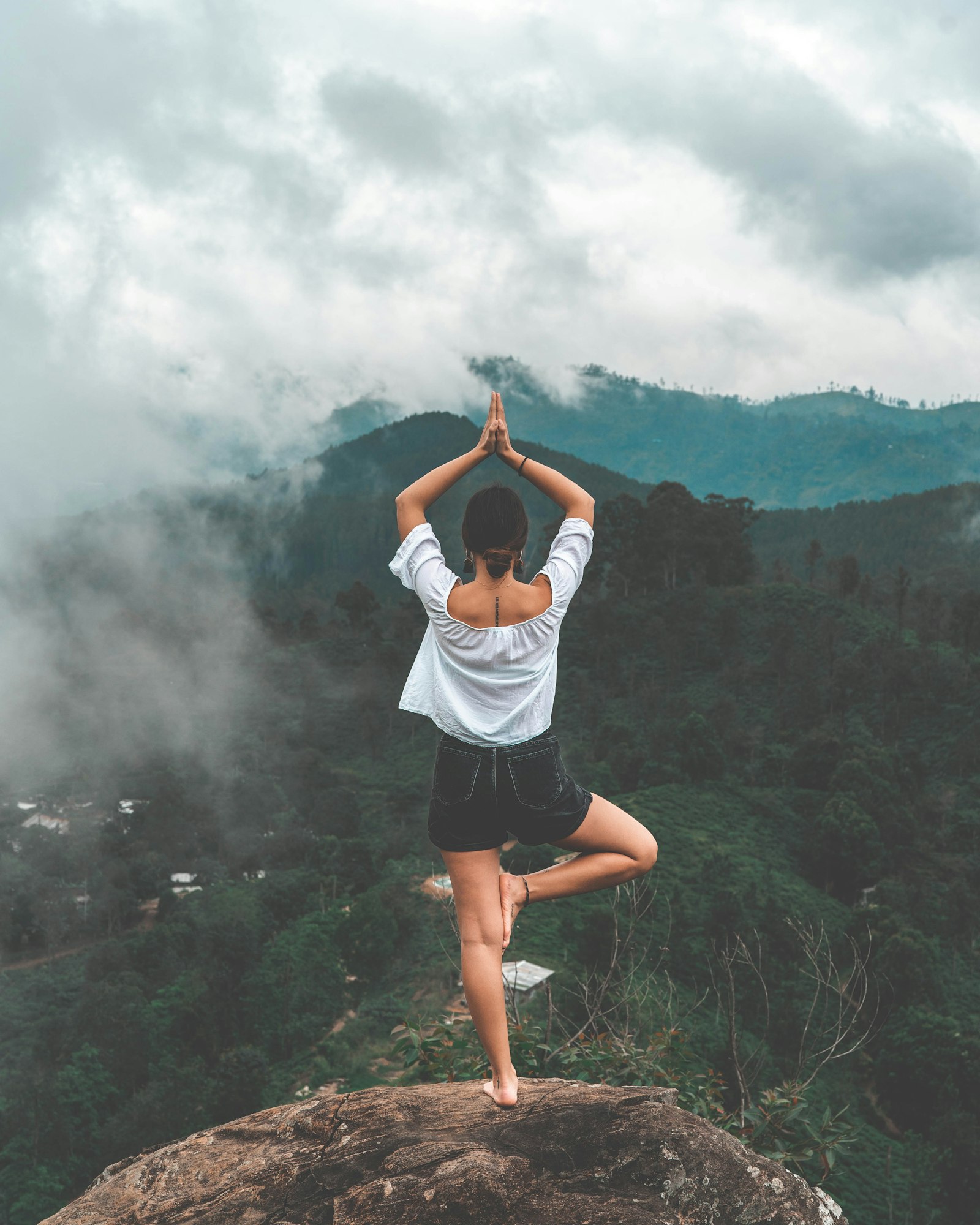
5. Gentle Yoga Poses
Certain yoga poses are particularly effective at stimulating the vagus nerve, especially those that involve gentle backbends, throat opening, and inversions. The combination of breath, movement, and specific body positioning creates a powerful vagal activation signal.
How to do it: Try these three poses: Cat-Cow (alternating between arching and rounding your spine while coordinating with breath), Legs Up the Wall (lying on your back with legs extended up against a wall), and Supported Fish Pose (lying back over a rolled blanket placed under your shoulder blades, allowing your chest to open). Hold each for one to three minutes with slow, steady breathing.
“The vagus nerve is your body’s whisper back to calm. Every hum, every deep breath, every moment of gentle stillness is a conversation between you and your own capacity for peace.”
6. Singing
Singing — especially singing loudly and with feeling — works the same vagal pathway as humming but with even more intensity. The deep breathing required for sustained notes, combined with the vocal cord vibrations, creates a wonderful double activation of the vagus nerve.
How to do it: Sing along to your favorite songs in the car, in the shower, or anywhere you feel comfortable. The more enthusiastically you sing, the better. Don’t worry about pitch or talent — this is about physiology, not performance. Belt it out.
7. Laughter
Genuine laughter is a full-body vagus nerve workout. It engages the diaphragm, activates the vocal cords, and triggers the release of feel-good neurotransmitters. Research has shown that laughter improves heart rate variability — a key marker of vagal tone — and reduces cortisol levels.
How to do it: Watch something that genuinely makes you laugh. Call that friend who always cracks you up. Try laughter yoga, where you practice laughing intentionally — it might feel silly at first, but the body doesn’t distinguish between spontaneous and intentional laughter. Both activate the vagus nerve equally.
8. Gentle Ear Massage
A branch of the vagus nerve runs through the ear canal, which is why gentle ear massage can produce a surprisingly calming effect. This technique is used in auricular acupuncture and is one of the easiest vagal exercises to do discreetly, anywhere.
How to do it: Using your thumb and index finger, gently massage the outer rim of your ear, working from the top down to the earlobe. Spend extra time on the inner curves of the ear where the auricular branch of the vagus nerve is located. Do this for one to two minutes on each side while breathing slowly.
Quick Reference: When to Use Each Exercise
- Acute stress or panic: Cold water face immersion, deep belly breathing
- Daily maintenance: Humming, gargling, gentle yoga
- Mood boost: Singing, laughter
- Subtle calming (anytime, anywhere): Ear massage, box breathing
- Before sleep: Progressive muscle relaxation, deep belly breathing
9. Box Breathing
Box breathing is a structured breathing technique used by Navy SEALs, first responders, and athletes to maintain calm under pressure. It works by creating a rhythmic, balanced breathing pattern that signals the vagus nerve to downshift the stress response.
How to do it: Breathe in through your nose for four counts. Hold your breath for four counts. Exhale slowly through your mouth for four counts. Hold again for four counts. That’s one cycle. Repeat for four to eight cycles. The equal duration of each phase creates a sense of control and predictability that your nervous system interprets as safety.
10. Progressive Muscle Relaxation
Progressive muscle relaxation works by systematically tensing and then releasing different muscle groups throughout the body. The release phase activates the parasympathetic nervous system and stimulates the vagus nerve. It’s particularly effective before sleep or during periods of physical tension.
How to do it: Starting with your feet, tense the muscles as tightly as you comfortably can for five seconds, then release completely for fifteen seconds. Notice the difference between tension and relaxation. Move upward through your calves, thighs, abdomen, hands, arms, shoulders, neck, and face. The entire sequence takes about ten to fifteen minutes and leaves most people feeling noticeably more relaxed.
Want a Guided Practice for Vagus Nerve Activation?
Our free guided forest bathing meditation combines deep breathing, nature immersion, and body awareness — three powerful vagus nerve stimulators in one peaceful practice. Download it free here.
Building Your Personal Vagus Nerve Practice
You don’t need to do all ten exercises every day. The most effective approach is to choose two or three that resonate with you and practice them consistently. Over time, you’ll notice that your baseline state begins to shift. Stress won’t hit quite as hard. Recovery will come a little faster. Sleep might improve. Digestion might ease.
The Cleveland Clinic recommends incorporating vagus nerve exercises into your daily routine rather than saving them for moments of acute stress. Think of it like physical fitness — you don’t wait until you need to run from something to start training. Consistent practice builds the capacity to handle whatever comes your way.
Start small. Maybe it’s three minutes of humming while you make your morning tea. Or a few rounds of box breathing at your desk between meetings. Or gargling vigorously after brushing your teeth at night. These tiny interventions add up to something genuinely transformative.
Your vagus nerve is already there, waiting to help you find calm. All it needs is a little invitation.
You might also enjoy:




Join the conversation and add your thoughts.