


On May 31st I pulled fifteen pieces out of my closet, laid them on my bed, and put everything else in a tote in the spare room. I had decided to wear only those fifteen pieces for the month of June. I live in Michigan, where June can be anything from a damp forty-eight degree morning to a humid ninety-two degree afternoon, sometimes in the same week. I work from home most days, I volunteer at an animal shelter on Saturdays, and I sit with hospice patients on Wednesdays. My fashion needs are not glamorous. But they are real, and they are varied, and I wanted to know if I could meet them with less.
I am vegan, I prefer natural fibers when I can find them secondhand, and I have been slowly trying to buy less for years. The fashion industry’s environmental footprint is one of the things that genuinely keeps me up at night. The EPA estimates that 17 million tons of textile waste went into U.S. landfills in 2018, and the number has been climbing. I am not under any illusion that one woman in a small Michigan town wearing fifteen pieces for a month makes a meaningful dent in that. But I do think that habits I model for myself become habits I keep, and habits I keep become a life I’m proud of. So: fifteen pieces, thirty days. Here’s what actually happened.
In This Article
Key Takeaways
- Fifteen pieces is enough for a varied Midwest June if you choose for versatility, not occasion.
- One layering piece you can throw over anything (mine was a chambray button-up) does more work than any other item.
- Natural-fiber fabrics matter more in humid weather than I expected.
- The most surprising lesson was how much mental energy I got back from not deciding.
- I’d add one more pair of bottoms next year. Fourteen would have been too few.
Why Fifteen Pieces (And Not Some Other Number)
The capsule wardrobe concept has been around since the 1970s, popularized by designer Susie Faux and later expanded by Donna Karan, but the modern version most people know comes from minimalist bloggers in the early 2010s. Most current capsule guides land between thirty and forty pieces per season. I picked fifteen for one specific reason: I wanted the challenge to feel like a challenge.
I also picked thirty days because June is a single month with a tidy edge on each side. I could see the start and the finish. I could prepare. I could write down what I owned and what I wore each day. I could measure something specific instead of vaguely “trying to buy less.”
The fashion industry is the second-most polluting industry in the world after oil, according to a frequently cited UN figure, and the Natural Resources Defense Council notes that the average American throws away about 81 pounds of clothing per year. Fifteen pieces felt like an experiment that could teach me something about my own consumption patterns. The number isn’t sacred. It’s just small enough to be uncomfortable in an interesting way.
The Actual List
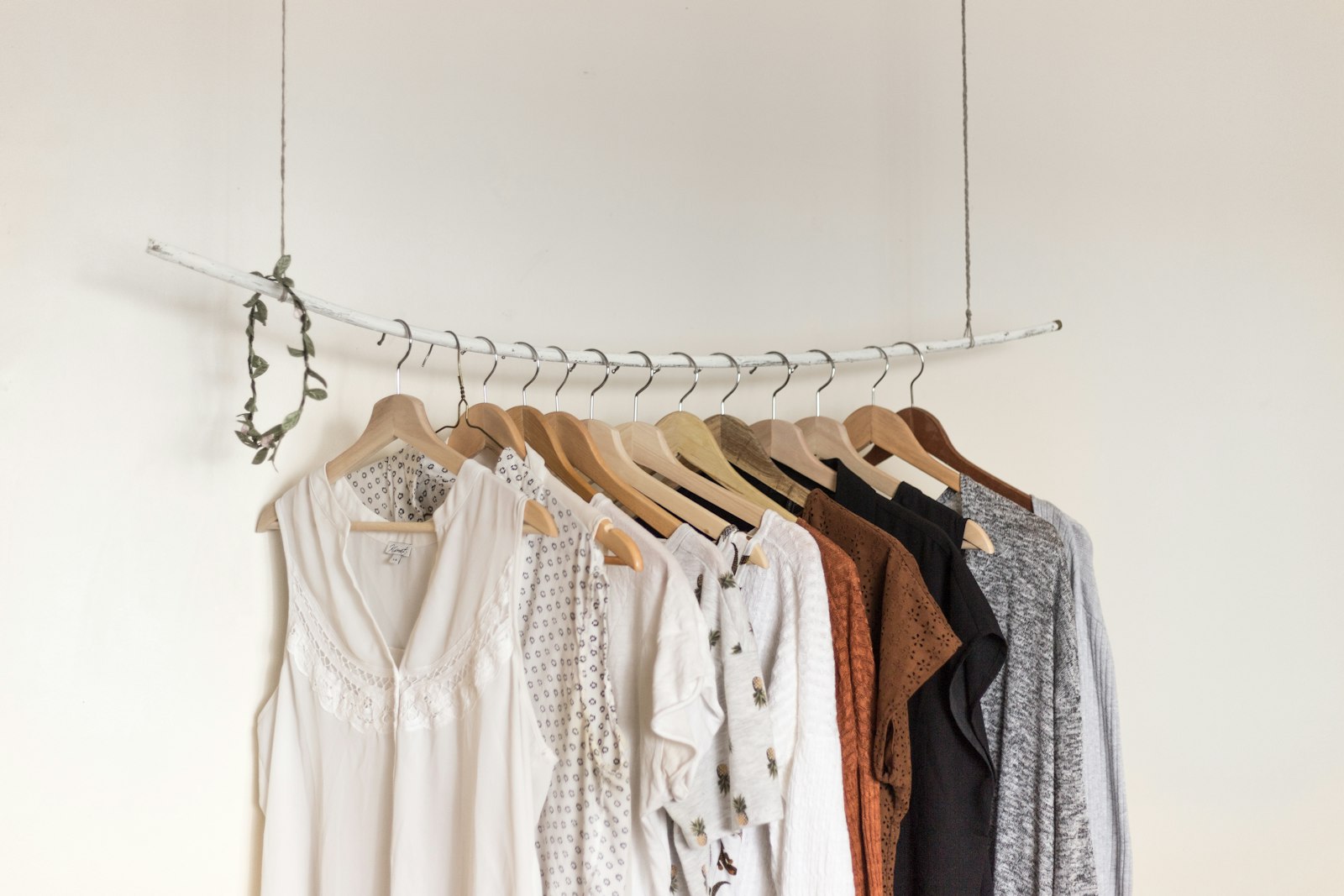
For the sake of transparency, here is the exact list I worked from. Everything was already in my closet, most of it bought secondhand over the past four years.
Bottoms (4)
- Mid-weight linen wide-leg pants in oatmeal
- Organic cotton denim shorts in faded indigo
- Soft black knit lounge pants (also fine for hospice visits)
- A long cotton skirt in olive green
Tops (6)
- White organic cotton t-shirt
- Black organic cotton t-shirt
- Loose cream linen short-sleeve button-up
- Chambray long-sleeve button-up (the workhorse)
- Soft heathered olive tank
- A slouchy oat-colored sweater for cool mornings
Layers and dresses (3)
- One light cotton cardigan in dusty rose
- A simple sleeveless linen midi dress in black
- A breezy short-sleeve cotton dress in a small floral print
Shoes (2)
- White vegan leather sneakers
- Brown vegan leather sandals
That’s fifteen. I did not count underwear, sleepwear, my one workout outfit, or the rain jacket that lives in my car. The rules were the rules, and the rules were also reasonable.
The Weather Reality of a Michigan June
Michigan in June is a meteorological mood ring. According to National Weather Service climate data for the Grand Rapids region, the average June high is in the upper seventies and the average low is in the upper fifties, but the swings around that average are wide. Last June I had three mornings under fifty degrees and four afternoons over ninety. There were thunderstorms. There was humidity. There was one Saturday at the shelter where it was sixty-two and damp in the morning and ninety-one and sunny by mid-afternoon.
This is the part of the experiment that I most wanted to stress-test. I wanted to know if fifteen pieces could actually meet the real conditions of where I live, not the conditions of some idealized California summer. The answer turned out to be yes, but only because I chose pieces that layered well. The chambray button-up went over the tank and under the cardigan during the cool weeks. The linen pants and the cotton dress took the hot weeks. The midi dress moved between both, depending on whether I added the cardigan.
If I’d chosen fifteen pieces optimized for either heat or cool, I would have been miserable. The lesson is that for an unstable climate, versatility beats specificity every time.
What Worked Better Than I Expected
The mental energy I got back
This was the unexpected gift of the whole experiment. By day four I noticed that getting dressed had stopped taking up any mental space. I would walk into my closet, see fifteen items, and pick something in under twenty seconds. There was no scanning. There was no wondering. There was no setting an outfit aside and trying a different one. The decision was small because the options were small.
I have read for years about decision fatigue, and the way people who reduce their daily clothing choices report feeling freed up for other thinking. I had filed that away as a productivity hack I didn’t need. After one week with fifteen pieces, I understood. The freedom isn’t from having fewer options. It’s from having fewer options that were already filtered for being good options. Every single item I owned that month, I actually liked. There was no third-best shirt in the rotation.
Natural fibers in humidity
I had long suspected that linen and organic cotton breathed better than synthetics, but I’d never had a controlled environment to test it. Wearing the same small handful of pieces day after day in fluctuating humidity made the difference obvious. The linen pants felt good even at ninety percent humidity. The cotton dress was wearable at temperatures where synthetic dresses I used to own would have left me drenched.
The Council of Fashion Designers of America and several sustainability nonprofits have noted that synthetic fabrics like polyester not only perform worse in heat but also shed microplastics into the wash water at every cycle. So I had been suspicious of polyester for a long time on environmental grounds. Now I’m suspicious of it on personal-comfort grounds too. The two arguments stack.
One workhorse item carrying everything
The chambray button-up did more work than any other piece in the capsule. Open over the tank when it was hot. Buttoned with the linen pants when I had a hospice visit and wanted to look put together. Tied around my waist for the in-between weather. Layered under the cardigan on cool mornings. I wore it, by my count, twenty-one of the thirty days.
This is the most useful capsule-wardrobe lesson I can offer anyone. Identify the one item that goes with literally everything else you own, and let it be the spine of the wardrobe. Then build around it.
What Didn’t Work
Only four bottoms was tight
I made it work, but barely. Between the shelter (where the bottoms got dirty), the heat (where the lounge pants were unwearable), and the occasional rainy walk (where the long skirt got soaked), I had a few days where my fresh-bottom math was uncomfortably close to zero. I’d add one more pair of bottoms next year. Probably another pair of lighter shorts.
The cardigan was the wrong color
Dusty rose sounded romantic in March when I was planning. In practice it clashed with two of my tops and felt jarring with the olive skirt. A neutral cardigan, oat or charcoal, would have done more work. I learned that when you’re choosing fifteen pieces, charm cannot beat compatibility. The pretty color you love but only wears with three other things does not earn its closet space.
I missed having a denim option
I’d left full-length jeans out of the capsule because I’d assumed June would be too hot for them. The cool weeks in early June proved me wrong. There were several mornings I would have reached for jeans and didn’t have them. Next year, one pair stays in.
What I’d Change for Next Year
The point of an experiment is to learn from it, so here is my revised list for next year. Sixteen pieces, one swap, one addition.
- Add: a lighter pair of organic cotton shorts in a neutral color
- Add: one pair of mid-weight jeans
- Swap: the dusty rose cardigan out for an oat or charcoal one
- Keep everything else as-is
I’ll also add a small rule: any new piece I add has to replace something or extend the life of the capsule by at least a year. No accumulating. The point of the experiment was not to look minimal. The point was to actually buy less and own less over time.
Final Thoughts on Less
One of the things the experiment did was make me look harder at the tote bag in the spare room — the rest of my closet, set aside for thirty days. When June ended, I went back to that bag with new eyes. Some of the things I missed during the experiment, I put back. Some of the things I had not thought about once, I gave away. About a third of my pre-experiment wardrobe went to a local consignment shop and the rest stayed.
Vogue Business reported that the average garment is now worn about half as many times as it was fifteen years ago before being thrown away or replaced. That number landed differently for me after a month of wearing the same fifteen things on rotation. The chambray button-up has years of wear left in it. The linen pants will outlast most things I own. The cotton t-shirts have already been washed many dozens of times and still look fine. The math of “buy less, choose well, make it last” stopped being a slogan and became a thing I’d lived for thirty days.
If you’re considering trying something like this, I would say: pick a real month, a number that feels uncomfortable to you, and just write it down. Lay out the pieces. Put the rest somewhere you can’t see them. Then live for thirty days inside the experiment, and notice what you actually miss versus what you assumed you’d miss. The gap between those two things is the whole lesson.
I am not a minimalist. I am not trying to be. But I am someone who wants the things I own to be things I love, and the things I buy to be things I really need. A small wardrobe for a Midwest June turned out to be one small step in the direction of that life. I’ll do it again next year. Sixteen pieces, this time. The chambray button-up will still be there.
Sources
- Textiles: Material-Specific Data — U.S. Environmental Protection Agency.
- Fashion Industry’s Environmental Impact — Natural Resources Defense Council.
- Climate Data for the Grand Rapids Region — National Weather Service.
- Sustainability Coverage — Vogue Business.
Free 10-Minute Forest Bathing Meditation
Subscribe to Peacefully Proven and receive a free guided meditation to restore calm and clarity — delivered straight to your inbox.




Join the conversation and add your thoughts.